

How office furniture liquidation helps businesses save money?
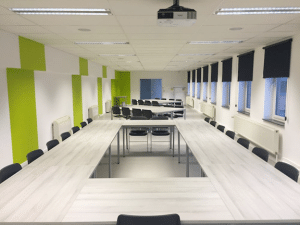 Every business goes through changes, whether that means relocating to a new office, downsizing operations, or even shutting down completely. Along with these shifts comes the challenge of dealing with office assets, particularly furniture. Desks, chairs, filing cabinets, and conference tables often make up a large portion of what needs to be handled, and simply discarding them is wasteful and costly. This is where office furniture liquidation plays a critical role. It provides companies with a structured way to manage surplus items while recovering some of the initial investment.
For companies navigating transitions, liquidation is more than a cost-saving measure; it is also an environmentally responsible approach. By redistributing furniture and equipment through resale, donation, or recycling, businesses can reduce expenses, simplify moves, and contribute to sustainable practices at the same time.
What office furniture liquidation means for businesses
Office furniture liquidation refers to the professional process of removing and redistributing used office assets. Rather than leaving companies with the burden of hauling everything away on their own, liquidation specialists step in to evaluate what can be resold or recycled. Commonly included items are desks, workstations, ergonomic chairs, conference tables, filing systems, and even breakroom setups.
The concept has grown in popularity as more companies recognize the financial and practical benefits. While moving furniture to storage units used to be the default choice, many organizations now prefer liquidation because it eliminates storage fees and transforms old assets into opportunities for resale.
Financial advantages of liquidating furniture
For businesses, cost management is always a priority, particularly during large-scale transitions. One of the strongest arguments for corporate office liquidation is the potential to save money while avoiding unnecessary expenses. Storage fees can quickly pile up if a company chooses to hold onto unused furniture. Likewise, moving heavy furniture to a new location that doesn’t require it results in wasted effort and higher moving bills.
Liquidation solves these issues by removing items from the equation entirely. On top of that, there is often a resale market for gently used furniture. Through used office furniture resale, companies may recoup part of their investment. While the value may not match the original purchase price, even a partial recovery helps balance overall moving or closure costs.
Supporting sustainability through liquidation
Another major reason companies turn to office furniture liquidation is its environmental benefit. Discarding large quantities of office furniture can place immense pressure on landfills. Many of these items, however, still have years of useful life left in them. By liquidating, businesses give these assets a second life, whether through resale to other organizations, donations to non-profits, or recycling of materials.
Sustainability is no longer just a trend but an expectation. Businesses that choose liquidation show responsibility not only to their bottom line but also to the environment. For many companies, that commitment enhances their corporate reputation while reducing waste at the same time.
How liquidation simplifies office transitions
Transitions are often stressful. Whether it’s a move across town or a complete business closure, timing is usually tight. Office clearance services take on the logistical burden of dismantling, removing, and redistributing assets. Instead of employees or managers coordinating every detail, liquidation specialists handle the entire process, allowing the business to focus on more important operational concerns.
Consider the difference between relocating without liquidation versus with it. Without a professional partner, businesses face the task of identifying buyers, arranging movers, and disposing of items themselves. With liquidation, a single service provider handles everything, often within a short timeframe. This level of efficiency can make the difference between a smooth transition and a chaotic one.
The value of used office furniture in the market
From the buyer’s perspective, liquidation also creates opportunities. Companies searching for affordable office setups often turn to resale markets, where high-quality furniture can be purchased at a fraction of the price of new items. Desks, chairs, and tables from liquidation sources often come from professional settings where maintenance has been consistent, making them reliable purchases.
This resale process benefits both sides: sellers avoid disposal costs and buyers gain access to affordable, sustainable furnishings. It’s a win-win situation that demonstrates why business asset liquidation continues to grow as a service across industries.
When liquidation becomes the right choice
Not every company will need liquidation services, but for those undergoing transitions, it is often the most practical choice. Relocations to new office spaces usually involve different floor plans, making older furniture unsuitable. Mergers and acquisitions often lead to duplicate assets that are no longer needed. Even simple office upgrades, such as moving from traditional cubicles to open-concept workstations, leave behind a surplus of items.
In these scenarios, liquidating furniture prevents waste while simplifying the transition. For companies closing operations altogether, liquidation is often the only sensible way to handle assets efficiently and cost-effectively.
Selecting a professional partner for liquidation
While some businesses attempt to handle liquidation internally, partnering with specialists makes the process far more efficient. Professionals understand the resale market, know how to evaluate assets properly, and can manage removals with minimal disruption. Transparency in valuation and reliability in scheduling are critical factors when selecting a service provider.
Reputable companies like Michaels Global Trading have built trust by helping businesses navigate these transitions seamlessly, balancing both financial recovery and operational convenience.
Conclusion
Office changes can be stressful, but office furniture liquidation turns a difficult process into a manageable and even financially beneficial one. By choosing liquidation, companies avoid high storage and moving costs, gain value from used office furniture resale, and contribute to sustainability. Whether it’s through corporate office liquidation, business asset liquidation, or full-service office clearance services, the benefits extend beyond cost savings to include time efficiency and environmental responsibility.