

Facing the giants: How local businesses can compete with big brands
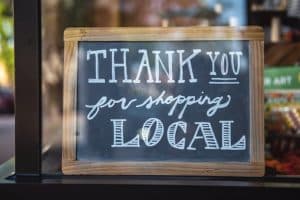
Photo by Tim Mossholder on Unsplash
As a small business owner, competing against big brands is like David fighting Goliath. And like that popular biblical story, you can actually come out on top.
True, big brands have a lot going for them: bottomless marketing budgets, prime real estate, and name recognition that stretches across the globe. However, just like with David and Goliath, size can also be a problem and a blessing. On the other hand, your ‘smallness’ can be your ace in the hole for not just competing, but actually thriving against big brands.
Read on as we discuss practical strategies that’ll help you leverage your size to win the giants in your industry.
Find a niche market
Big brands like Walmart, Starbucks, and McDonald’s thrive by selling to as many people as possible. But this comes at a cost. They cannot connect with niche audiences. That’s where small businesses like yours excel.
Carving out a niche for yourself in a product type or specific audience lets you position yourself as an expert in that space, and this will help you attract customers who want your kind of specialty.
Take your local coffee shop, for example. It may never sell more cups of coffee than Starbucks, but it doesn’t need to. Specializing in an exotic blend like Kopi Luwak lets it compete on flavor, not volume.
So, how do you find a niche market in your industry? Simple, look for what the big brands have overlooked.
Stay agile
If the business world were the sky, big brands would be like Boeing. Big, sleek, beautiful, and yes, powerful, but when it comes to flexibility, forget it. Small businesses are like Cessnas. They’re not much to look at, but they’re nimble, agile, and can move quickly.
Take your local McDonald’s outlet, for example: it can’t just change the menu because customers ask for it. Nope. Management has to approve every change. But the burger joint down the street? They can switch things up in less than 24 hours.
No delay for approvals, just an immediate response to ongoing market conditions.
Leverage local SEO
Probably the easiest thing you can do to make your business more visible is to invest in local SEO.
Think about it for a moment: when someone pulls out their phone and types “best pizza near me”, they’re not looking for Domino’s headquarters. They’re looking for the best pizza shop closest to their location. That’s local SEO at work. And it works too.
According to Google, 76% of “near me” searches result in a physical store visit within 24 hours, with up to 28% of searchers buying. That’s traffic and revenue you don’t want to miss.
Let us consider the example of a cannabis dispensary in Ann Arbor, Michigan. The state has witnessed impressive growth since it legalized the recreational use of cannabis in 2018. For a small business looking to gain visibility, educating customers is a good start. Vibe Dispensaries notes that providing information can create a positive perception.
Local SEO is also essential when it comes to gaining customers in a competitive space. Appearing first when a potential customer searches “Ann Arbor dispensary” can be the difference between whether they buy from you, a competitor, or order online.
So, if you’re serious about taking on the big and not-so-big brands, you need to position your business to show up at the exact moment people are ready to buy.
Build a community brand
Despite their massive budgets, there’s one thing big brands can’t fake: a connection with the local community. Sure, they can sponsor the annual concert or Little League team, but they’ll never quite feel like “one of us.” That’s something smaller brands can do, and often do better.
Take the local bookstore, for example. No one expects it to compete with Amazon in terms of size or reach. However, real locals will first check there before ordering online when they don’t find what they want. Why? Because it’s part of the community.
The secret isn’t flashy advertising, it’s being present where it counts: the appearances at town hall meetings, being a part of the local charity, and sponsoring the school’s fundraiser. It’s about a sense of belonging and co-ownership.
As one interview featured on the US Chamber of Commerce’s Ask the Board column succinctly put it: “A strong and sustainable business model goes hand in hand with a strong connection to the community.”
Leverage social proof
In today’s digital world, no business should overlook the power of reviews. According to PWC, about 32% of people will first read online reviews before buying from a business. This means that your reputation is often decided before a customer even decides to get in touch.
The good news is that small, local businesses have a huge advantage here. How? By encouraging customers to drop reviews, which you’ll share on all your online platforms. Don’t stop there. Take the time to respond personally. Thank happy customers, address the concerns of unhappy ones, and show that there’s a real person behind your business.
Big brands often leave this to automated bots. However, most customers notice and appreciate when a human actually engages with them.
Conclusion: Succeed by playing a different game
Going head-to-head with big brands isn’t about being bigger or even cheaper. It’s by taking advantage of their disadvantages. Specialize in a niche they can’t serve. Stay small and nimble while they remain inflexible. Be part of the community while they remain the outsider.
Do these consistently, and as history has shown, sometimes, the underdog wins.