Expanding into global markets: How DID Global telecom solutions unlock new opportunities
Sponsored content. This article was supplied by a third party and Business Money has been paid to publish it.
 Scaling a business means new markets — and that brings new time zones, new customer expectations, and a different pace. Telecommunications set the rhythm: they determine whether a business grows or loses ground.
Why telecom is the key to global business
When sales, customer service, or a country launch is on the line, communication must be flawless. Today, telecom is a full-scale system inside your business:
- VoIP saving up to 70% of call costs
- SIP trunking for scalable growth without extra expenses
- Omnichannel systems with deep CRM integration
- Local numbers (DIDs) that build trust
Without this infrastructure, scaling risks being not only slow but also unnecessarily expensive.
Challenges of entering international markets
Launching in a new market is a challenge. Without stable, localized communication, even the best strategy can fail — because trust begins with reliable communication.
Communication barriers & localization
People rarely answer calls from unknown international codes. That can mean dozens of lost contacts every day. But that’s just the start:
- Language barrier: customers hear a foreign-language menu and hang up.
- Time zone barrier: it’s night for you, workday for them — call goes unanswered.
- Technical barrier: manager doesn’t see call history, so the customer repeats everything from scratch.
These may seem like small issues, but they define whether a customer stays with you.
Regulatory & technical hurdles
Telephony is not only about technology but also about jurisdiction. What works in Poland may be restricted in Saudi Arabia or require a license in Nigeria.
Common restrictions include:
- local storage of call recordings
- limitations on number allocation
- licensing or physical presence requirements
And then there’s roaming — same problems everywhere:
- high cost
- unstable quality
- reliance on third-party operators
Without cloud infrastructure or SIP trunking, scaling communication is complicated, expensive, and risky. And a business without communication is a business without customers.
DID Global’s role in scaling
DID Global is not just another set of services but a flexible infrastructure that grows with your business. Need CRM integration? New markets? Multilingual support? Everything adapts to your growth pace.
SIP trunking & IP telephony for international business
SIP trunking bridges your phone system with VoIP. No servers, no complex equipment, no delays. Everything runs in the cloud, integrates with your CRM, and keeps your team connected worldwide.
IP telephony cuts call costs by up to 70% — especially valuable for cold leads or hundreds of support inquiries. Another benefit is backup routing: if one channel is overloaded, the call is automatically rerouted.
DID Global tip:
Planning a launch in a new country? Start with a local number. It’s a simple step that significantly increases trust and boosts response rates. DID Global provides DID numbers in 150+ countries, with setup taking just minutes. You also get expert advice on tailoring communication for your target market.
Omnichannel solutions for global support
In the 2020s, communication is more than phone calls. It’s a synchronized ecosystem of channels. DID Global’s omnichannel system combines:
- IP and SIP telephony
- SMS campaigns
- Callback widgets
- Call recording & analytics
- CRM & helpdesk integration
Calls are automatically routed by language, country, or schedule. Support is 24/7. Scaling is seamless: new countries, carriers, or languages are added without changing infrastructure. All cloud-based — fast and flexible.
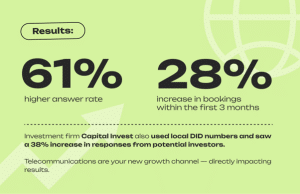 Examples: New opportunities for companies
Internationalization isn’t always about millions in revenue and global offices. Often, it starts with one right step — like adopting local numbers. Small actions bring measurable results.
Case in point: DID Global
To solve the problem of customers ignoring foreign calls, travel company TravelTime connected DID numbers in 20 countries through DID Global.
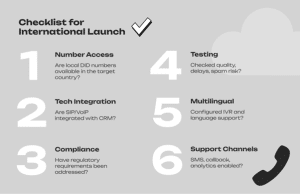 Tips for companies going global
The global market doesn’t forgive technical failures. If communication fails on day one, customers turn to competitors. Prepare in advance:
- Check availability of local DID numbers in target countries.
- Integrate VoIP into CRM or Helpdesk — saves hours of daily routine.
- Launch omnichannel immediately: SMS, callback, analytics, scenarios.
- Test everything: spam flags, delays, stability — all must be under control.
Communication is your first impression. And quality communication often decides if there will be a second call at all.