

From crisis to commercial: Smart strategies for real estate investment and asset protection
Sponsored content. This article was supplied by a third party and Business Money has been paid to publish it.
After the flames: Your first steps and what to expect
A house fire is a deeply devastating event. It leaves behind more than just physical damage. There’s also a heavy emotional toll. For homeowners and real estate investors, understanding the aftermath is vital. Knowing the true cost to repair a fire-damaged house is the first step.
The expenses for fire damage restoration can vary greatly. Many things affect these costs. These include how bad the fire was and what materials were burned. This guide will help you understand these complex issues.
We will cover the main factors that drive repair costs. We’ll start with the first cleanup steps and go all the way to major rebuilding. We will look at how insurance works. We will discuss hidden costs and help you decide if you should repair or consider other choices. Our aim is to give you clear information. This will help you make smart decisions during a difficult time. For valuable insights into effective fire-damaged property management, we detail the various costs involved in restoration.

The immediate aftermath of a house fire is often a whirlwind of emotions and urgent decisions. The initial shock can be paralyzing, but swift, informed action is crucial to mitigate further damage and steer the recovery process effectively. Our first priority, always, is safety. Do not re-enter your home until fire officials have declared it safe. Even if the flames are out, hidden dangers like structural instability, weakened electrical systems, and toxic fumes can pose serious risks.
Once the fire department has given the all-clear, your next critical step is to contact your insurance provider. This initial call initiates the claims process and is vital for documenting the damage. Before any cleanup or repair work begins, it’s imperative to carefully document everything. Take extensive photographs and videos of all damaged areas, both inside and out. Create a detailed inventory of destroyed or damaged personal property, including approximate values and dates of purchase if possible. Additionally, for those needing temporary or alternative spaces during recovery, exploring options like Brooklyn office space for lease can provide a safe and functional location to manage insurance claims, coordinate repairs, and handle other essential tasks. Beyond insurance, you’ll need to address immediate practical needs. This often includes securing the property to prevent further damage or theft, arranging for temporary housing, and contacting utility companies to ensure services like gas and electricity are safely shut off. The Red Cross and local disaster relief services can provide immediate assistance with temporary housing, food, medication, and even mental health support. Understanding these initial steps can help you regain a sense of control during a chaotic time.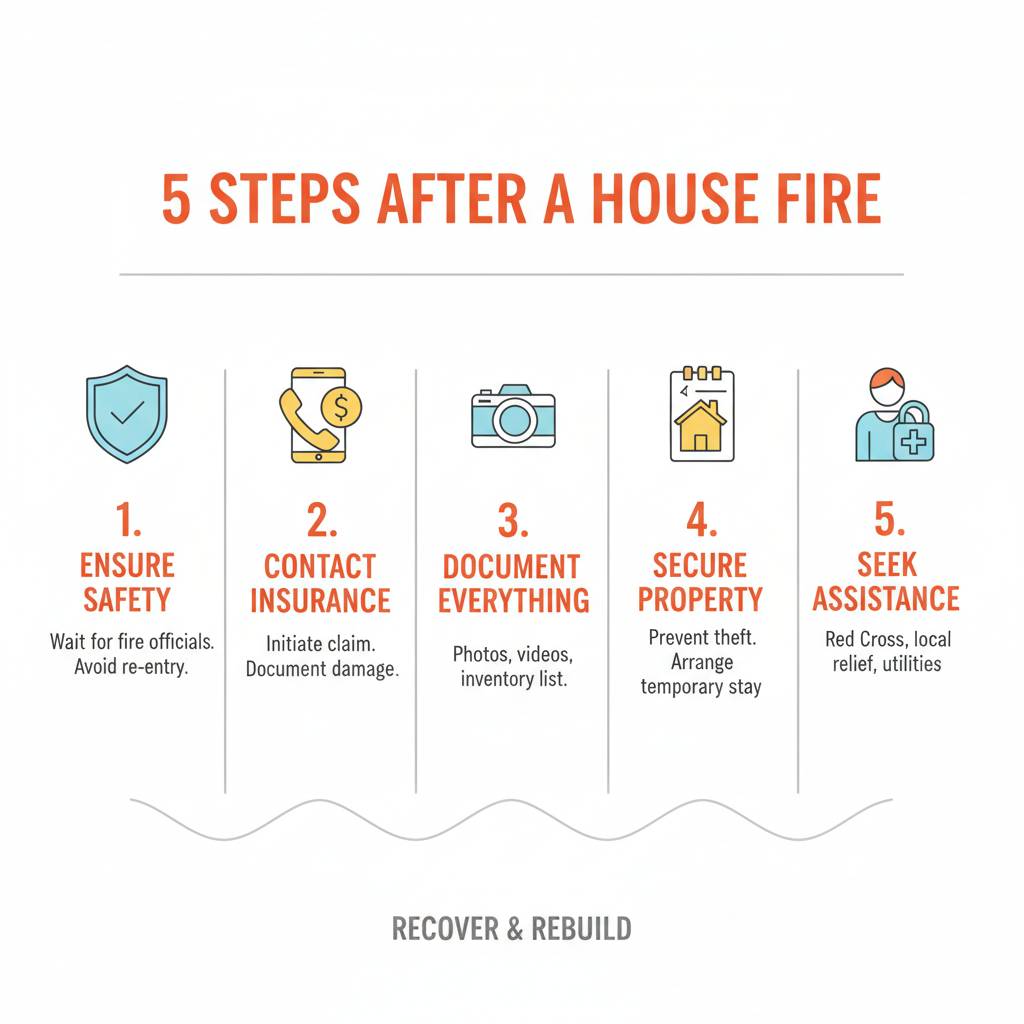
Key factors that drive the cost to repair a fire damaged house
The cost to repair a fire-damaged house is rarely straightforward. Numerous variables converge to determine the final expense, making accurate initial estimates challenging without a thorough professional assessment. These factors range from the obvious, such as the visible destruction, to the subtle, like lingering smoke odors or hidden water damage. We consider the extent and type of damage, the property’s characteristics, and even geographical location when evaluating restoration costs. Understanding these key drivers is essential for any homeowner or investor facing such a crisis. The intensity of the fire itself plays a significant role; for more on how severe fires can get, you can read our guide on How Hot Does a House Fire Get?.
The scale of the damage: From minor smoke to major structural loss
The most significant factor influencing repair costs is the overall scale of the damage. We typically categorize fire damage into three tiers:
- Minor damage: This usually involves localized smoke and soot damage, with minimal structural impact. Costs for minor smoke damage can range from $3,000 to $10,000. This might include professional cleaning, deodorization, and repainting of affected areas.
- Moderate damage: Here, the fire may have affected one or more rooms, potentially causing some structural damage to non-load-bearing elements, along with extensive smoke, soot, and water damage. Restoration costs for moderate fire damage typically fall between $10,000 and $40,000. This tier often requires partial demolition, material replacement (drywall, flooring), and more intensive cleaning.
- Severe damage: This category implies significant structural compromise, often affecting multiple areas of the house, including load-bearing walls, the roof, or the foundation. Costs for severe structural damage can escalate dramatically, ranging from $40,000 up to $180,000, or even more for larger or high-value properties. Such extensive damage often necessitates major reconstruction and extensive material replacement.
The national average cost range for fire damage restoration typically hovers between $3,000 and $40,000, reflecting the wide spectrum of severity we encounter. Structural integrity is paramount; if the fire has compromised the fundamental stability of the home, the repair process becomes far more complex and expensive.
Water damage: The hidden cost from firefighting

Ironically, the efforts to extinguish a fire often introduce another significant and costly problem: water damage. Firefighters use vast quantities of water, which can saturate structural elements, insulation, flooring, and personal belongings. This water, if not addressed swiftly and thoroughly, can lead to a cascade of secondary issues.
The immediate concern is water extraction, where specialized equipment is used to remove standing water. Following this, professional drying and dehumidifying are critical to prevent moisture from seeping into materials and creating a breeding ground for mold. Mold can begin to grow within 24-48 hours of water exposure, adding another layer of complexity and expense to the restoration.
The costs associated with water damage cleanup range from $1,000 to $6,000, or approximately $2-4 per square foot, depending on the extent of saturation and the materials affected. This includes the labor and equipment for extraction, drying, and initial mold prevention treatments. For detailed information on effective water damage Drying Out and Restoration Procedures, professionals emphasize immediate action to prevent secondary damage.
Smoke and soot contamination
While flames cause visible destruction, smoke and soot are insidious, penetrating every crevice and surface, often far beyond the immediate fire zone. Soot, a powdery or oily residue, can etch surfaces, discolor paint, and leave behind a pervasive, unpleasant odor. Smoke particles can infiltrate HVAC systems, insulation, and even personal items, posing significant health risks due to toxic chemicals and carcinogens.
Professional soot removal costs typically range from $400 to $1,700, depending on the affected area and the type of soot (oily soot is generally more difficult and expensive to clean than dry soot). Smoke damage restoration can cost between $200 and $1,200 per room, encompassing deep cleaning of surfaces, contents, and air purification.
Deodorizing the property is another crucial step, often requiring specialized techniques like ozone treatments or thermal fogging to neutralize embedded smoke odors. These services can add $1,000 to $3,000 to the total cost. Furthermore, air duct cleaning is essential to prevent the HVAC system from recirculating smoke particles and odors throughout the restored home, typically costing $250-$500. Addressing smoke and soot contamination is not just about aesthetics; it’s vital for eliminating potential health risks and ensuring a safe living environment.
Type of fire and its financial impact
The nature of the fire itself significantly dictates the complexity and cost of restoration. Different types of fires produce different residues and cause varying levels of damage, requiring specialized approaches:
- Kitchen oil fires: These are common and can spread quickly, often damaging appliances, cabinets, and surrounding surfaces. Restoration costs for a kitchen oil fire in a 2,500-square-foot home can range from $12,000 to $20,000.
- Electrical fires: Often starting within walls or appliances, electrical fires can cause hidden damage to wiring and structural elements, along with smoke and soot. Restoring damage after an electrical fire in a 2,500-square-foot home typically costs between $12,000 and $23,000.
- Gas fires: These can be particularly intense, leading to significant structural damage and requiring specialized safety precautions. Restoration services for a gas fire in a 2,500-square-foot home might cost between $14,000 and $20,000.
- Ordinary combustibles (class A fires): Fires involving wood, paper, or textiles tend to produce dry, flaky soot. Restoration for such fires in a 2,500-square-foot home typically ranges from $9,000 to $14,000.
- Combustible metal fires (class D fires): While less common in residential settings, these fires require highly specialized extinguishing agents and cleanup due to the unique chemical residues they leave. Restoration for a combustible metal fire in a 2,500-square-foot home can be the most expensive, ranging from $16,000 to $25,000.
Each fire type presents unique challenges, and a professional assessment is crucial to determine the most effective and safe restoration strategy.
A detailed breakdown of fire damage restoration costs

Once the initial shock subsides, understanding the granular details of fire damage restoration costs becomes paramount. This involves looking beyond broad estimates to an itemized breakdown of services and materials. Professional restoration companies provide detailed estimates that account for every stage of the process, from initial cleanup to final touches. This level of detail helps homeowners and investors budget accurately and understand where their money is being spent. For a deeper dive into the specific tasks involved in bringing a property back to life, our guide on Fire Damage Restoration Repair offers comprehensive insights.
Fire damage repair cost per square foot
One common way to estimate restoration costs is on a per-square-foot basis. This metric provides a useful benchmark, though prices can vary widely based on the severity of damage and regional factors.
- Basic restoration: For properties with light smoke and soot damage, requiring mostly cleaning and deodorization, basic restoration can cost around $4 per square foot.
- Standard restoration: This applies to homes with moderate damage, including some material replacement (e.g., drywall, insulation) in affected areas, alongside comprehensive cleaning. Standard restoration typically costs about $4.70 per square foot.
- Complex restoration: For severe damage involving significant structural repairs, extensive demolition, and rebuilding, costs can go up to $7 per square foot or more.
Factors influencing the per-square-foot price include the quality of materials chosen for replacement, the complexity of the structural repairs, and local labor rates. For example, a 1,000 sq ft home might cost $4,000–$7,000 to restore, while a 2,500 sq ft home could range from $10,000–$17,500. These figures serve as a general guideline, and actual costs will be determined by a professional on-site assessment.
Itemized costs for each stage of restoration
The restoration process is a multi-faceted endeavor, with distinct stages each incurring specific costs. We’ve outlined the typical stages and their average cost ranges:
- Debris removal: This initial step involves safely removing charred materials, unsalvageable contents, and general refuse from the property. Costs typically range from $300 to $1,600 for a flat rate, or sometimes calculated by weight ($50-$100 per pound for item removal).
- Water extraction, drying & dehumidification: As discussed, removing water introduced by firefighting efforts is critical. This stage involves pumps, wet vacuums, and industrial-grade dehumidifiers. Costs are generally $1,000-$6,000 for remediation.
- Soot and smoke cleaning: Specialized cleaning agents and techniques are used to remove soot from surfaces, contents, and HVAC systems. This can cost between $2,000 and $6,000.
- Structural repairs: This is often the most expensive stage, addressing compromised framing, walls, roofs, and foundations. Costs can range from $15,000 to $25,000 per room for significant structural damage.
- Odor removal: Using methods like ozone treatments, thermal fogging, or specialized deodorizers to eliminate lingering smoke smells. This typically costs $1,000 to $3,000.
- Final inspections and code compliance: Ensuring all repairs meet local building codes and safety standards, often involving permits and inspections. These fees can range from $100 to thousands of dollars, depending on the scope of work and local regulations.
Rebuilding key areas of your home
When fire damage necessitates rebuilding specific sections of a house, the costs can vary significantly based on the area’s complexity, materials, and finishes.
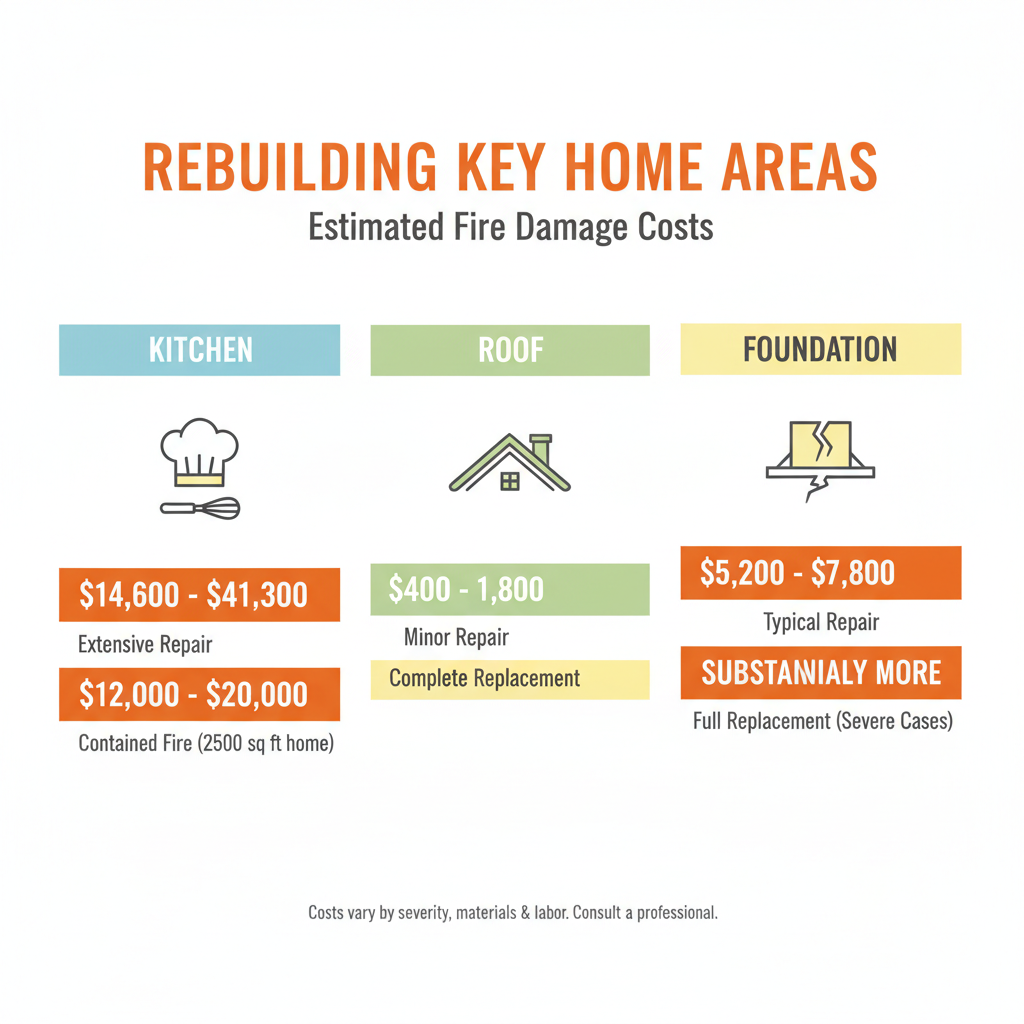
- Kitchen repair costs: Kitchens are often the most expensive rooms to repair or rebuild due to appliances, cabinetry, plumbing, and electrical work. Extensive kitchen repairs after a fire can range from $14,600 to $41,300. If the fire was contained to the kitchen, the cost could be around $12,000 to $20,000 for a 2,500 sq ft home.
- Roof repair vs. replacement costs: Fire can severely compromise a roof’s integrity, even if not directly burned. Minor roof repairs might cost $400 to $1,800, while a complete roof replacement can range from $5,900 to $12,800. The type of roofing material (asphalt shingles, metal, tile) will also impact the price.
- Foundation repair costs: Intense heat can weaken concrete and steel reinforcement, making foundation repair a critical and costly component. Foundation repair typically ranges from $2,200 to $7,800. In some severe cases, a foundation may be deemed unusable and require complete replacement, which is substantially more expensive.
- Drywall installation costs: Replacing fire-damaged drywall is a common task. Basic drywall repairs and installation can cost between $1,000 and $3,000. For complete wall reconstruction, especially if framing is also damaged, costs can climb to $3,000 to $7,000.
These figures highlight that rebuilding specific areas can quickly add up, often forming the bulk of the overall restoration expense.
Navigating insurance, permits, and hidden expenses
Beyond the direct costs of cleaning and rebuilding, homeowners and investors must prepare for a labyrinth of administrative and unforeseen expenses. Navigating insurance claims, securing necessary permits, and accounting for hidden costs are critical aspects of the recovery process. Ignoring these elements can lead to significant financial setbacks and delays. Understanding these Legal & Financial Considerations After Fire is crucial for a smoother recovery.
Making the most of your homeowner’s insurance
Your homeowner’s insurance policy is your primary financial safeguard after a fire. It’s essential to understand its components to maximize your coverage:
- Dwelling coverage: This covers the physical structure of your home, including the foundation, walls, and roof. It pays for repairs or rebuilding up to your policy limits.
- Personal property coverage: This covers your belongings, such as furniture, clothing, electronics, and other items. It’s typically a percentage of your dwelling coverage, and you’ll need to provide an inventory of damaged items.
- Loss of use (additional living expenses – ALE): If your home is uninhabitable during repairs, this coverage pays for temporary housing, meals, and other increased living expenses.
- Liability coverage: While less directly related to repair costs, this covers you if someone is injured on your property or if your fire causes damage to a neighbor’s property.
Filing a claim requires meticulous documentation, including the fire marshal’s report, your inventory of damaged items, and all communication with your insurance company. For a comprehensive walkthrough of this process, our Fire Damage Insurance Claims Guide provides detailed steps. It’s also wise to consider that if the property is left vacant during the restoration process, you might need specialized vacant home insurance policies.
Insurance cost analysis services can be incredibly valuable, often returning 3-5 times their fee in additional claim settlements by identifying overlooked damage and ensuring accurate pricing. These services are particularly beneficial for extensive damage or when disputes arise with insurance adjusters.
Unforeseen costs: What your initial estimate might miss
Even with a comprehensive insurance policy, out-of-pocket expenses and hidden costs are almost inevitable. We often see homeowners overlook these, leading to budget overruns and added stress:
- Temporary housing: While ALE coverage helps, it might not cover all your preferences or extend for the entire duration of prolonged repairs. Costs for hotels, short-term rentals, or even pet boarding can quickly add up.
- Permit and inspection fees: Local building departments require permits for most significant repair work. These fees, along with mandatory inspections at various stages of reconstruction, can range from $100s to $1,000s, depending on the scope of work and local regulations.
- Replacing personal documents: Fire can destroy birth certificates, passports, deeds, and other vital documents. The time and cost associated with obtaining replacements can be substantial.
- Board-up services: Immediately after a fire, securing the property with board-up services is crucial to prevent theft, vandalism, and further weather damage. These emergency services are an immediate expense.
- Air quality testing: Post-restoration air quality testing is essential to ensure all smoke, soot, and chemical residues have been removed, making the home safe for occupancy. This is an additional cost that ensures peace of mind.
These hidden expenses underscore the importance of having a contingency fund and working closely with your insurance provider to understand all potential coverages.
Professional restoration vs. DIY: A cost-benefit analysis

When faced with a fire-damaged home, many homeowners grapple with the decision: hire professionals or attempt repairs themselves? While the allure of saving money through DIY might be strong, we consistently advise against it for anything beyond very minor, superficial damage. The complexities, hidden dangers, and specialized nature of fire damage restoration make it a task best left to certified experts.
The hidden dangers and financial risks of DIY repair
Attempting DIY fire damage repair often leads to more problems than solutions, carrying significant hidden dangers and financial risks:
- Structural instability: Fire can compromise the structural integrity of a home in ways that aren’t immediately visible. Without expert assessment, a DIY approach risks working in an unsafe environment or failing to address critical structural weaknesses, leading to future collapse or further damage.
- Electrical hazards: Fire-damaged electrical systems are extremely dangerous. Melted wiring, damaged circuit breakers, and compromised outlets can cause electrocution or re-ignite fires. Only licensed electricians should inspect and repair fire-damaged electrical systems.
- Toxic soot and mold: Soot contains carcinogenic particles and toxic chemicals. Improper handling can spread these contaminants, worsen air quality, and pose serious health risks. Similarly, inadequate water removal and drying can lead to rampant mold growth, which is expensive and hazardous to remediate.
- Improper cleaning: Fire damage requires specialized cleaning agents and techniques that differ from standard household cleaners. Using the wrong products can permanently set stains, damage surfaces, or fail to neutralize odors, making professional remediation more difficult and costly later.
- Voiding insurance claims: Most insurance policies require professional restoration for significant fire damage. Attempting DIY repairs without prior approval from your insurer could lead to denied claims or reduced payouts, leaving you personally responsible for all costs.
Why professional restoration saves money in the long run
While professional services come with an upfront cost, we believe they offer significant long-term financial benefits and peace of mind:
- Thorough cleaning and odor removal: Professionals possess the specialized equipment and expertise to thoroughly clean and deodorize every affected surface, including hidden areas and HVAC systems, ensuring complete removal of contaminants and odors.
- IICRC certification: Reputable restoration companies hold certifications from organizations like the Institute of Inspection, Cleaning and Restoration Certification (IICRC). This signifies adherence to industry best practices and high standards of work.
- Preventing future issues: Experts identify and address hidden damage, such as compromised structural elements or potential mold growth, preventing costly future repairs and health problems.
- Warranty on work: Professional services often come with warranties, providing assurance that the work is done correctly and offering recourse if issues arise post-restoration.
- Faster recovery time: Professionals can mobilize quickly, efficiently manage the restoration process, and steer insurance claims, significantly reducing the time your home is uninhabitable and minimizing additional living expenses.
Investing in professional restoration is an investment in the safety, integrity, and long-term value of your property.
Is rebuilding worth it? Exploring your options after a fire
After a house fire, the decision to rebuild or explore alternative options is profoundly personal and financial. The emotional toll can make clear-headed decision-making difficult, but it’s crucial to weigh the costs, benefits, and long-term implications of each path. Our guide, Rebuild or Sell After House Fire, digs into these critical considerations, helping homeowners make the best choice for their unique situation.
When restoration costs more than it’s worth
There are situations where, despite emotional attachment, rebuilding a fire-damaged house simply isn’t the most financially sound decision:
- Comparing total repair costs to home’s market value: If the estimated cost of repairs, including all hidden and unforeseen expenses, approaches or exceeds the pre-fire market value of the home, rebuilding might not be financially prudent. An insurance company might declare the home a “total loss” if repair costs exceed a certain percentage of its value.
- Extensive structural damage: When fire has severely compromised major structural components like load-bearing walls, the roof truss system, or multiple floor joists, the cost and complexity of rebuilding become immense. This can lead to lengthy construction times, escalating costs, and potential long-term structural concerns.
- Foundation issues: Intense heat can damage a home’s foundation, causing cracks or weakening the concrete. Repairing or replacing a foundation is one of the most expensive and disruptive aspects of restoration, often making rebuilding less attractive.
- When insurance payout is insufficient: Even with good coverage, policy limits or deductibles can leave a significant gap between the actual cost of repairs and the insurance payout. If you face substantial out-of-pocket expenses that are financially unmanageable, rebuilding might not be feasible.
In these scenarios, the financial burden and prolonged stress of rebuilding might outweigh the benefits, leading homeowners to consider alternative solutions.
The simpler alternative: Selling your fire-damaged house as-is
For many, the thought of navigating extensive repairs, dealing with contractors, and prolonged insurance claims is overwhelming. This is where selling a fire-damaged house “as-is” becomes a compelling alternative.
- Avoiding repairs and cleanup: Selling as-is means you don’t have to undertake any cleanup, demolition, or restoration work. The buyer assumes responsibility for the property in its current state, saving you immense time, effort, and stress.
- Fast cash offer: Companies specializing in buying distressed properties can often provide a quick cash offer, allowing you to close on your timeline. This provides immediate financial relief and allows you to move forward without delay.
- Skipping contractor and insurance hassles: The process eliminates the need to vet multiple contractors, oversee construction, or engage in potentially lengthy negotiations with insurance adjusters. This streamlined approach can be a significant advantage during an already stressful time.
- Moving on: For some, the emotional weight of a fire-damaged home is too much to bear. Selling as-is allows for a clean break, enabling you to focus on healing and finding a new beginning, perhaps even investing in prime commercial real estate in a vibrant area if you’re looking to transition your assets. This option offers a path to closure without the added burden of managing a complex restoration project.
This alternative provides a pragmatic solution for homeowners who prioritize speed, simplicity, and emotional well-being over the arduous process of rebuilding.
Frequently asked questions about repairing a fire-damaged house
We understand that a fire-damaged house brings a multitude of questions. Here, we address some of the most common concerns homeowners have during this challenging time.
How long does fire damage restoration typically take?
The timeline for fire damage restoration varies significantly based on the extent of the damage.
- Minor smoke damage: If the damage is primarily cosmetic and localized, you might be able to return home in a few days or weeks after professional cleaning and deodorization.
- Moderate damage: For more extensive damage affecting several rooms but not major structural components, restoration typically takes between 2 to 8 weeks. This includes debris removal, water mitigation, cleaning, and some material replacement.
- Major structural repairs: If the fire has compromised the structural integrity of your home, the process can extend to several months, potentially six months or more. Factors like obtaining permits, contractor availability, and the complexity of the rebuild significantly influence this timeline.
What items can be salvaged after a fire?
The salvability of items after a fire depends largely on their material and the extent of exposure to heat, smoke, and water.
- Non-porous items like metal, glass, ceramics, and some hardwoods typically have the best chances of recovery. These can often be thoroughly cleaned of soot and smoke residue.
- Specialized restoration techniques can sometimes salvage electronics, artwork, documents, and cherished photographs, even if they appear heavily damaged.
- Porous items such as upholstered furniture, carpets, clothing, books, and soft plastics are often more challenging to restore due to deep smoke penetration and odor absorption. Items severely damaged by direct flame, heat-melted materials, or toxic chemicals usually need to be replaced for safety and health reasons. A professional assessment will determine what can be safely and effectively restored.
Does fire damage permanently decrease my home’s value?
While fire damage undeniably has an initial negative impact on property value, it does not necessarily lead to a permanent decrease.
- Initial impact: Immediately after a fire, the market value of your home will be significantly reduced due to the visible damage and the perceived risks.
- Value recovery through professional restoration: With thorough and professional restoration, much of the home’s value can be recovered. Licensed contractors who address both visible and hidden damage, ensure code compliance, and provide detailed documentation can help restore buyer confidence.
- Potential for increased value: In some cases, a professionally restored home, especially one that incorporates modern updates and safety features during the rebuild, might even see an increase in value compared to its pre-fire state. The key is comprehensive, high-quality restoration and meticulous documentation for future buyers.
Conclusion: Moving forward after a house fire
A house fire is a trial no homeowner wishes to face. The journey from crisis to recovery is complex, filled with emotional challenges and significant financial considerations. We’ve explored the myriad costs involved, from the immediate aftermath of debris and water removal to the long-term expenses of structural rebuilding, smoke remediation, and unforeseen administrative fees. The average cost to repair a fire-damaged house can range from a few thousand dollars for minor smoke damage to well over a hundred thousand for severe structural loss, with many factors influencing the final tally.
You have two main paths forward: starting on the comprehensive process of restoration and rebuilding, or choosing the simpler alternative of selling your fire-damaged house as-is. Each option has its own set of advantages and disadvantages, and the best choice will depend on your specific circumstances, financial capacity, and emotional readiness.
Our goal throughout this guide has been to empower you with clear, factual information, enabling you to make the most informed decision possible during a difficult time. Whether you choose to rebuild your cherished home or opt for a fresh start, understanding the costs and processes involved is your first step towards recovery. For further assistance and resources, please don’t hesitate to explore our Contact Us page, learn more about Our Company, or access additional Fire Damage Resources.