

Why do many local businesses in Philadelphia, PA, waste money on the wrong billboards
Sponsored content. This article was supplied by a third party and Business Money has been paid to publish it.
Credit: Whisk
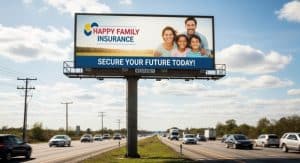
Billboards promise visibility. They’re massive, ever-present, and seem like a smart move for any local business. But in Philadelphia, too many companies pour thousands into billboard campaigns yet see no spike in calls, no increase in foot traffic, and no measurable return.
The issue isn’t the medium, it’s the misalignment. A flashy sign on I-95 means nothing if your audience lives in Queen Village and never drives that route. Without understanding where your customers are, what they care about, and when they’re ready to act, even the most expensive billboard becomes just another blur in the background. Visibility without strategy is just waste.
Why do billboards feel like a safe bet?
Billboards have a long-standing reputation as reliable advertising tools. They’re visible 24/7, don’t require clicks, and seem to offer instant exposure. For a business owner juggling a dozen responsibilities, that kind of simplicity is appealing.
But visibility doesn’t equal effectiveness. Just because a billboard is seen doesn’t mean it’s remembered, or acted on. That’s where many campaigns fall short. Billboard advertising companies like Alluvit Media combine precise placement with audience behavior insights, turning traditional outdoor ads into measurable, results-oriented campaigns that go beyond surface-level exposure. Ultimately, a billboard’s true value lies in how well it aligns message, location, and timing to influence real-world decisions.
What makes a billboard “wrong” for your business?
A billboard isn’t wrong because it’s ugly or in a bad neighborhood. It’s wrong when it doesn’t align with your audience’s habits, your message’s timing, or your business goals.
Location without relevance
A billboard near I-95 might get 100,000 impressions a day, but if your target customers are mostly in Fishtown or Chestnut Hill, you’re paying for eyeballs that won’t convert into store visits, phone inquiries, or online engagement. It’s like advertising a high-end dental clinic in a college dorm: lots of views, few appointments.
Message without context
A generic “Visit Our Store!” message with no offer, no urgency, and no local tie-in won’t stick. People are busy. If your billboard doesn’t answer “Why now?” or “Why you?” in three seconds, it’s wasted space.
Timing without strategy
Running a billboard campaign in July for a service that peaks in December? That’s money spent on an audience that isn’t ready to act. Seasonality matters, especially in a city with such distinct rhythms as Philadelphia.
How do local habits shape billboard effectiveness?
Philadelphia isn’t a one-size-fits-all city. South Philly’s foot traffic doesn’t mirror that of Manayunk. Center City’s rush hour patterns are different from those in the Northeast. Understanding these nuances is essential.
Commuters on Roosevelt Boulevard aren’t the same as weekend strollers on South Street. If your business relies on impulse visits, you want to be where people linger, not where they’re speeding by at 50 mph. Conversely, if you’re promoting a service like HVAC repair, targeting high-traffic commuter routes during peak seasons makes more sense.
Where do most businesses go wrong with billboard metrics?
Many businesses still use impressions as their main billboard metric. But impressions only reflect how many people might’ve seen the ad, not how many actually noticed, remembered, or responded to it. That’s a shallow way to measure something meant to drive real-world action.
Think of it like a poster in a waiting room. Every patient sees it, but if no one brings it up, was it effective, or just invisible? Maybe the message wasn’t clear, or the design didn’t stand out. Billboards work the same way. Without relevance, clarity, and a compelling reason to act, even the most visible ad becomes just another part of the background.
When should you rethink your billboard strategy?
Credit: Whisk
If your billboard campaign isn’t driving more calls, visits, or web traffic, it’s not time to panic, but it is time to reassess. Many businesses assume the billboard itself is the problem, but that’s rarely the case. The real issue often lies in how the campaign was planned and executed.
Are you tracking the right metrics? Did you link the billboard to a landing page or use a QR code? Have you tested different messages or visuals? Without these elements, even a well-placed billboard can fall flat. Strategy always comes before signage.
What should you consider before signing another billboard contract?
Before renewing or launching a new campaign, take a step back and evaluate three key areas. These aren’t just checkboxes; they’re the foundation of billboard ROI. Let’s break them down:
Who is actually seeing it?
Demographics matter. A billboard near a high school won’t help a B2B accounting firm. Use mobile data, census insights, and even local foot traffic studies to understand who passes by, and whether they match your customer profile.
What action do you want them to take?
Every billboard should have a purpose. Is it brand awareness? A limited-time offer? Driving website visits? Without a clear call to action, even a clever design falls flat. Make the next step obvious and easy.
How will you measure success?
Set up tracking before the billboard goes live. Use unique URLs, QR codes, or even a dedicated phone number. That way, you’re not guessing whether it worked; you’ll know.
Why “more eyes” doesn’t mean more sales
There’s a persistent myth that more impressions automatically lead to more business. It’s a comforting idea, but it’s rarely true. Relevance trumps reach every time.
A boutique law firm in Old City once spent five figures on a billboard along I-76. It got plenty of views, but none from their ideal clients, small business owners in Center City. After switching to a hyper-local campaign near co-working spaces and pairing it with a targeted digital push, their inquiries doubled. Same budget, smarter placement.
Frequently asked questions
How do I know if my billboard is reaching the right audience?
Start by analyzing the location’s traffic patterns and demographics. Utilize tools such as mobile location data or request audience breakdowns from your vendor. If your ideal customer isn’t in that flow, it’s the wrong spot.
What’s the best way to track billboard performance?
Use unique URLs, QR codes, or dedicated phone numbers. Pair the billboard with a specific landing page and monitor traffic spikes during the campaign window.
Are digital billboards better than traditional ones?
They can be, if used strategically. Digital boards allow for rotating messages and time-based targeting, but they’re often more expensive. The key is matching format to message and audience behavior.
Can I make a billboard work on a small budget?
Yes, but it requires precision. Focus on one high-impact location, use a strong call to action, and pair it with digital efforts. Don’t spread your budget thin across multiple low-return placements.