

Bitcoin ATMs and how they are affecting the scene now
Sponsored content. This article was supplied by a third party and Business Money has been paid to publish it.
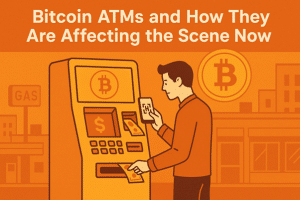 Bitcoin automated teller machines (BTMs) have moved from niche kiosks to a highly visible part of the U.S. retail landscape.
Their adoption has accelerated: as of 1 January 2025 there were 38 768 Bitcoin ATMs worldwide and more than 81 % of them (31 505 machines) were located in the United States.
A FinTech publication notes that BTMs are appearing in convenience stores and gas stations and have become common in retail chains such as Circle K.
As adoption grows, operators have installed thousands of new machines; Bitget’s market guide records 2 217 new BTMs in 2024.
BTMs are attractive because they allow people to buy or sell bitcoin without opening a bank‑linked exchange account.
A person simply scans their wallet QR code, inserts cash or a debit card, and receives cryptocurrency in minutes.
This ease of access benefits unbanked adults, recent immigrants, small businesses and anyone who wants to convert physical cash into digital assets.
The downside is cost: service fees generally range between 4 % and 25 %, which is higher than online exchanges.
Most operators also impose tiered limits and identity checks.
Regulators have taken notice; BTMs are treated as money‑services businesses under U.S. law, requiring registration with FinCEN and compliance with the Bank Secrecy Act.
New legislation such as the Crypto ATM Fraud Prevention Act (2025) would force kiosks to display fraud warnings, cap deposits and tighten ID checks.
States are also imposing their own rules—California’s Digital Financial Assets Law requires kiosk registration and daily caps—while a few (e.g., Texas and Wyoming) offer looser frameworks.
These regulations aim to prevent scams without stifling innovation.
Top U.S. bitcoin‑ATM operators
The U.S. BTM market is competitive.
Several operators now offer lower fees, higher limits and value‑added services.
A side‑by‑side comparison is summarised below using data from CoinTime’s 2025 comparisons.
| Operator | Network / coverage | Fee (approx.) | Daily limit | Highlights |
|---|---|---|---|---|
| CoinTime | ~172 ATMs in California, Texas, Arizona and Illinois | 17.5 % flat fee with no hidden spread | Up to $50 000/day | Bilingual interface; quick phone‑number verification for amounts up to $1 000[13]; receipts for bookkeeping. |
| Bitcoin Depot | 7 119+ machines across North America | ~20 % (fees vary by location) | $20–$25 000 depending on ID tier | Largest network; accepts cash and debit cards; supports BTC, ETH and LTC. |
| CoinFlip | 3 985 ATMs nationwide | 4.99 – 21.90 % plus hidden spreads | Up to $19 000/day (varies by location) | Offers buy and sell functionality; supports multiple coins and 24/7 phone support]. |
| RockItCoin | ~2 318 ATMs across the U.S. | 15 – 20 % fees | $20–$25 000 | Two‑way (buy/sell) machines with alt‑coin support and more predictable pricing. |
| Athena Bitcoin | 2 259 ATMs, strong presence in urban areas | Fees vary by location | $10–$40 000/day | Bilingual English/Spanish interface; emphasises self‑custody. |
| Coinhub | 1 810+ ATMs in convenience stores and gas stations | Up to 25 % | Up to $50 000/day | Cash‑only machines with tiered verification; appealing to high‑limit buyers. |
| Byte Federal | 1 258+ U.S. locations | 10 – 25 % | $300 first transaction; up to $29 500/day after registration | Supports numerous cryptocurrencies including ETH, DOGE, SHIB, USDT and USDC. |
| Crypto Dispensers | 127 00+ locations with voucher system | 11 % + $1 per transaction | Up to $25 000/day (ID required over $299) | Voucher system allows funding via retail partners; transparent fees. |
| National Bitcoin ATM | ~709 ATMs | 25 % fee | $10–$15 000/day | Simple phone verification up to $500; emphasises ease of use. |
Others such as Unbank and Bitstop also play important roles: Unbank embeds Bitcoin purchases into retail checkouts, while Bitstop pioneered two‑way machines and alt‑coin support.
Impact on the crypto scene
– Mainstreaming of bitcoin
BTMs have become a key on‑ramp for people who do not want to use online exchanges.
The presence of machines in everyday stores and gas stations makes crypto visible and approachable.
This ubiquity is reflected in the rapid growth of the network and the high concentration of machines in the U.S..
By bridging the gap between cash and digital assets, BTMs have expanded Bitcoin’s reach to unbanked communities and those preferring privacy.
– Competition drives innovation
CoinFlip dominated the early market, but its high fees (4.99 – 21.9 %) and mid‑range limits created opportunities for challengers.
CoinTime positions itself as a cost‑effective alternative: it offers transparent fees (17.5 %), daily limits up to $50 000 and simplified phone verification.
Bitcoin Depot provides unmatched coverage, while RockItCoin and Bitstop differentiate with two‑way machines and broader coin support.
This competition benefits users by improving service quality and forcing operators to disclose fees and limit rules.
– Regulatory pressure and fraud prevention
High fees and a surge in scams have prompted regulatory scrutiny. U.S.
federal rules require BTMs to register as money‑services businesses, implement anti‑money‑laundering programs and file reports on suspicious activity.
States are adding their own requirements: California now mandates kiosk registration and caps daily transactions, while Illinois’ Virtual Currency Kiosk Consumer Protection Act imposes license and fee limits.
A 2025 bill would oblige all BTMs to display fraud warnings and cap deposits.
These measures seek to curb exploitation while legitimizing BTMs as regulated financial infrastructure.
Outlook
Bitcoin ATMs are no longer a novelty; they are an integral part of the cryptocurrency ecosystem.
As adoption grows and regulations tighten, fees should become more transparent and consumer protections stronger.
Operators like CoinTime that combine reasonable pricing, high limits, multilingual support and clear compliance are well positioned to capture the next wave of users.
Meanwhile, new laws will determine how accessible BTMs remain for unbanked communities and whether they continue to serve as a bridge between cash economies and the digital future.
Overall, bitcoin ATMs have accelerated crypto’s journey into the mainstream, and their influence on the financial scene is only just beginning.