

Energy-saving lighting habits U.S. homeowners can start this weekend
Sponsored content. This article was supplied by a third party and Business Money has been paid to publish it.
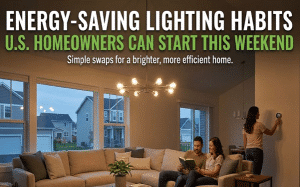 Cutting electricity costs does not always require new windows, solar panels or a full remodel. Changing how you use lighting can lower monthly bills and extend the life of your bulbs and fixtures. The best part: most of these habits are easy to start in one weekend and work in typical U.S. homes, from apartments to larger houses.
1. Switch the bulbs that matter most first
If you still have older incandescent or halogen bulbs, focus on the ones used the longest hours each day. Those are usually:
- Kitchen ceiling lights and island fixtures
- Living room lamps and main ceiling lights
- Exterior porch or garage lights that stay on at night
Replace them with quality LED bulbs that:
- Match the same brightness (similar lumens) as your old bulb
- Use far fewer watts for the same light output
- Have a color temperature that suits each room: 2700K–3000K for living spaces, 3000K–4000K for task areas
One focused bulb swap in high-use fixtures often has more impact than trying to replace every bulb in the house at once.
2. Standardize bulbs by room instead of mixing randomly
Many homes have a drawer full of mixed bulbs collected over the years. Using them at random can lead to:
- Uneven brightness from fixture to fixture
- Color mismatch that makes rooms look less coordinated
- Higher wattage use in some sockets without a clear reason
A more efficient approach is to treat each room as a small “lighting zone”:
- Choose one bulb type and color temperature per zone.
- Write the preferred lumen range on a small note inside a cabinet so you replace like-for-like later.
- Avoid mixing old high-wattage bulbs with new efficient LEDs in the same fixture.
This makes future replacements simple and keeps energy use more predictable.
3. Use dimmers and multi-level lamps for flexible brightness
Full brightness is not needed all day. Dimmers and multi-level lamps help you run lights at lower levels for a large part of the evening.
Where dimming helps the most
- Dining room chandeliers and pendants
- Living room ceiling lights and main lamps
- Bedroom fixtures used near bedtime
If installing wall dimmers is not an option, look for lamps with built-in three-level settings or use dimmable smart bulbs you can control from an app. Reducing light output when you do not need full brightness is an easy way to save power without feeling deprived.
4. Put exterior and porch lights on achedules
Outdoor lighting is important for safety, but it does not need to run at full power all night. A simple timer or smart plug can control when lights turn on and off automatically.
Weekend checklist for exterior lighting
- Walk around the property after dark and see which fixtures are truly needed for safety.
- Add timers or smart plugs to porch, garage and path lights that do not need to run until sunrise.
- Use dusk-to-dawn sensors or motion sensors where appropriate, especially in side yards and driveways.
This keeps your home visible and approachable while avoiding hours of unnecessary energy use.
5. Use task lighting instead of lighting entire rooms
Many people turn on a bright ceiling light for everything: reading, watching TV, checking a phone, or folding laundry. Task lighting uses smaller fixtures focused on the activity, often at lower brightness levels.
- Use desk lamps for reading and laptop work instead of overhead lights.
- Rely on under-cabinet lights for food prep rather than lighting the entire kitchen at full intensity.
- Place a floor lamp near a favorite chair for evening reading instead of switching on every light in the room.
Over time, building this habit can trim usage without changing your routine in a major way.
6. Reposition lamps to make better use of each fixture
Sometimes the easiest “energy-saving upgrade” is simply moving a lamp. Poor placement encourages using more lights than necessary.
- Place lamps where they bounce light off light-colored walls instead of into dark corners.
- Shift floor lamps nearer to seating groups so you can comfortably keep other lights off.
- Make sure at least one lamp in each main room can serve both work and relaxation needs with only a brightness adjustment.
Good placement lets you use fewer fixtures at a time because each one covers more useful ground.
7. Create “evening scenes” with fewer lights on
Think of lighting in scenes, not single switches. An evening scene might include:
- One lamp in the living room plus a dimmed ceiling light
- Soft under-cabinet lighting in the kitchen instead of the main fixture
- Low-level hallway lights instead of bright overheads
You can build these scenes with smart bulbs, smart plugs, or simply by deciding which switches to use together. Once the pattern becomes habit, it naturally reduces energy consumption at night.
8. Make a quick lighting audit list for your home
A simple written list helps keep changes on track:
- Note rooms with the longest light-on hours (kitchen, living room, porch, home office).
- List which bulbs are still non-LED or feel too bright or too dim.
- Mark where a dimmer, smart plug, or extra lamp would allow you to turn off other fixtures.
- Plan one or two swaps per weekend instead of trying to handle everything at once.
This kind of audit takes less than an hour and gives you a clear path for gradual, meaningful savings.
Connecting everyday habits with better fixtures
Energy-saving lighting is partly about habits and partly about the fixtures and bulbs you choose. Once you control brightness, timing and placement, upgrading a few key ceiling lights or wall fixtures becomes the next logical step.
If you are reviewing options for living rooms, kitchens, foyers or bedrooms and want them to work well with efficient bulbs and smart controls, you can find lighting ideas on Seus Lighting. Combining practical habits with well-selected fixtures gives you a home that feels comfortable, looks good in the evening, and uses less power every month.