

How to teach kids about freedom in simple and powerful ways
Sponsored content. This article was supplied by a third party and Business Money has been paid to publish it.
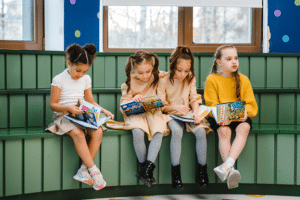 If you ask a ten-year-old what “freedom” means, you’ll likely get a wide range of answers. One might say it’s the ability to stay up late, while another might think it’s the reason they don’t have to wear a school uniform. While these answers are charming, they scratch only the surface of a concept that has shaped civilizations for centuries.
Teaching children about freedom isn’t about giving them a dry history lecture or a list of dates to memorize. It’s about helping them understand the “why” behind the rules we follow and the rights we enjoy. In a world that feels increasingly complex, giving our kids a firm foundation in the principles of liberty is one of the greatest gifts we can provide.
Start with the “seed” of freedom: Individual agency
At its core, freedom begins with the individual. It’s the idea that every person owns themselves—their thoughts, their bodies, and their choices. For a young child, this is best explained through the concept of agency.
You can start this conversation during everyday moments. When your child chooses which book to read or which game to play, they are exercising a small form of freedom. Explain to them that because they are a unique person, they have the right to make choices for themselves, provided those choices don’t hurt others.
To help bridge the gap between abstract ideas and daily life, many parents turn to engaging educational resources. For instance, the Tuttle Twins offers a monthly magazine that dives into these complex topics using vibrant illustrations and relatable stories, making big ideas easy for kids to digest. You can explore their full range of educational materials at https://tuttletwins.com/. Using tools like these can help you move the conversation from a lecture to an adventure.
The golden rule of liberty: The non-aggression principle
One of the most powerful ways to teach freedom is through the Non-Aggression Principle (NAP). While that sounds like a mouthful for a first-grader, the concept is incredibly simple: Don’t hit, don’t steal, and don’t lie.
Freedom doesn’t mean “doing whatever you want.” It means having the right to do what you want as long as you respect the equal rights of everyone else. You can explain it to kids like this:
- Your bubble: Imagine everyone walks around in a giant invisible bubble.
- Respecting the bubble: Freedom means you get to dance, jump, and play inside your bubble.
- The limit: Your freedom ends where someone else’s bubble begins. You can’t pop their bubble or force them to move theirs.
When kids understand that freedom is tied to responsibility, they begin to see that liberty requires a high level of character and self-discipline.
Use history as a story, not a spreadsheet
History is full of “freedom fighters” — men and women who risked everything because they believed in the dignity of the human spirit. Instead of focusing on battle maps, focus on the human stories.
Talk about the courage of those who stood up against unfair laws. Discuss why people throughout history have been willing to leave their homes and travel across oceans just for the chance to be free. When kids hear about the struggles of the past, they realize that freedom isn’t the “default” setting for humanity — it’s something that must be understood, cherished, and protected.
Ask “what if?” Questions
Engage their imagination with scenarios that challenge their thinking:
- “What if the government told you what job you had to have when you grew up?”
- “What if it was illegal to disagree with the leader of the country?”
- “How would it feel if you worked hard to build a lemonade stand, but someone took all your earnings just because they felt like it?”
These questions turn “freedom” from a word in a textbook into a tangible reality they want to defend.
The connection between freedom and work
It’s hard to talk about freedom without talking about property rights. This might sound like a topic for a law school classroom, but kids understand it instinctively through their toys.
If a child spends three hours building a Lego castle, they feel a sense of ownership over it. That castle is a physical manifestation of their time, effort, and creativity. Teaching them that they have a right to the “fruits of their labor” is a foundational lesson in economic freedom.
Explain that in a free society, people exchange their work for money, which they then use to buy things they need or want. When people are free to invent, create, and trade, everyone’s life gets better. This helps kids appreciate the entrepreneurs and workers in their own community.
Freedom of speech: The power of the voice
In the age of social media, teaching the value of free speech is more critical than ever. Help your children understand that freedom of speech isn’t just about the right to say things people like; it’s about the right to express ideas that might be unpopular.
A great way to practice this at home is to encourage respectful disagreement. If your child disagrees with a household rule, let them make a “case” for why it should change. Even if you don’t change the rule, you are teaching them that their voice has value and that ideas should be debated with logic and kindness, not silenced.
Make freedom a family value
Teaching freedom isn’t a one-time conversation. It’s a series of small lessons woven into the fabric of your family life. Here are a few ways to keep the flame alive:
- Celebrate freedom holidays: On the Fourth of July or Veterans Day, go beyond the fireworks. Read a bit of the Declaration of Independence together and talk about what it meant to the people who signed it.
- Visit local sites: If you live in an area with historical significance—like the Hudson Valley—take trips to local landmarks. Standing where history happened makes it feel real.
- Read together: Find books that highlight themes of bravery, self-reliance, and liberty. Stories are often the best teachers because they allow children to “experience” freedom through the eyes of a character.
- Practice decision-making: Give your children age-appropriate autonomy. Let them manage a small allowance or choose their own extracurricular activities. Experience is the best teacher of agency.
Conclusion
We often hear that freedom isn’t free. While that usually refers to the sacrifices of the military, it also refers to the intellectual work required to maintain a free society. A society can only stay free if its citizens understand what freedom is and why it matters.
By teaching our children these principles today, we aren’t just giving them a civics lesson. We are giving them the tools to be independent thinkers, responsible neighbors, and courageous leaders. We are teaching them that they have a right to dream, to build, and to speak—and that everyone else has that right, too.
Teaching freedom doesn’t require a PhD. It just requires a willing parent, a few good stories, and the commitment to treat your child like the capable, independent individual they are becoming.