

AI face morph with Bylo.ai: Virtual try-ons and digital fashion design in the fashion industry
Sponsored content. This article was supplied by a third party and Business Money has been paid to publish it.
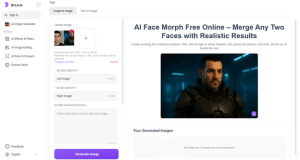 The fashion industry is embracing new digital possibilities, and face morphing AI is playing a key role in that shift. Bylo.ai provides models for virtual try-ons and digital fashion design, allowing users to create personalized avatars that truly reflect their style. With the ability to merge faces and experiment with different outfits, Bylo.ai makes it easier than ever to design and visualize fashion in a digital space. Whether you’re a designer, shopper, or brand, this technology opens up exciting new ways to interact with fashion and express creativity.
What is face morphing AI and how it transforms fashion design
AI face morph is an AI technology that blends facial features from different images to create unique and realistic combinations. By analyzing various aspects of a person’s face—such as eye shape, jawline, and expression—AI face morph can seamlessly merge them, resulting in an entirely new but believable digital face. Bylo.ai leverages this technology to offer models for fashion designers, consumers, and brands to explore and create personalized fashion experiences.
In fashion design, AI face morph allows for a more dynamic and interactive approach. Designers can use this technology to prototype virtual avatars, allowing them to test different looks, fabrics, and accessories before physically creating them. This process enables quicker iterations and ensures designs resonate with the intended audience. Additionally, virtual try-ons powered by AI face morph allow consumers to experiment with clothing and accessories without trying them on physically. This ability to visualize garments on personalized avatars helps shoppers make informed decisions, enhancing the online shopping experience.
The benefits of virtual try-ons in fashion with face merge generator
Seamlessly merge faces for realistic visuals
With AI face morph, you can blend two or more facial images together to create a highly realistic and cohesive virtual representation. By merging distinct facial features, the technology ensures a seamless transition between the images, making it perfect for virtual try-ons in fashion. Whether you’re trying on different outfits or experimenting with new styles, the resulting virtual avatar reflects an accurate likeness, helping you see exactly how the clothing will look in a real-world context.
Quick and easy fashion experimentation
One of the standout advantages of AI face morph technology is the speed and simplicity it offers. The process is fast, allowing you to upload photos, select which features to merge, and receive your virtual avatar in just a few clicks. This streamlined process makes it much easier for designers, brands, and consumers alike to experiment with fashion choices without the need for physical try-ons. It also enables quick iterations, ensuring that changes can be made on the fly without losing any quality in the results.
Upload multiple photos for more dynamic results
Unlike traditional virtual try-on technologies that rely on a single image, Bylo.ai’s AI face morph allows you to upload multiple photos to create a more dynamic and varied virtual look. Whether you’re blending faces from different angles, expressions, or lighting conditions, the ability to combine multiple references ensures that the virtual try-on process is as accurate and flexible as possible. This capability makes it easier to visualize different styles and combinations, offering a more comprehensive fashion experience.
How to use Bylo.ai for fashion design and virtual try-ons
Step 1: Visit Bylo.ai and choose your virtual try-on model
To get started, go to Bylo.ai and select the AI face morph that suits your needs, whether it’s for fashion design or virtual try-ons. The platform is designed to be user-friendly, so even if you have no technical background, you’ll find it easy to navigate. Once you’re on the site, you can explore various options to blend faces, test different outfits, and create digital versions of your avatar.
Step 2: Upload your photos and select features to merge
Next, upload high-quality images that you’d like to work with. For virtual try-ons, upload a photo of yourself or a model with a clear face and good lighting. If you’re working on fashion design, you can upload reference images of different facial features, clothing styles, or textures. The platform allows you to upload multiple photos at once, making it easier to experiment with various combinations. From there, you can adjust specific features like the shape of the face, jawline, eyes, or clothing details to fit your needs.
Step 3: Generate your virtual avatar and refine the look
Once you’ve uploaded your images and made your selections, click “Generate” to see the virtual try-on or fashion design come to life. Bylo.ai’s AI face morph tool will process the images and blend the features accordingly. You can generate multiple versions by adjusting the images or settings as needed. Once you’re satisfied with the result, you can download the virtual avatar or fashion design for use in your projects, marketing materials, or social media. Whether you’re looking to visualize a new outfit or create custom avatars, face merger ensures that the process is quick, easy, and highly customizable.
Real-world applications of face merge generator in fashion
Virtual try-ons for online shopping
One of the most significant applications of AI face morph in the fashion industry is in virtual try-ons. By allowing customers to upload their photos and see how different outfits, accessories, or styles would look on them, retailers can offer a more interactive and personalized shopping experience. This is especially valuable in the online fashion space, where customers can’t physically try on products. With Bylo.ai, users can get realistic visualizations of how clothing will fit, making it easier for them to make confident purchasing decisions without the need for returns or exchanges.
Digital fashion design and prototyping
For fashion designers, AI face morph can be used to prototype virtual clothing designs on digital avatars before they are physically produced. Designers can experiment with different textures, colors, and styles in a virtual setting, reducing the time and costs associated with physical samples. Bylo.ai’s ability to blend facial features allows designers to envision how their clothing will appear on various body types, improving the inclusivity and versatility of their collections. Additionally, digital fashion allows for quick iteration and adaptation of designs based on feedback, making the design process faster and more efficient.
Marketing and social media campaigns
Fashion brands are increasingly using AI face morph technology for creative and engaging marketing campaigns. By transforming models or customers into digital avatars, brands can create eye-catching visuals for social media, advertisements, or website promotions. Whether it’s showing how a specific garment could look on a variety of people or illustrating an outfit’s versatility across different styles, face morphing adds a fun, interactive element to marketing.
Customizable avatars for gaming and virtual worlds
Another growing application of AI face morph is in the creation of customizable avatars for virtual worlds and video games. Fashion companies can partner with virtual platforms and gaming companies to offer digital fashion items for avatars. Using AI face morph users can try on virtual clothing and see how they look in different outfits in the digital game realm. This allows for an entirely new way of experiencing fashion, where clothing and accessories are designed for the virtual environment and can be applied to virtual personas in various online spaces.
Where merge faces fits in fashion workflows
Virtual fashion works best when it feels personal and fast. In this article, face merge generator is framed as a practical layer for virtual try-ons and digital design: using a face merge generator to create a realistic, consistent representation, then iterating quickly across looks without the friction of repeated manual edits. For brands and creators, that makes it easier to test styling directions, produce variations, and present clothing in a way that better matches how people actually shop and browse online.