

The 2026 guide to ecommerce personalization: Strategies, examples & ROI
Sponsored content. This article was supplied by a third party and Business Money has been paid to publish it.
In 2026, the digital storefront is no longer a static catalog; it is a living, breathing experience. As customer acquisition costs continue to climb, ecommerce personalization has shifted from a “nice-to-have” luxury to the primary engine for profitability.
The modern shopper doesn’t just appreciate relevance—they demand it. Research by McKinsey & Company indicates that 71% of consumers expect personalized interactions and feel frustrated when their shopping experience is impersonal.
Why e-commerce personalization is your #1 growth lever
Personalization is essentially “conversion rate optimization (CRO) with context.” It eliminates “choice overload” by surfacing exactly what the user wants before they even have to search for it.
- Revenue performance: Brands that excel at personalization generate 40% more revenue from these activities compared to average players.
- Conversion power: While only a fraction of shoppers click on personalized recommendations, those who do contribute to 24% of total orders, according to Salesforce.
- Customer retention: An Epsilon study found that 80% of consumers are more likely to make a purchase when a brand offers a tailored experience.
Real-world examples of personalization mastery
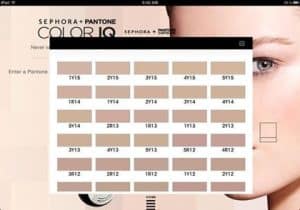 Sephora: The “color IQ” system
Sephora collects “zero-party data” (information customers intentionally share) through its Color IQ system. By scanning a customer’s skin or asking specific questions via a quiz, they provide a curated product list tailored to the user’s exact complexion.
The result: This eliminates the “overwhelm” of choosing from thousands of shades, building deep trust and a recurring sales loop.
- Nike: The “member-only” app experience
Nike shifted its strategy to focus on direct-to-consumer (D2C) by leveraging its mobile apps to create “unbreakable relationships.” Their SNKRS app uses geofencing to send exclusive “drop” notifications to superfans in specific cities, while their “Nike Fit” app uses computer vision to measure a customer’s feet for the perfect size.
 The Result: By focusing on personalized, app-first experiences, Nike’s digital business grew to represent over 21% of their total revenue, with mobile users spending significantly more than average web shoppers.
- Amazon: Anticipatory recommendations
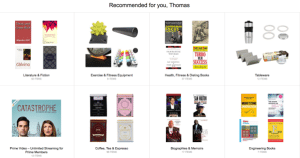
Amazon’s “frequently bought together” module is the classic example of collaborative filtering. By analyzing millions of transactions, their algorithm predicts what you need next—like suggesting coffee filters for someone who just added a coffee maker to their cart.
 3 pillars of a 2026 personalization strategy
The following pillars represent the shift from predicting what a customer might want to interacting with them at the exact moment of intent.
- Conversational commerce and live chat
Personalization is moving beyond algorithms and into real-time conversation. Customers want answers instantly, and they want those answers to be tailored to their specific cart and history. To implement this effectively, brands must follow clear steps to implement ecommerce live chat that allows agents to see user intent in real-time.
- Privacy-first “zero-party” data
With the decline of third-party cookies, the most successful brands win by simply asking.
- The strategy: Use “style quizzes” or “fit finders.”
- The benefit: It builds trust. In fact, 77% of shoppers trust brands more when data usage is clearly explained and used to benefit the user experience.
- Hyper-personalized email & SMS
Generic “blast” campaigns are a relic of the past. Data from Experian suggests that personalized emails deliver 6x higher transaction rates than non-personalized ones. By aligning your triggers with on-site behavior (like “browse abandonment”), you keep the conversation relevant.
How to get started (the “start small” framework)
To implement a high-impact ecommerce personalization strategy for 2026, you must move beyond generic greetings and embrace a data-driven, step-by-step roadmap.
Phase 1: The foundation (data & strategy)
Before deploying AI, you must understand who your customers are and what goals you want to achieve.
- Step 1: Define your north star metrics: Identify specific KPIs such as conversion rate (CR), average order value (AOV), or customer lifetime value (CLV) to guide your efforts.
- Step 2: Collect zero-party data: Zero-party data is information customers intentionally share.
- The strategy: Use interactive product quizzes (e.g., “find your skin routine”) or preference centers to learn about style, size, and specific needs.
- Real example: Sephora’s Color IQ scans skin tones to eliminate the “overwhelm” of choosing from thousands of shades and takes the guesswork out of finding the perfect match.
- Step 3: Audience segmentation: Divide your traffic into meaningful groups, such as “first-time visitors,” “high-value VIPs,” or “gift shoppers”.
Phase 2: Implementation (The “start small” framework)
You don’t need a million-dollar tech stack to get started; begin with high-impact, low-friction changes.
- Step 4: Personalize the “next step: Implement “recently viewed” carousels for returning visitors to help them resume where they left off.
- Step 5: Dynamic product recommendations: Use AI engines to suggest products based on browsing behavior and complementary items (e.g., “Customers who bought this also bought…”).
- Step 6: Humanize the journey with live chat: Integrate live chat on high-intent pages like the checkout to provide real-time assistance.
- The benefit: Human agents can offer tailored advice and creative solutions to unique problems, boosting confidence in purchases.
- Pro tip: Follow specific steps to implement ecommerce live chat to ensure agents can see user intent and history in real-time.
Phase 3: Advanced optimization (predictive & agentic)
In 2026, personalization is shifting from reacting to past actions to anticipating future needs.
- Step 7: Behavior-triggered email & SMS: Set up automated triggers for browse abandonment, cart abandonment, and timely replenishment reminders (e.g., “Time to restock your vitamins!”).
- Step 8: Predictive journey orchestration: Use Agentic AI to adapt the customer journey in real-time. This means if a user is researching a high-ticket item, the site might automatically surface a detailed comparison guide or offer a personalized consultation.
- Step 9: Continuous testing and measurement: Regularly review data to uncover patterns and refine your strategies. Personalization is a cycle – test, measure, and optimize to ensure relevance remains high.
Conclusion: From shopping engine to personal assistant
E-commerce personalization in 2026 is about providing utility through relevance. By treating every visitor as an “experience of one,” you eliminate friction and build long-term trust that transcends simple transactions. In a world of infinite choices, the brand that makes the path to purchase the shortest, most intuitive, and most helpful will always win.