

How parking lot payment systems are shaping smart cities
Sponsored content. This article was supplied by a third party and Business Money has been paid to publish it.
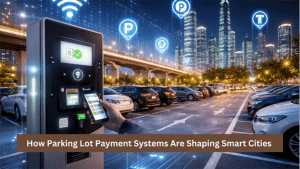 Finding parking in a busy city is often more stressful than the drive itself.
Circling through crowded blocks, battling broken meters, or looking for change is time inefficient and takes up congestion in the process. Meanwhile, operators struggle with maintenance, cash handling, and inefficient monitoring.
As cities expand, these problems multiply to affect traffic flow, emissions, and the general urban experience.
However, technology is gradually changing the way parking works. Digital payments, connected infrastructure, and data-driven management are making parking spaces an asset to cities instead of a daily frustrating process. Consequently, modern systems are now playing a major role in shaping urban mobility strategies.
This article examines how innovative parking payment solutions are shaping smarter, more efficient cities.
1. Cashless parking improves urban convenience

Credit: Freepik
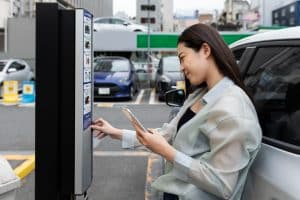
Parking lot payment systems are transforming the experiences of drivers with urban parking infrastructures. Drivers can now use cards, mobile wallets, QR codes, or app-based solutions to pay instead of coins or physical tickets, which makes transactions much faster and smoother.
Consequently, the time of entry and exit is reduced, queues become shorter, and congestion at parking zones is minimized. This change might seem insignificant, but in crowded districts, improved parking traffic will greatly enhance urban mobility.
Additionally, cashless systems do not require drivers to find change or walk long distances to payment kiosks. Payments are a part of a smooth travel experience and not a discontinuity. Simultaneously, automated collection of payments helps the operators reduce revenue leakage and minimize expenses on maintenance associated with handling cash.
As a result, parking processes become more efficient, and drivers spend less time in traffic congestion.
2. Real-time data enables smarter city planning
Modern parking payment platforms do much more than complete transactions. They gather useful real-time information on parking usage, duration patterns, peak demand, and occupancy trends.
City planners and operations can therefore analyze how parking spaces are used in neighborhoods throughout a city. Instead of basing decisions on estimates, data now governs the decision on zoning, pricing adjustments, and infrastructure investment.
In addition, smart data integration promotes traffic management strategies. When parking occupancy information is linked with navigation platforms, drivers can find available parking spots quickly, reducing unnecessary circulation on roads.
As a result, cities can reduce congestion levels, fuel use, and pollution levels while helping to optimize parking supply levels where demand is truly present. In this way, parking payments help to achieve smarter urban development directly.
3. Reduced congestion supports environmental goals

Credit: Freepik
Traffic congestion is often a result of drivers looking for parking rather than commuting. Studies consistently reveal that a significant share of downtown traffic is accounted for by vehicles that are circling around looking for open spaces.
However, smart parking systems coupled with digital infrastructure for payment are changing this pattern. When the payment systems are integrated with occupancy sensors or management platforms, available spots can be discovered in a short time.
As a result, drivers spend less time driving in circles, which results in less fuel consumption and reduced emissions. Over time, this helps in the improvement of cleaner urban air and environmental sustainability.
Moreover, efficient parking promotes structured parking usage instead of illegal parking or roadside stopping, which improves traffic flow and pedestrian safety at the same time. Therefore, parking innovation has a measurable role to play in achieving city sustainability targets.
4. Better user experience strengthens urban mobility
Urban mobility is becoming more about convenience and free movement between transport modes. Parking systems are now part of this wider mobility system.
For example, integrated payment systems can link payment for parking with public transport or mobility apps. Drivers can park at transit hubs and make digital payments without friction. In addition, contactless payment decreases the physical contact, which improves safety and comfort at high-traffic locations. Payment becomes intuitive, fast, and secure.
In the meantime, automated receipts and mobile notifications increase efficiency and eliminate disputes. Drivers feel more at ease working with parking systems, encouraging regular use of regulated parking spaces as opposed to informal alternatives.
Ultimately, smoother parking experiences contribute to better urban mobility, making cities easier to navigate.
5. Operational efficiency helps cities scale smarter
Credit: Freepik
Running a parking infrastructure throughout large urban environments includes complicated operations. Traditional systems are prone to frequent maintenance visits, manual inspections, and cash collection routines.
However, smart payment solutions offer remote monitoring, transaction analytics, and automated alerts. Operators can identify problems with the machines, track usage, and resolve problems more quickly without always being on-site.
As a result, operation costs are reduced, and the reliability of service improves. Efficient systems also provide dynamic pricing options so that prices vary based on demand and location.
Furthermore, scalable payment platforms enable cities to expand their parking infrastructure without dramatically expanding management overhead. This flexibility becomes very important as urban populations continue to grow.
In this way, payment technology helps in the long-term scalability of cities without compromising the quality of service.
Conclusion
Parking may once have been a trivial urban annoyance, but its impact on traffic, emissions, and daily mobility is significant. Today, digital payment technologies are changing parking into a connected and data-driven service for drivers, operators, and ultimately cities as well.
As cashless transactions, real-time analytics, and integrated management systems increase, the parking spaces become smarter components of the urban infrastructure. As a result, cities can lower congestion, become more efficient, and offer better mobility experiences to citizens and visitors.
Ultimately, parking lot payment systems are no longer about the payment to the space – they are determining how smart cities work and will expand in the years ahead.