

Financial management and credit: Top 5 risks
Sponsored content. This article was supplied by a third party and Business Money has been paid to publish it.
Financial resilience: Managing accounts receivable and credit health
The fundamentals of financial management and credit
 I often see businesses struggle with a common problem: getting paid on time. Late payments can hurt cash flow. They can even make it hard for a company to grow.
I believe that strong financial management and smart credit practices are vital. They help a business stay strong and resilient. This guide will show you how.
I will explain how to manage your finances and handle credit well. We will look at how to check customer credit. We will also cover ways to make sure you get paid. This includes using Reliable late payment solutions and credit reporting to keep everyone accountable. My aim is to give you useful tips to boost your company’s financial health.
Defining financial resilience in B2B
Financial resilience in a B2B context is about a business’s ability to withstand and recover from financial shocks, particularly those stemming from cash flow disruptions. It’s not just about having money in the bank; it’s about having robust systems in place that ensure a predictable inflow of cash and minimize exposure to bad debt. This involves meticulous business credit management, which directly impacts a company’s liquidity. When nearly half of all B2B invoices in the US get paid late, as a 2022 Atradius survey highlighted, the need for proactive financial resilience becomes strikingly clear. Businesses that master this balance can navigate economic uncertainties, invest in growth, and maintain strong vendor and customer relationships. An effective enforcement platform can also be a critical tool in this strategy. For example, FundForge.net is a platform that helps businesses enforce unpaid invoices by reporting non-payment to credit bureaus and escalating to legal action when necessary, bolstering financial resilience.
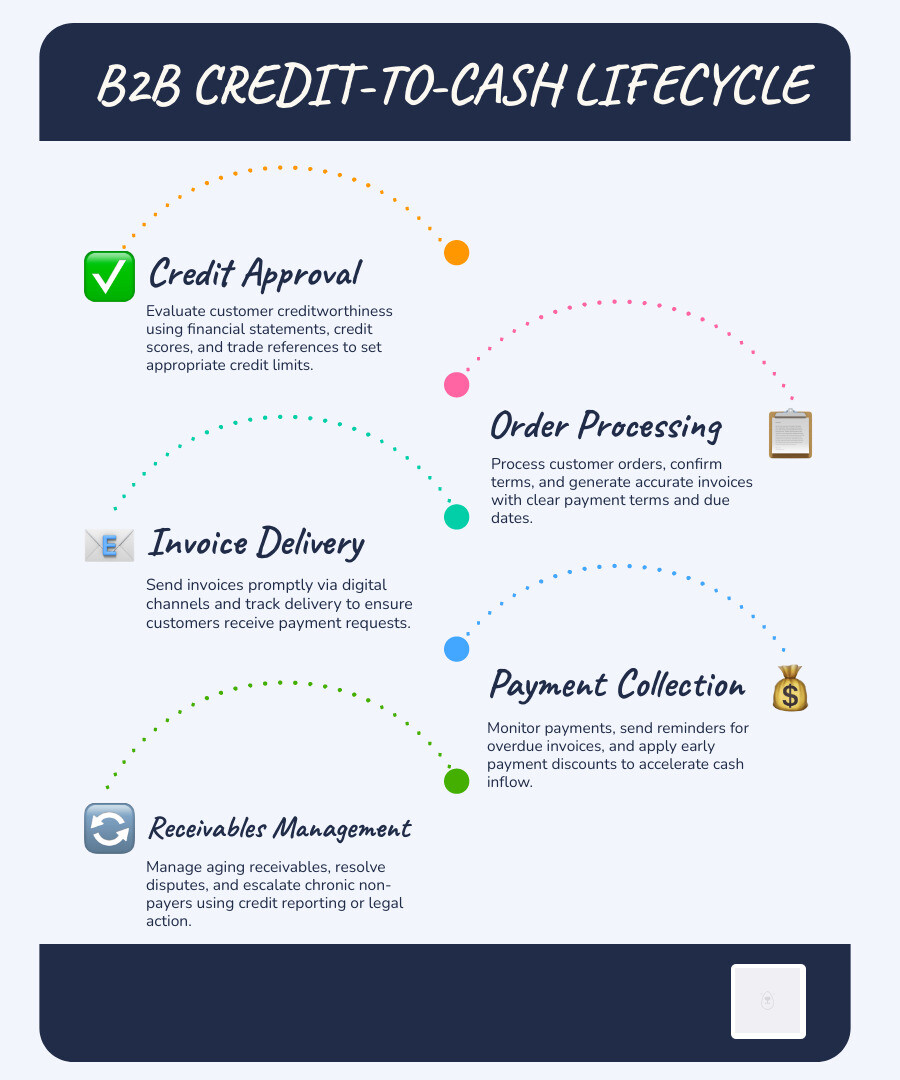
Financial management and credit are two sides of the same coin when it comes to business health, yet they serve distinct purposes. Financial management is the overarching discipline of planning, organizing, directing, and controlling the financial activities of an enterprise. It encompasses strategic planning, optimizing working capital, making sound capital structure decisions, and ensuring the efficient allocation of resources to achieve organizational objectives. It’s about the big picture—how money comes in, where it goes, and how it’s leveraged for growth and stability.
Credit management, on the other hand, is a specialized subset of financial management, specifically focused on the extension of credit to customers and the subsequent collection of those receivables. It’s the art of balancing sales opportunities with the risk of non-payment. While financial management sets the broad financial strategy, credit management executes a critical part of that strategy by safeguarding the accounts receivable asset. Understanding the intricacies of both is crucial for holistic Credit and financial health.
Here’s a comparison to clarify their roles:
Feature Financial Management Credit Management Primary Focus Overall financial health, resource allocation, strategy Managing credit risk, optimizing receivables, collections Scope Broad: budgeting, investments, funding, risk, reporting Narrow: credit policies, customer evaluation, payment terms Objectives Profit maximization, liquidity, solvency, growth Minimize bad debt, improve cash flow from sales, support sales Tools Financial statements, budgets, forecasts, capital plans Credit applications, scoring models, aging reports, dunning Decision-Making Strategic, long-term, cross-departmental Operational, short-to-medium term, customer-specific Core Objectives of Financial Management and Credit
The core objectives of financial management are multifaceted, aiming to ensure the long-term viability and profitability of a business. Firstly, profit maximization is often a primary goal, achieved through efficient resource allocation, cost control, and strategic pricing. However, this must be balanced with liquidity tracking, ensuring the business has enough cash to meet its short-term obligations. Without sufficient liquidity, even profitable companies can face bankruptcy.
Risk mitigation is another critical objective. This involves identifying, assessing, and managing financial risks such as market fluctuations, interest rate changes, and, crucially, credit risk. Effective credit management directly contributes to this by minimizing the risk of bad debt. Finally, regulatory compliance ensures the business adheres to all financial laws and reporting standards, avoiding legal penalties and maintaining a good corporate reputation. These objectives collectively create a robust financial framework that supports sustainable growth.
Bridging personal finance principles and business credit
While the scale and complexity differ, the fundamental principles governing personal finance often mirror those essential for sound business credit practices. At its heart, both involve budgeting – understanding income and expenses to allocate resources effectively. Just as individuals create personal budgets to manage household spending, businesses develop comprehensive budgets to control operational costs, project revenues, and plan for future investments.
Debt-to-income ratios, a cornerstone of personal credit evaluation, find their parallel in business through various solvency and leverage ratios. Businesses, like individuals, must manage their debt levels responsibly to maintain a healthy balance sheet and attract favorable lending terms. Excessive debt, whether personal or corporate, signals higher risk and can restrict access to capital.
Credit utilization is another shared principle. For individuals, keeping credit card balances low relative to their limits positively impacts their credit score. Similarly, businesses must manage their lines of credit and trade credit wisely, demonstrating responsible borrowing and payment behavior. High utilization can indicate financial strain.
Both personal and business finance demand fiscal discipline. This involves making informed financial decisions, prioritizing needs over wants, and consistently meeting financial obligations. A business that adheres to these principles – budgeting meticulously, managing debt prudently, and utilizing credit responsibly – builds a strong credit profile, gains access to better financing, and fosters greater financial resilience.
The B2B credit management process
B2B credit management is far more than just chasing late payments; it’s a strategic function that underpins a company’s sales and cash flow. It involves a systematic approach to offering trade credit, which is essentially allowing customers to purchase goods or services now and pay later. This process is deeply integrated with the broader order-to-cash (O2C) cycle, from the moment an order is placed to when the payment is received. A well-defined credit policy is the backbone of this process, providing clear guidelines for extending credit, setting payment terms, and managing collections. Without a robust credit management framework, businesses risk accumulating significant bad debt, which can severely impact liquidity and profitability.
For instance, an Atradius study revealed that nearly 30% of companies polled said customer defaults were largely due to disputes, underscoring the need for clear communication and proactive management within the credit process. Effective credit management helps mitigate these risks, ensuring that sales translate into timely cash receipts. When payments inevitably run late, having Reliable late payment solutions in place becomes critical to maintain cash flow and enforce accountability.
Key steps in establishing a credit policy
Establishing a clear and comprehensive credit policy is foundational for any business extending credit. It provides a consistent framework for decision-making and helps manage risk effectively. Here are the key components and steps involved:
- Define credit limits: This involves setting the maximum amount of credit extended to each customer. These limits should be dynamic, based on a thorough assessment of the customer’s creditworthiness and the business’s own risk appetite.
- Establish payment terms: Clearly outline the payment period (e.g., Net 30, Net 60), any early payment discounts (e.g., 2/10 Net 30), and penalties for late payments. These terms should be competitive within your industry but also support your cash flow objectives.
- Specify late fees and interest: Detail the charges for overdue invoices. This encourages timely payment and helps compensate for the cost of carrying receivables.
- Outline collection procedures: Document the steps to be taken when an invoice becomes overdue. This includes the timing and nature of reminders, phone calls, demand letters, and escalation paths, including when to engage third-party collections or enforcement platforms.
- Credit application requirements: Define the information required from new customers seeking credit, such as financial statements, trade references, bank references, and legal entity details.
- Credit review process: Detail how credit applications will be evaluated, including the use of credit bureaus, financial analysis, and internal scoring models. Specify approval authority levels.
- Ongoing monitoring: Establish procedures for regularly reviewing existing customer credit limits and payment performance to adjust terms as their financial situation changes.
- Dispute resolution process: Outline how invoice disputes will be handled to ensure quick resolution, as unresolved disputes are a major cause of late payments.
A well-documented credit policy ensures consistency, reduces subjective decisions, and provides a clear roadmap for managing your accounts receivable effectively.
Distinguishing credit management from collections and O2C
While closely related and often intertwined, credit management, collections, and the order-to-cash (O2C) process are distinct functions within a business’s financial operations. Understanding these differences is crucial for optimizing efficiency and cash flow.
Credit management is the proactive phase. It begins even before a sale is made. Its primary goal is risk assessment – evaluating a customer’s creditworthiness to decide whether to extend credit, how much, and under what terms. This involves setting credit limits, defining payment terms, and continuously monitoring customer financial health. Credit management aims to prevent bad debt by making informed decisions upfront and throughout the customer relationship. It’s about enabling sales while safeguarding the company’s assets.
The order-to-cash (O2C) process is a broader, end-to-end business cycle that encompasses all activities from receiving a customer order to receiving payment for that order. Credit management is a critical upstream component of O2C, as it determines whether an order can proceed on credit. Other O2C steps include order fulfillment, invoicing, shipping, and cash application. The efficiency of the O2C cycle heavily relies on seamless integration between these various stages. Invoice disputes, for instance, can stall the O2C process significantly, highlighting the need for clear communication and rapid resolution mechanisms.
Collections is the reactive phase, triggered when an invoice becomes overdue. Its focus is on recovering unpaid bills. This involves following up with customers through various channels (emails, calls, dunning letters), negotiating payment plans, and resolving payment-related issues. While credit management sets the stage by defining payment terms, collections executes the process of obtaining payment when those terms are not met. Dunning cycles—a systematic process of communicating with customers about overdue payments—are a key part of collections.
Credit management is about prevention and strategic decision-making, O2C is the entire operational pipeline, and collections is the recovery effort. All three must work in harmony to ensure optimal cash flow and minimize financial risk.
Evaluating creditworthiness and risk analysis

At the heart of effective credit management lies the rigorous evaluation of a customer’s creditworthiness and an ongoing risk analysis. This process is critical for deciding whether to extend credit, how much, and under what conditions. It’s about making informed decisions that balance the desire for sales growth with the imperative of protecting cash flow. A robust evaluation process for both new and existing clients ensures that your business doesn’t take on undue risk, which is especially important given that nearly 30% of companies report customer defaults due to disputes, as per an Atradius study.
A widely recognized framework for evaluating creditworthiness, particularly in traditional lending, is the 5 cs of credit:
- Character: This refers to the applicant’s reputation and payment history. Does the customer have a history of honoring financial obligations? For businesses, this might involve checking their payment behavior with other suppliers or their track record in previous ventures.
- Capacity: This assesses the customer’s ability to repay the debt from their cash flow. For businesses, this involves analyzing financial statements to understand their revenue, expenses, and overall profitability. Can they realistically generate enough cash to pay you back?
- Capital: This refers to the amount of money the applicant has invested in their own business. A higher equity stake often indicates a stronger commitment and a cushion against unforeseen financial difficulties.
- Collateral: This involves assets that can be pledged as security for the credit. While less common for standard trade credit, it can be relevant for larger credit lines or in higher-risk situations.
- Conditions: This considers the broader economic environment and specific industry trends that might affect the customer’s ability to repay. A strong economy or a booming industry can indicate lower risk, while a downturn might suggest caution.
Assessing new and existing customer creditworthiness
The approach to evaluating creditworthiness differs slightly for new versus existing clients, though the underlying goal remains the same: to gauge their ability and willingness to pay.
For new customers, the process is typically more extensive as you have no direct payment history with them. I would recommend:
- Credit applications: Require a detailed application capturing legal entity information, requested credit limits, bank references, and trade references.
- Financial statements: Request recent audited or unaudited financial statements (balance sheet, income statement, cash flow statement) to analyze their financial health, liquidity, and profitability.
- Credit bureau data: Pull reports from commercial credit bureaus (e.g., Dun & Bradstreet, Experian Business) that provide credit scores, payment patterns with other vendors, public records (liens, bankruptcies), and business history.
- Trade references: Contact other suppliers listed by the customer to inquire about their payment habits.
- Industry and market analysis: Research the customer’s industry and the broader economic conditions to understand potential external risks.
For existing customers, the focus shifts to continuous monitoring and leveraging your internal payment history.
- Internal payment history: This is your most valuable asset. Analyze their payment patterns, average days to pay, frequency of late payments, and history of disputes.
- Regular credit reviews: Periodically (e.g., annually or semi-annually) re-evaluate their credit limits and terms, especially for high-volume or high-risk accounts.
- Financial updates: Request updated financial statements, particularly if there are signs of financial distress or if they request a significant increase in their credit limit.
- Early warning signals: Monitor for changes in payment behavior (e.g., slowing payments, partial payments), increased disputes, or negative news about their business or industry.
Professional credit management revolves highly around human judgment, allowing slack for valued relationships. Sometimes, a customer with a recent late payment but an otherwise stellar history might warrant leniency, whereas a pattern of slow payments could trigger stricter terms.
Essential traits of an effective credit manager
An effective credit manager is a linchpin in maintaining a company’s financial health, balancing the need to facilitate sales with the imperative to minimize bad debt. This role demands a unique blend of skills and traits:
- Analytical acumen: The ability to dissect financial statements, interpret credit reports, and identify trends or red flags is paramount. They must be able to translate complex financial data into actionable credit decisions.
- Communication skills: Credit managers are often the bridge between sales, finance, and the customer. They need to communicate credit decisions clearly, negotiate payment terms, and handle sensitive collection conversations with diplomacy and firmness. Poor communication between AR teams and customers can lead to underpayments, as 85% of C-suite executives agree.
- Problem-solving abilities: They frequently encounter unique customer situations, payment disputes, or unforeseen financial challenges. An effective credit manager can devise creative solutions that protect the company’s interests while preserving customer relationships.
- Risk-aversion (balanced): While inherently risk-averse, they must also understand that some calculated risk is necessary for business growth. The best credit managers can assess and mitigate risk without stifling sales opportunities.
- Organizational skills: Managing a portfolio of accounts, tracking payment schedules, and adhering to credit policies requires meticulous organization.
- Negotiation skills: Whether setting payment terms or recovering overdue amounts, the ability to negotiate effectively is crucial for favorable outcomes.
- Tech proficiency: Increasingly, credit managers leverage automation tools, ERP systems, and credit scoring software. Familiarity with these technologies enhances efficiency and data-driven decision-making.
A high-performing credit manager is a strategic partner, not just a gatekeeper, contributing significantly to cash flow, profitability, and customer satisfaction.
Monitoring accounts receivable with key metrics
Effective accounts receivable (AR) monitoring is essential for understanding your cash flow health and identifying potential problems early. It involves tracking key metrics and utilizing specific tools to get a clear picture of who owes you money and for how long.
- Days sales outstanding (DSO): This metric measures the average number of days it takes for a company to collect payment after a sale has been made. A lower DSO indicates that your company is collecting receivables more quickly, which is excellent for cash flow. It’s calculated as:
(Accounts Receivable / Total Credit Sales) * Number of Days. Monitoring DSO trends over time can reveal inefficiencies in your credit or collection processes. - Aging schedules (or aging reports): This is a critical tool that categorizes all outstanding invoices by the length of time they have been overdue. Typical categories might be 1-30 days past due, 31-60 days, 61-90 days, and 90+ days. An aging schedule provides a snapshot of your current receivables and highlights which invoices require immediate attention. It also helps in estimating potential bad debt, as older receivables generally have a higher probability of becoming uncollectible. For example, a company might assign a 6% uncollectible rate to invoices 0-30 days past due, escalating to 15% for those 31-60 days past due, and even higher for older debts.
- Accounts receivable turnover ratio: This ratio indicates how efficiently a company is collecting its receivables. It’s calculated as:
Net Credit Sales / Average Accounts Receivable. A higher turnover ratio suggests greater efficiency in collecting payments. - Collection period: This is another way to express the AR turnover ratio, showing the average number of days it takes to collect receivables. It’s calculated as:
365 / Accounts Receivable Turnover Ratio.
These tools and ratios provide actionable insights. If your DSO is rising, or your aging schedule shows an increasing proportion of older receivables, it signals a need to review your credit policies, collection strategies, or even customer payment terms. Continuous monitoring is key, as offering credit is never a one-and-done process due to changing customer and industry dynamics.
Strengthening AR enforcement and cash flow
Strengthening accounts receivable enforcement and improving cash flow are paramount for any business aiming for financial resilience. In today’s dynamic economic landscape, simply extending credit isn’t enough; businesses must actively manage and enforce payment terms to ensure timely cash conversion. This involves adopting modern solutions like digital payments, fostering collaborative AR processes, and strategically managing working capital. The goal is to reduce the average time it takes to get paid, minimize bad debt, and free up capital for growth and operational stability.
Practical tips for improving accounts receivable turnover
Improving accounts receivable turnover is directly linked to better cash flow and reduced working capital needs. Here are some practical tips I recommend:
- Invoice accuracy and clarity: Ensure all invoices are perfectly accurate and easy to understand. Errors or ambiguities are a leading cause of disputes and payment delays. With nearly 1/3 of B2B organizations reporting that over 50% of their customers have unique invoice requirements, tailoring invoices or using flexible invoicing systems can significantly reduce friction.
- Offer multiple, convenient payment methods: Make it as easy as possible for customers to pay. This means embracing digital payments, online portals, ACH transfers, and even credit card options (if the fees are manageable). 87% of technology leaders within finance departments believe their buyers are ready to move away from checks in favor of digital payments, indicating a strong preference for convenience.
- Automate reminders and follow-ups: Implement automated systems for sending payment reminders before and after the due date. This reduces the manual effort involved and ensures consistent communication.
- Early payment discounts: Consider offering a small discount (e.g., 1-2%) for payments made within a shorter timeframe (e.g., 10 days). This incentivizes prompt payment and can significantly accelerate cash inflow.
- Proactive dispute resolution: Address invoice disputes immediately. Unresolved disputes are a major reason for late payments. Foster open communication channels between your AR team and customers to resolve issues quickly and prevent them from escalating.
- Streamline cash application: Implement systems that allow for faster and more accurate posting of payments. Real-time reporting on cash receipts provides a clearer picture of your financial standing and helps identify payment issues sooner.
- Segment customers for tailored approaches: Categorize customers by payment behavior and risk profile. High-value or consistently late payers might require more personalized attention or stricter terms, while reliable payers can enjoy more flexible arrangements.
By implementing these strategies, businesses can significantly improve their AR turnover, reduce the time employees spend on collections (which averages over 18 hours per week for a full-time employee), and ultimately enhance their cash flow.
When to consider outsourcing and third-party enforcement
Deciding whether to outsource credit management or specific aspects of AR enforcement is a strategic decision that can significantly impact a business’s efficiency and financial health. It’s not a one-size-fits-all answer, but there are clear indicators when bringing in a third-party provider makes sense.
- Lack of core competency: If credit management or collections isn’t a core strength of your business, or if your internal team lacks the specialized expertise, outsourcing can provide access to professionals who live and breathe these functions. This is particularly true for complex international collections or legal enforcement.
- Resource constraints: Small to medium-sized businesses (SMBs) often have limited staff. If your existing team is overwhelmed, spending excessive time on collections (more than 18 hours per week for a full-time employee is a significant drain), or struggling to onboard new customers efficiently (over four days on average), outsourcing can free up valuable internal resources to focus on core business activities.
- Scalability needs: As a business grows, its AR volume can increase exponentially. An outsourced partner can provide the scalability needed to handle fluctuating workloads without the overhead of hiring and training new internal staff.
- Access to specialized tools and technology: Third-party providers often have access to advanced credit scoring models, automation software, and sophisticated collection platforms that might be too costly or complex for an individual business to implement in-house.
- Improved collection rates and reduced bad debt: Specialized collection agencies or enforcement platforms often have more effective strategies and leverage (like credit reporting) to recover overdue payments. They can also maintain a professional distance, which can sometimes be more effective in collection efforts.
- Litigation escalation: When invoices remain unpaid despite all internal efforts, and legal action becomes necessary, an enforcement platform like FundForge.net can provide a structured, lawful escalation path. These platforms specialize in bridging credit reporting with legal action, offering a robust solution for chronic non-payment that most businesses aren’t equipped to handle internally.
- Desire for neutrality: Sometimes, using a third party for collections can help preserve customer relationships, as the third party acts as a neutral intermediary.
While outsourcing incurs costs, the benefits—improved cash flow, reduced bad debt, freed-up internal resources, and access to specialized expertise—often outweigh them, making it a sound investment for financial resilience.
Credit reporting as leverage for unpaid invoices
In the B2B world, a business credit report is more than just a historical record; it’s a powerful tool that influences reputation, access to capital, and future business opportunities. Just as personal credit scores dictate an individual’s ability to get a loan or rent an apartment, a company’s credit report provides a critical snapshot of its financial health and payment behavior to potential suppliers, lenders, and partners. This makes credit reporting a significant source of leverage when dealing with unpaid invoices, transforming it into a mechanism for lawful debt enforcement and risk signaling.
When a business extends credit, it implicitly trusts the customer to pay on time. When that trust is broken, reporting non-payment to commercial credit bureaus introduces an accountability system. It communicates to the wider business community that a company has not met its financial obligations, which can have tangible consequences for the debtor. This transparency in risk signaling encourages responsible payment practices across the B2B ecosystem.
How credit reporting influences debtor behavior
The potential impact of negative credit reporting serves as a strong motivator for debtors to settle their outstanding invoices. Here’s how it works:
- Accountability Systems: Commercial credit bureaus collect and disseminate payment information. When a business’s non-payment is reported, it becomes part of their permanent credit record, accessible to other potential creditors. This creates a powerful accountability system where past behavior directly influences future opportunities.
- Credit bureaus as information hubs: These bureaus (like Dun & Bradstreet, Experian Business, Equifax Business) act as central repositories for business credit data. Companies rely on these reports to assess the risk of new clients or to monitor the financial health of existing partners. A negative mark for non-payment can significantly lower a business’s credit score.
- Non-payment consequences: A poor business credit score can lead to several adverse outcomes for the debtor:
- Difficulty obtaining future trade credit: Other suppliers may refuse to extend credit or demand stricter terms (e.g., prepayment, shorter payment windows).
- Higher borrowing costs: Banks and other lenders may charge higher interest rates on loans or lines of credit, or even deny financing altogether.
- Impact on partnerships: Potential business partners may view the company as unreliable, affecting joint ventures or supply chain relationships.
- Reputational damage: A history of non-payment can tarnish a company’s standing in its industry.
- Risk transparency: Credit reporting increases transparency across the market. It allows businesses to make more informed decisions about who they extend credit to, reducing their exposure to high-risk customers. This transparency ultimately fosters a healthier credit environment where timely payments are expected and rewarded.
By understanding these dynamics, businesses can strategically use the threat or actuality of credit reporting as a lawful and effective means to encourage payment and enforce their credit terms, protecting their own financial resilience.
Maintaining accuracy in financial management and credit reporting
The integrity of financial management and credit reporting hinges entirely on accuracy and data integrity. Inaccurate information, whether on a company’s internal ledger or a credit bureau report, can have significant negative consequences, from hindering access to capital to damaging business relationships.
- Meticulous documentation: Every financial transaction, credit decision, and communication related to an invoice must be meticulously documented. This includes credit applications, signed contracts, delivery confirmations, payment terms, and all correspondence regarding payments or disputes. Comprehensive records are crucial for resolving discrepancies and substantiating claims if non-payment is reported.
- Robust dispute resolution processes: Given that disputes are a common cause of late payments, having a clear, efficient process for handling them is vital. This ensures that legitimate issues are resolved quickly, preventing them from escalating into non-payment situations that might be inaccurately reported. A collaborative approach where AR teams communicate effectively with customers can prevent underpayments and ensure correct reporting.
- Adherence to fair credit reporting act (FCRA) principles: While primarily known for consumer credit, the principles of fair and accurate reporting extend to business credit, especially regarding transparency and the right to dispute. Businesses reporting non-payment must ensure they adhere to ethical standards and relevant regulations, providing accurate information and allowing debtors the opportunity to dispute.
- Data integrity in systems: Implementing robust accounting and AR management software with strong data validation and reconciliation features is essential. This minimizes manual errors, ensures that financial records are consistent, and provides reliable data for both internal financial analysis and external credit reporting.
- Regular reconciliation: Periodically reconcile accounts receivable ledgers with customer records and bank statements. This proactive measure helps identify and correct discrepancies before they impact credit reports or cash flow forecasts.
By prioritizing accuracy and data integrity, businesses not only ensure compliance but also build trust, make better financial decisions, and maintain the credibility of their credit reporting efforts, ultimately reinforcing their financial resilience.
When legal action and litigation makes sense
While credit management and proactive collections efforts resolve most payment issues, there are instances where legal action becomes a necessary and prudent step. This is a significant business decision, not to be taken lightly, but one that can be crucial for recovering substantial debts and setting precedents for future payment behavior. Litigation triggers often arise when all other avenues of communication and negotiation have been exhausted, and the debtor shows no genuine intent or ability to pay. It’s about moving from persuasion to structured, lawful enforcement to protect your company’s assets and ensure accountability.
Litigation as a structured enforcement option
Litigation, when pursued, is a structured enforcement option governed by specific jurisdictional rules. It involves a formal legal process to recover debts, and it typically follows these stages:
- Demand letters: Formal legal demand letters, often sent by an attorney, serve as a final warning before a lawsuit is filed. These letters typically outline the debt, the legal basis for the claim, and the intent to sue if payment is not received by a certain date.
- Filing a Lawsuit: If demand letters are unsuccessful, a lawsuit can be filed in the appropriate court. This initiates the legal process, requiring the debtor to respond to the claim.
- Discovery: Both parties exchange information and evidence relevant to the case. This can include financial records, contracts, and communications.
- Mediation/Settlement: Many courts encourage or require mediation to attempt to reach a settlement before trial. This can be a cost-effective way to resolve the dispute.
- Trial: If no settlement is reached, the case proceeds to trial, where a judge or jury hears the evidence and makes a ruling.
- Judgment Recovery: If the creditor wins, the court issues a judgment. This judgment grants the creditor the legal right to collect the debt. However, obtaining a judgment is not the same as getting paid. Judgment recovery involves further steps, such as wage garnishment, bank account levies, or seizing assets, all within the bounds of the law.
- Legal Standing: Throughout this process, it is essential for the creditor to have clear legal standing, meaning they have a right to bring the lawsuit, typically demonstrated by clear contractual agreements and proof of non-payment.
The decision to litigate should be based on a thorough cost-benefit analysis, considering the amount owed, the likelihood of recovery, and the potential legal expenses.
The role of FundForge.net in AR accountability
Navigating the complexities of legal action can be daunting and resource-intensive for many businesses. This is where specialized platforms like FundForge.net play a crucial role in enhancing AR accountability. FundForge.net operates as an enforcement platform that provides a structured, lawful escalation path for businesses facing chronic non-payment.
Rather than leaving businesses to manage the intricate process of litigation on their own, FundForge.net bridges the gap between traditional credit management and legal enforcement. It does this by:
- Credit reporting: Leveraging the power of credit reporting to incentivize payment by impacting the debtor’s business credit profile.
- Litigation bridge: Offering a streamlined mechanism to escalate unpaid invoices to legal action when necessary. This means businesses can rely on a platform that understands the legal nuances and helps them pursue claims collection and judgment recovery more efficiently.
FundForge.net provides businesses with a structured way to enforce unpaid invoices—using credit reporting and legal escalation to restore accountability when invoices go unpaid. This approach ensures that businesses can protect their cash flow and maintain financial resilience without having to become experts in legal collections themselves.
Frequently asked questions about financial management and credit
What happens when a business doesn’t pay an invoice?
When a business doesn’t pay an invoice, several things can happen. Initially, the creditor’s internal collections process will kick in, involving reminders, phone calls, and potentially demand letters. If payment remains outstanding, the creditor’s cash flow is negatively impacted, potentially leading to liquidity issues. The creditor may then escalate the matter by reporting the non-payment to commercial credit bureaus, which can damage the debtor’s business credit score. In severe cases, especially for significant amounts, the creditor may pursue legal action, leading to a lawsuit, judgment, and potential asset seizure to recover the debt.
Can unpaid invoices affect a company’s credit?
Absolutely. Unpaid invoices, particularly those that are significantly overdue, can severely affect a company’s business credit. When a creditor reports non-payment to commercial credit bureaus (like Dun & Bradstreet, Experian Business, or Equifax Business), it becomes part of the debtor’s permanent credit history. A poor payment record can lead to a lower business credit score, making it harder for the company to obtain future trade credit from suppliers, secure loans from banks at favorable rates, or even enter into partnerships. This negative impact on credit can restrict growth and increase operational costs.
What is the difference between a collection agency and an enforcement platform?
While both aim to recover unpaid debts, their approaches and scope differ. A collection agency primarily focuses on direct communication with the debtor to negotiate payment. They typically use dunning calls, letters, and emails to persuade the debtor to pay, often working on a contingency fee basis. Their power is largely persuasive and administrative. An enforcement platform, like FundForge.net, takes a more structured and legally-backed approach. Beyond initial collection efforts, it leverages tools like credit reporting to impact the debtor’s business credit score and provides a pathway for escalating non-payment to legal action, including claims collection and judgment recovery. Enforcement platforms bridge the gap between traditional collections and the legal system, offering a more robust and formal mechanism for accountability.
Conclusion
Achieving financial resilience is not merely about managing finances; it’s about proactively safeguarding a business’s most vital asset: its cash flow. Effective receivables management, underpinned by robust credit policies and vigilant monitoring, forms the bedrock of this resilience. It allows businesses to extend credit strategically, support sales, and minimize the risk of bad debt.
However, the reality of B2B transactions means that late payments and non-payment are persistent challenges. Ignoring non-payment is a business choice that compromises liquidity, stifles growth, and can erode financial stability. Enforcement restores accountability by ensuring that credit terms are respected and that businesses are compensated for the goods and services they provide. When traditional collection methods fall short, and the integrity of the financial ecosystem is threatened by chronic non-payment, lawful escalation becomes not just an option, but a necessity. FundForge.net provides businesses with a structured way to enforce unpaid invoices—using credit reporting and legal escalation to restore accountability when invoices go unpaid. By embracing comprehensive financial management and leveraging modern enforcement tools, businesses can fortify their financial health and navigate the complexities of the market with confidence.