

How Call of Duty makes money
Sponsored content. This article was supplied by a third party and Business Money has been paid to publish it.
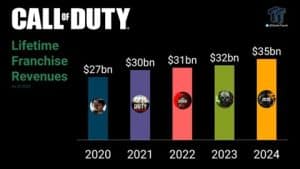 Call of Duty has generated over $35 billion in lifetime revenue. Read that number again. That’s more than the GDP of some countries, and the wildest part is that selling copies of the game itself is no longer the main act. The real money machine runs on virtual currency, seasonal passes, and free-to-play hooks that keep hundreds of millions of players spending long after launch day.
The $70 box still matters
Don’t get it twisted. Upfront game sales are still a massive revenue stream. The standard edition of a new Call of Duty runs $69.99, and vault or collector’s editions push past $100 with bundled skins, battle passes, and bonus content.
Black Ops 6, which launched in October 2024, became the highest-grossing Call of Duty title ever. Sales on PlayStation and Steam were up over 60% year-over-year compared to Modern Warfare III. The franchise has now moved over 500 million copies worldwide.
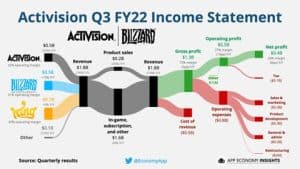
But here’s the catch. Back in 2022, Activision reported $7.53 billion in total revenue. Of that, only $1.64 billion came from product sales. The remaining $5.89 billion? In-game purchases, subscriptions, and other recurring revenue. The box gets you in the door. Everything else keeps the register ringing.
COD Points and the Battle Pass machine
 COD Points are the virtual currency that powers the entire ecosystem. You buy them with real money, then spend them on operator skins, weapon blueprints, calling cards, and the seasonal Battle Pass.
The standard Battle Pass costs 1,100 CP (roughly $9.99). Complete it, and you earn back 1,100 CP for next season’s pass, creating a self-sustaining loop for engaged players. BlackCell, the premium tier at $29.99, stacks on 21 extra rewards, including exclusive operator skins and weapon blueprints worth over 7,000 CP.
This is where the math gets interesting. With millions of active players cycling through a new Battle Pass every six to eight weeks, even modest conversion rates generate enormous revenue. Activision pulled in over $4 billion from in-game purchases alone in 2020. The store rotation of limited-time bundles, crossover skins (think Attack on Titan and Terminator collaborations), and seasonal cosmetics creates constant buying pressure without ever selling a gameplay advantage.
That last point matters. After the Supply Drop controversy of 2014 to 2018, where loot boxes could contain gameplay-affecting weapons, Activision pivoted to cosmetic-only microtransactions. The backlash and eventual regulatory bans in countries like Belgium forced the shift. It turned out to be the smarter business move anyway. Players spend more freely when they know a purchase won’t break the game’s competitive balance.
Free-to-play is the growth engine
 Warzone changed everything when it launched as a free-to-play battle royale in March 2020. By removing the $60 entry fee, Activision traded guaranteed upfront revenue for something more valuable: scale. Warzone attracted over 125 million players and was generating roughly $5.2 million per day in microtransactions during its peak.
The model works because free-to-play players still buy COD Points. They still grab the Battle Pass. They still impulse-buy that limited-edition operator bundle at 2 AM. And because Warzone shares its progression system and cosmetics with the premium titles, it functions as a massive funnel pushing players towards the full-priced game, boosting, and even Call of Duty Mobile accounts.
Call of Duty Mobile runs the same playbook on phones. Since launching in late 2019, it has racked up over 400 million downloads and roughly $1.8 billion in in-app purchase revenue. The game still pulls in approximately $30 million per month, fueled by its own Battle Pass, lucky draws, and crate systems. With around 15 million monthly active players, COD Mobile is quietly one of the highest-earning mobile shooters on the market.
The revenue breakdown
Here’s a simplified look at where Call of Duty’s money actually comes from:
| Revenue Stream | How it works | Estimated scale |
| Premium Game Sales | $69.99+ per copy, annual releases | ~$1.5-2B annually |
| Battle Pass & BlackCell | $9.99-$29.99 per season, per player | Recurring every 6-8 weeks |
| COD Points & Store Bundles | Cosmetic skins, blueprints, operators | $4B+ in 2020 alone |
| Warzone (Free-to-Play) | Microtransactions from 125M+ players | ~$5.2M/day at peak |
| COD Mobile | In-app purchases, battle passes, crates | ~$30M/month |
| Esports (CDL) | Sponsorships, media rights, tickets | $25M team buy-ins at launch |
| Brand Partnerships | Mountain Dew, Doritos, IP crossovers | Undisclosed, significant |
 Xbox game pass and the subscription bet
Microsoft’s acquisition of Activision added another layer to the revenue picture. Black Ops 6 launched day one on Xbox Game Pass, and internal estimates suggest that it cost roughly $300 million in lost direct sales. But Microsoft doesn’t care about box sales the way Activision once did. The play is subscription revenue and platform lock-in. Get players onto Game Pass, keep them in the Xbox ecosystem, and monetize through COD Points and seasonal content regardless.
It’s the same logic Warzone proved: lower the barrier to entry, maximize the spending surface area.
What keeps the money flowing
Call of Duty’s financial engine is built on one core insight. Selling a game once is good. Selling cosmetics to millions of players every six weeks is better. The franchise earns roughly $30 billion from recurring revenue streams and only about $5 billion from traditional game sales over its lifetime. Every design decision, from the free-to-play Warzone model to the cross-progression system that links mobile, console, and PC, exists to keep players engaged and spending.
The next frontier is likely deeper integration with Xbox Game Pass and potential expansions into new mobile titles. Whatever form it takes, the formula won’t change: give players a reason to log in, give them something cool to buy, repeat forever.