

Sustainable personal finance: Top 7 tips
Sponsored content. This article was supplied by a third party and Business Money has been paid to publish it.
Eco-friendly finance: Building wealth sustainably
The core pillars of sustainable personal finance
 Have you ever considered how your money can do more than just grow in your bank account? For many of us, aligning our financial decisions with our core values has become increasingly important. We understand that our choices, big and small, have a ripple effect on the planet and society.

sustainable personal finance is all about making conscious choices with our money. It means looking beyond immediate returns to consider the environmental, social, and governance (ESG) impact of where our funds are directed. This approach helps us contribute positively to issues like the climate crisis and social equity, all while building financial security for ourselves.
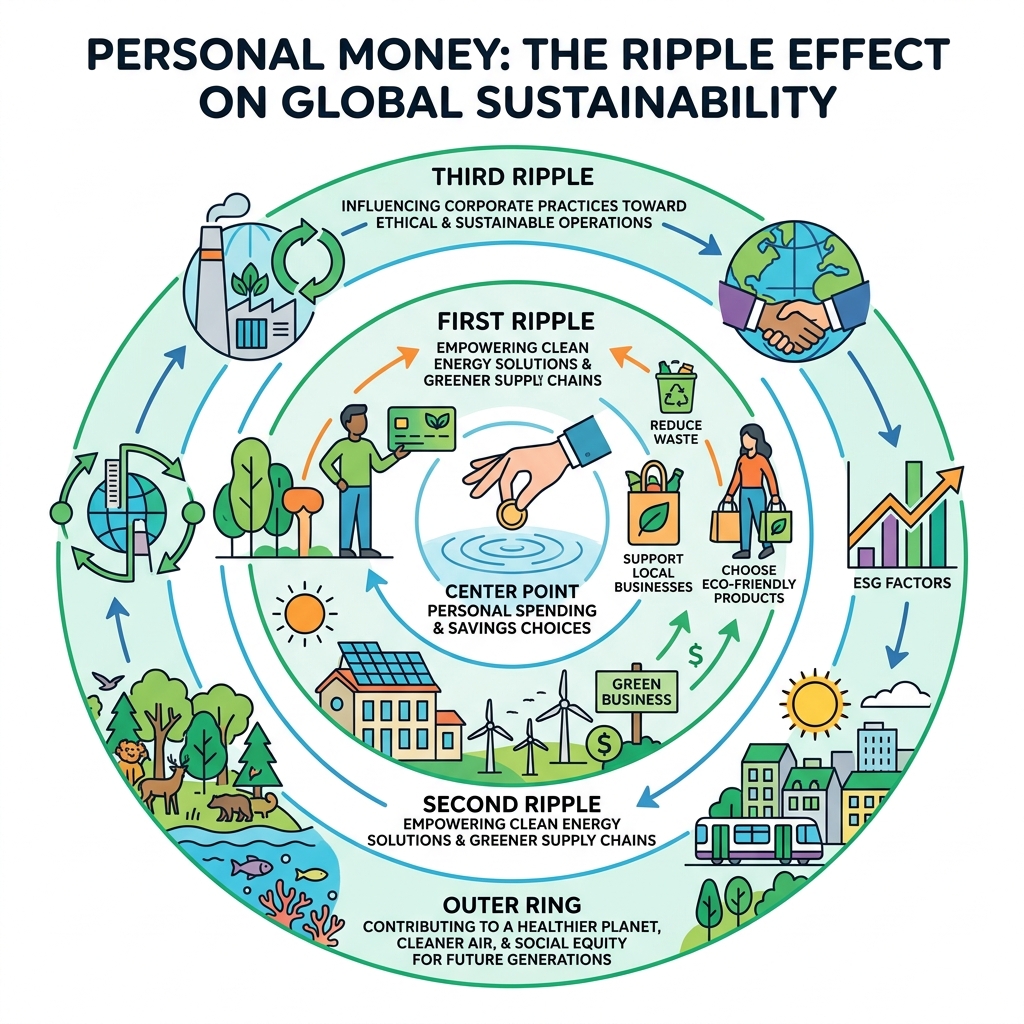
In this extensive guide, we will explore how to integrate sustainability into every aspect of your financial life. We’ll show you how everyday spending, budgeting choices, and even your banking decisions can support a greener future. For instance, understanding how to apply Sustainable finance for zero waste principles can significantly reduce your environmental footprint.
We will delve into green banking options, eco-friendly financial products, and effective strategies for sustainable investing. We’ll also debunk common myths about performance and show you practical steps to switch your existing savings and investments to more sustainable options. Our goal is to empower you with the knowledge and tools to build wealth responsibly, contributing to a healthier planet for generations to come.
At its heart, sustainable personal finance is a holistic approach that integrates our financial well-being with the health of the planet and society. It’s about recognizing that our money is not just a tool for personal gain, but a powerful force that can either perpetuate harmful systems or drive positive change. This philosophy is built upon three core pillars, often referred to as ESG criteria: Environmental, Social, and Governance.
Environmental (E) factors consider a company’s or product’s impact on natural systems. This includes carbon emissions, water usage, waste management, pollution prevention, and resource conservation. When we align our finances with environmental goals, we support businesses and initiatives striving for a cleaner, healthier planet.
Social (S) factors examine how a company treats its employees, customers, and communities. This encompasses labor practices, human rights, diversity and inclusion, product safety, and community engagement. By prioritizing social criteria, we ensure our money supports organizations that uphold ethical standards and contribute to a more equitable society.
Governance (G) factors relate to a company’s leadership, internal controls, and shareholder rights. This includes board diversity, executive compensation, transparency, and anti-corruption measures. Strong governance ensures that a company is managed responsibly and ethically, aligning with long-term sustainability goals.
Our everyday spending and budgeting choices are powerful levers for supporting these sustainability goals. This is where “green budgeting” comes into play – an intentional alignment between our spending habits and our values. It’s not about perfection, but about making conscious decisions. For example, opting for energy-efficient appliances, choosing ethically sourced products, or supporting local businesses with strong environmental practices are all forms of value-aligned spending. These small, consistent choices create a ripple effect, influencing market demand and encouraging more companies to adopt sustainable practices.
Beyond individual purchases, green budgeting also encourages waste reduction and embracing a circular economy mindset. This means extending the life of products, repairing instead of replacing, and minimizing consumption. By integrating these principles into our financial planning, we not only reduce our environmental footprint but often save money in the long run. For those interested in deeper strategies, exploring Sustainable finance for zero waste offers comprehensive guidance on how to minimize your environmental impact through mindful financial decisions.
To illustrate the shift, consider these comparisons:
Traditional Financial Habits Sustainable Financial Habits Prioritize lowest price Consider product lifecycle, ethical sourcing, and durability Unquestioning banking Research banks’ investment portfolios and ethical practices Impulse purchases Mindful consumption, “buy less, choose well, make it last” Focus solely on financial returns Integrate ESG factors for broader impact and long-term value Disposable products Repair, reuse, recycle, and invest in durable goods The demand for value-aligned financial options is significant. Research indicates that a substantial 87% of 401(k) plan participants desire investments that align with their personal values, with 74% even willing to increase their contributions if ESG options were readily available. This highlights a growing desire among individuals to have their money reflect their principles, starting from fundamental budgeting and spending decisions.
Green banking and eco-friendly financial products
Our choice of bank or credit union might seem like a neutral decision, but it carries significant weight in sustainable personal finance. The money we deposit doesn’t just sit idly; banks use these funds to issue loans and make investments. This means our savings can inadvertently support industries that conflict with our values, such as fossil fuel expansion, or they can empower initiatives that drive positive change.
Traditional banking often involves institutions that finance carbon-intensive industries. For instance, reports show that banks invested over $705 billion in fossil fuels in 2024, with $347 billion specifically directed towards fossil fuel expansion. In fact, the world’s 65 largest banks collectively provided $869 billion in financing to fossil fuel companies in 2024 alone. This stark reality underscores the profound impact our choice of financial institution can have.
Sustainable banking, in contrast, prioritizes transparency and actively directs deposits towards eco-friendly initiatives, renewable energy projects, and community development. When choosing a green bank or credit union, we look for institutions that:
- Have clear policies on fossil fuel divestment.
- Actively finance solar, wind, and other clean energy projects.
- Support local sustainable businesses and community initiatives.
- Offer competitive rates while maintaining ethical investment practices.
- Provide transparent reporting on their environmental and social impact.
Many green banks and credit unions are emerging, offering alternatives that align with sustainability goals. They often provide features like carbon-offsetting debit cards, which might plant a tree for every transaction or contribute to carbon reduction projects. Digital wallets and paperless statements are also common, reducing plastic waste and saving resources. For example, going paperless can save a quart of water for every statement received online, according to WSP USA.
Beyond banking, a growing array of eco-friendly financial products can further green our finances:
- Green mortgages: These specialized home loans encourage and finance energy-efficient upgrades. Programs like FHA Energy Efficient Mortgages (EEM) or VA Energy Efficient Mortgages allow homeowners to roll the cost of improvements like solar panels, insulation, or energy-efficient windows into their mortgage, often with favorable terms. Fannie Mae also offers programs like HomeStyle Energy to finance such upgrades, helping homeowners save on utility bills and reduce their carbon footprint.
- Eco-friendly credit/debit cards: As mentioned, some cards are made from recycled plastic, while others offer rewards that translate into carbon offsets, tree planting, or cashback on sustainable purchases (e.g., public transit, thrift shopping, electric vehicle charging).
- Sustainable insurance: While less common, some insurance providers are beginning to offer policies that incentivize sustainable practices or provide coverage tailored to eco-friendly assets like solar panels.
By consciously choosing where we bank and which financial products we use, we redirect capital away from harmful industries and towards a regenerative economy. This proactive approach to personal finance sustainability ensures that our money is actively working to build the future we envision.
Navigating sustainable personal finance investing
Investing is arguably one of the most impactful ways to align our finances with our values. It’s where our capital can directly support companies and projects that are leading the charge in sustainability. The application of ESG criteria is central to this. When we evaluate investments through an ESG lens, we’re not just looking at financial returns, but also at a company’s environmental stewardship, social responsibility, and corporate governance practices.
What are ESG criteria in investing?
- Environmental: Does the company minimize its carbon footprint, manage waste responsibly, conserve water, and use renewable energy?
- Social: Does it treat employees fairly, uphold human rights, promote diversity, and contribute positively to communities?
- Governance: Does it have transparent accounting, ethical leadership, and accountability to shareholders?
By integrating these criteria, investors can identify companies that are not only financially sound but also operate in a way that contributes to a sustainable future. This approach helps mitigate risks associated with environmental regulations, social unrest, or poor corporate ethics, which can ultimately impact long-term financial performance.
Best sustainable investing options for beginners
For those new to sustainable investing, the landscape can seem complex, but several accessible options exist:
- Green funds and ETFs: These are collections of stocks or bonds from companies that meet specific environmental criteria or are involved in green industries. They can be broadly diversified or focused on specific themes like clean energy, sustainable agriculture, or water conservation. Exchange-Traded Funds (ETFs) are particularly popular for beginners due to their low costs and ease of trading.
- Impact investing: This goes a step further than ESG integration, aiming to generate specific, measurable social and environmental benefits alongside financial returns. Impact investments can range from private equity in renewable energy startups to community development loan funds.
- Sustainable mutual funds: Similar to ETFs, these professionally managed funds invest in companies with strong ESG profiles. They offer diversification and expert management, making them suitable for long-term growth.
Many platforms now offer tools to help beginners get started, including robo-advisors that can build diversified, ESG-aligned portfolios based on your risk tolerance and values.
Do sustainable investments perform as well as traditional ones?
One of the most persistent myths about sustainable investing is that it requires sacrificing financial returns. However, recent data strongly debunks this. In 2023, sustainable funds delivered an average return of 12.6%, which was nearly 50% higher than the 8.6% return from traditional funds. This outperformance highlights that companies with strong ESG practices are often better managed, more resilient, and better positioned for long-term growth.
Sustainable investments can also mitigate risks. Companies with poor environmental records or social controversies face regulatory fines, reputational damage, and operational disruptions. By avoiding these, ESG-focused portfolios can offer a more stable path to wealth creation. The growth of the sector itself is a testament to its viability: global assets under management in sustainable funds reached approximately $3.2 trillion as of December 2024, an 18% increase since 2022.
We can also engage in shareholder activism and corporate engagement. For larger investors, this means using voting rights and direct dialogue to push companies towards more sustainable practices. Even as individual investors, by choosing funds that actively engage with companies, we can indirectly contribute to this pressure for positive change.
For those looking to dive deeper into the specifics of aligning their investments with their values, exploring resources on sustainable personal finance can provide comprehensive guidance on ESG criteria, fund selection, and impact measurement.
Getting started with sustainable personal finance investing
Starting your sustainable investing journey doesn’t require a massive capital outlay or expert knowledge. For beginners, focusing on accessible, diversified options is key.
- Robo-advisors: Platforms like Betterment or Wealthfront now offer ESG-focused portfolios. These automated services build and manage diversified portfolios of sustainable ETFs and mutual funds based on your risk profile, making it incredibly easy to start with small amounts.
- Diversification and asset allocation: Just like traditional investing, diversifying your sustainable portfolio across different asset classes (stocks, bonds) and sectors is crucial. This helps manage risk and ensures your investments are resilient.
- Low-cost index funds: Many fund providers now offer ESG-screened index funds that track broad market indices while excluding companies with low ESG ratings or those involved in controversial industries. These are a cost-effective way to gain exposure to sustainable companies.
- Focus on megatrends: Investing in themes like clean energy transition, sustainable water management, or circular economy solutions can offer significant growth potential. The clean energy sector alone added around $320 billion to the world economy, representing 10% of global GDP growth. The rapid growth of assets under management in sustainable funds to $3.2 trillion by December 2024 underscores the increasing investor confidence in these areas.
Long-term security through sustainable personal finance
Sustainable personal finance offers profound long-term benefits, particularly for retirement planning and overall financial security. By investing in companies that are resilient to environmental and social challenges, we are essentially future-proofing our wealth.
- Retirement planning: Aligning your 401(k) or other retirement accounts with ESG options ensures that your long-term savings are supporting a sustainable future. The fact that 87% of 401(k) participants desire value-aligned investments, with 74% willing to increase contributions for ESG options, shows a clear demand for this integration.
- Pension fund switching: Many pension funds, often unknowingly, invest in industries that conflict with their beneficiaries’ values. Researching your pension provider and advocating for or switching to more sustainable options can have a massive collective impact.
- Financial resilience: Companies with strong ESG practices are often better equipped to navigate future risks, such as climate change impacts, resource scarcity, or social unrest. This resilience translates into more stable, long-term returns for investors.
- Stakeholder capitalism and doughnut economics: These concepts, gaining traction in sustainable finance, emphasize that businesses should serve not just shareholders but all stakeholders (employees, customers, communities, and the environment). Investing in companies that embrace these models can lead to more equitable and sustainable economic growth.
- Intergenerational equity: By building wealth sustainably, we contribute to a healthier planet and a more equitable society for future generations, ensuring they inherit both financial stability and a thriving environment.
Practical steps to transition your wealth
Making the shift to sustainable personal finance might seem daunting, but it can be broken down into manageable, actionable steps. Whether you’re looking to green your savings, investments, or daily spending, here’s how to transition your wealth effectively:
- Conduct a financial audit: Start by understanding where your money currently goes. Review your bank statements, investment portfolios, and spending habits from the last few months. Identify areas where your money might be inadvertently supporting unsustainable practices. This baseline awareness is crucial for making informed changes.
- Switch your banking: As discussed, your choice of bank matters. Research ethical banks or credit unions that align with your values, looking for transparency in their lending and investment practices. Moving your savings to an institution that finances renewable energy or community development projects ensures your deposits have a positive impact.
- Green your investments: Existing investments: If you have traditional mutual funds or ETFs, research if your provider offers ESG-screened alternatives. Many platforms allow you to switch funds within the same account. For pensions, inquire about sustainable options or advocate for their inclusion.
- New investments: For new contributions, consider robo-advisors for automated ESG portfolios, or invest directly in green ETFs, mutual funds, or impact funds that focus on themes like clean energy, sustainable water, or ethical supply chains.
- Automated green investing: Set up automatic monthly contributions to your chosen sustainable investment accounts. Consistency is key to long-term wealth building.
- Embrace sustainable consumption: Energy efficiency at home: Invest in Energy Star-certified appliances, LED lighting, and smart thermostats. These upgrades not only reduce your carbon footprint but also lead to significant long-term savings on utility bills. Home improvements for energy savings can also qualify for IRS rebates and tax credits, and interest on Home Equity Lines of Credit (HELOCs) used for such upgrades may be tax deductible.
- Mindful shopping: Prioritize buying less, choosing durable and high-quality items, and supporting businesses with transparent sustainability practices. Opt for secondhand goods, repair instead of replacing, and reduce food waste through meal planning and composting.
- Sustainable transportation: Consider walking, biking, public transport, or carpooling. If purchasing a vehicle, evaluate hybrid or electric options, keeping in mind the total cost of ownership including charging infrastructure and insurance.
- Track and reduce your carbon footprint through finances: Carbon offsets: For unavoidable emissions (e.g., air travel), consider purchasing carbon offsets from reputable organizations that fund tree-planting initiatives or renewable energy projects.
- Digital tools: Utilize apps and platforms that track your carbon footprint based on your spending. Some green banking apps even show you the climate impact of your transactions.
- Avoid high-energy cryptocurrencies: Be mindful of the environmental impact of certain digital assets. For example, every Bitcoin transaction consumes roughly 1,200–1,300 kWh of energy, enough to power a typical American home for about six weeks, or drive 1,000–1,600 miles. Prioritizing less energy-intensive financial technologies can be another way to reduce your financial carbon footprint.
By systematically implementing these steps, you can gradually transition your entire financial ecosystem to reflect your commitment to a sustainable future, making your money a powerful force for good.
Frequently asked questions about sustainable finance
As sustainable personal finance gains traction, many common questions arise. Here, we address some of the most frequent inquiries to provide clarity and confidence in your journey.
Do sustainable investments perform as well as traditional ones?
This is perhaps the most common question, and the answer, increasingly, is yes. The myth that sustainable investing requires sacrificing returns has been largely debunked by recent market data. As highlighted earlier, sustainable funds collectively outperformed traditional funds in 2023, delivering an average return of 12.6% compared to 8.6%.
This performance is not a fluke. Companies with strong ESG practices are often better managed, more innovative, and more resilient to long-term risks such as climate change, regulatory shifts, and social pressures. By integrating ESG factors, investors gain insights into a company’s operational efficiency, risk management, and potential for innovation in areas like clean energy. This can lead to reduced volatility and enhanced long-term profitability. The growth of sectors focused on renewable energy, sustainable technology, and resource efficiency continues to drive strong returns for ESG-aligned portfolios.
How do I identify greenwashing in financial products?
Greenwashing is the deceptive practice of making a product, service, or company appear environmentally friendly or sustainable when it is not. With the rise of sustainable finance, greenwashing has become a concern. To identify it, look for:
- Vague marketing terms: Be wary of broad, undefined claims like “eco-friendly” or “green” without specific details or measurable commitments.
- Lack of transparency: Reputable sustainable funds and banks will provide clear reports on their investment holdings, carbon footprint, and social impact. If information is hard to find or unclear, it’s a red flag.
- Third-party certifications: Look for independent certifications or ratings from organizations like Morningstar, Sustainalytics, or B Corp. These provide objective assessments of a company’s or fund’s sustainability performance.
- Measurable commitments: Genuine sustainable initiatives come with specific, quantifiable goals and progress reports (e.g., “reduce carbon emissions by X% by Y year”).
- Regulatory disclosures: Inquire about how ESG factors are formally integrated into the investment process, not just as marketing add-ons.
Always read the fine print and seek out concrete evidence rather than relying solely on marketing rhetoric.
What are the best resources to learn about eco-friendly finance?
The field of sustainable finance is rapidly evolving, and a wealth of resources is available for both beginners and experts:
- Foundational texts: Books like Kate Raworth’s “Doughnut Economics” offer a compelling vision for a sustainable economy, while “Sustainable Finance” by Molly Scott Cato provides a thorough overview. For understanding jargon, “Essential Concepts of Sustainable Finance: An A-Z Guide” can be invaluable.
- Academic resources: Textbooks such as “Principles of Sustainable Finance” are excellent for structured learning. Many universities now offer courses in sustainable finance, with some curricula publicly available.
- Online platforms and tools: Websites like Morningstar and Sustainalytics provide ESG ratings and research on funds and companies. Carbon footprint calculators can help you track your personal impact. Many green banks and fintechs also offer tools within their apps to visualize your financial impact.
- Professional advice: Consulting with a financial advisor specializing in sustainable investing can provide personalized guidance tailored to your specific goals and risk tolerance. They can help navigate the options and build a portfolio that truly aligns with your values.
By leveraging these resources, you can continuously expand your knowledge and make more informed decisions on your sustainable finance journey.
Conclusion
Our journey through sustainable personal finance reveals a powerful truth: our money is not just a personal asset, but a dynamic force with the potential to shape the world. By consciously integrating environmental, social, and governance (ESG) considerations into our budgeting, banking, and investing, we move beyond passive financial management to active financial stewardship.
This approach offers more than just a clear conscience; it provides tangible benefits, from the potential for competitive or even superior investment returns to enhanced financial resilience in an uncertain future. It’s about building wealth with integrity, ensuring that our financial security is intertwined with the health of our planet and the well-being of society.
Every choice, no matter how small – from opting for paperless statements to investing in a green ETF – contributes to a larger collective action. We have the power to redirect capital away from harmful industries and towards a regenerative economy, fostering innovation and supporting businesses that are building a better tomorrow.
As we continue to navigate the complexities of modern finance, let us remember that sustainable personal finance is not just a trend; it’s a fundamental shift towards a more responsible and future-proof way of managing our wealth. By making incremental changes and staying informed, we can all contribute to a global economic transformation that benefits ourselves, our communities, and generations to come.