

What are Kanban labels, why do you need them & how to get them
Sponsored content. This article was supplied by a third party and Business Money has been paid to publish it.
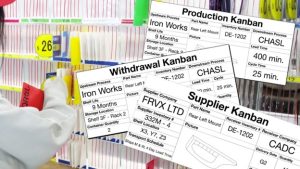 Modern manufacturing and supply chain operations definitely value organization and efficiency. Businesses have to worry about tracking parts, managing inventory, as well as generally maintaining a smooth production flow in order to avoid delays and unnecessary costs. And, as you may have guessed it already, one system is widely used to achieve those goals, and it is known as the Kanban system. Relying heavily on Kanban labels, it helps communicate those production and inventory needs more easily.
Understand the Kanban system better: https://www.investopedia.com/terms/k/kanban.asp
Clearly, thus, Kanban labels are undeniably an important tool that is used in lean manufacturing in order to signal when some materials have to be replenished or perhaps moved through the production process. Using these labels, therefore, businesses have the opportunity to reduce waste, improve workflow visibility, as well as ensure efficient and reliable inventory control. The fact that you are here tells me that you are already somewhat familiar with these, or that you have at least heard of them, but that you are now curious to find out more.
Meaning, thus, that you have some important questions on your mind. You want to understand what Kanban labels actually are, as well as why they matter. And then, you also want to know how to obtain them in order to help organizations streamline their operations. So, what we are going to do right now, thus, is provide you with answers to those questions and help you get a better idea about how it all works and about what you should do if you decide to get these for yourself.
What are Kanban labels?
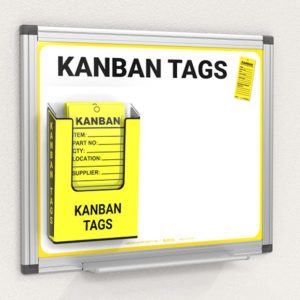 Starting with the basics, let us first ensure that you understand what Kanban labels really are. To put things simply, these are identification labels that are used in the Kanban inventory management system, and that act as signals that trigger some specific actions during the production or the inventory processes. They are typically attached to containers, shelves, bins, or sometimes even individual items, and they include information such as part number, item description, quantity per container, storage location, supplier info, reorder point, as well as a barcode or a QR code.
The information provided by the labels is quite essential. In short, it allows workers, as well as automated systems, to quickly and easily identify materials, as well as to determine when replenishment may be required. As you can see, thus, these really have an essential role, so they can be extremely useful. Learn more on labels in manufacturing.
Why do you need them?
Okay, now that you understand what these are, it is time for you to, well, get a better idea about why it is that you may need them in the first place. By now, you should have understood that these are actually a critical component of lean manufacturing systems. Without such clear labeling, it would be quite difficult for you to maintain an organized flow of materials, and I am guessing you understand just how important it is.
Using Kanban labels, thus, comes with quite some important benefits. For one thing, it helps improve inventory management. In short, it allows you to keep smaller and controlled quantities of materials and replenish them only when necessary, thus reducing excess inventory, and, of course, freeing up storage space.
Moving on, when you use these tags, you can also reduce waste. How come? Well, lean manufacturing certainly focuses on eliminating waste in all forms, including unnecessary transportation, overproduction, and the mentioned excess inventory. And, these labels can support the goal through ensuring that certain materials are produced and delivered only when they are needed, all of which is sure to help you operate more efficiently.
Apart from all of that, these can also increase workflow visibility, making the inventory status visible to pretty much everyone involved in the production process. So, the workers can easily and quickly check which items are available, what may need replenishment, as well as where materials should be stored. Furthermore, all of this means that using Kanban Tags can minimize downtime and lead to faster production processes. And that it can also improve accuracy by reducing the need for manual data entry, thus preventing errors.
How to get them?
Having figured out not only what Kanban tags are, but also what their benefits are, what you want to do next is understand how to actually get them. And, well, the idea is for you to, of course, find and choose the right company that can provide you with these, which means that you main task is to find more of those and then research them in greater details, in an effort to ultimately make your final choice. Aim at choosing highly reliable and trusted companies to do the work for you, as that is how you will get the best results, and the most reasonable prices and deals.