

How to finance window replacement: Matching the right loan to your situation
Sponsored content. This article was supplied by a third party and Business Money has been paid to publish it.
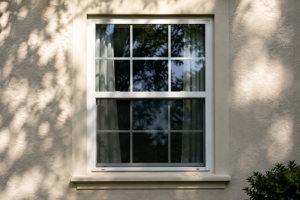
Exterior house window with white frame on beige wall, reflecting trees and sky in soft natural light
Window replacement is one of those home projects people keep deferring until they can’t anymore. A drafty bedroom becomes a heating bill problem. A failed seal turns into condensation you can’t wipe away. Then one bad winter later, you’re getting quotes and realising the total is far higher than you expected.
That sticker shock is real. A single window replacement averages $477 according to a November 2025 survey of 1,000 homeowners by This Old House, but that figure hides a wide range. Full-home replacements for a typical three-bedroom house run from $10,000 to over $15,700. At that scale, just putting it on a credit card isn’t a plan – it’s a gamble. You need a financing approach that actually fits your financial situation, not the one a window salesperson happens to offer.
This guide cuts through the noise. Rather than listing every option and leaving you to figure it out, it matches each financing vehicle to a specific borrower profile. Your equity position, credit score, and project size tell you which route makes sense – and which ones to avoid.
How much does a window replacement actually cost in 2026
The numbers matter here because project size is the single biggest driver of which financing option fits.
Based on over one million real homeowner projects, Modernize puts the 2026 average at $1,047 per window including labor. Single-hung windows sit at the lower end of that range; casement, awning, and bay or bow windows push well past it. For a home with 10 to 15 windows, you’re looking at a realistic total of $10,000 to over $22,000 depending on the type you choose and your local labor market.
One thing most homeowners don’t know: replacing all your windows at once typically saves 10-15% per window compared to doing them in batches. Installers price multi-window jobs differently, and a single mobilisation visit costs the same as five. So if you’re on the fence about doing a full replacement now versus phasing it over a few years, the math often favours doing it all at once.
For homeowners exploring replacement window financing, the loan type that fits best depends on how large the project runs and whether you have equity to tap. A $3,500 job and a $18,000 job don’t belong in the same financing conversation. The 2025 Cost vs. Value Report from Zonda/Remodeling Magazine found that replacing 10 vinyl double-hung windows costs roughly $21,264 and delivers a 67.1% return at resale – which means financing a full replacement isn’t just a cost, it’s an investment decision worth getting right.
Your financing options, matched to your situation

Woman comparing window replacement financing options on laptop while reviewing paperwork at kitchen table
Most articles on window financing list the options in the same order and call it done. This section does something different: it tells you which option fits your actual profile. Because the “best” loan depends heavily on your equity, your credit, and how long you can wait for funds.
If you have home equity: HELOC or home equity loan
A home equity line of credit (HELOC) is the cheapest borrowing route for homeowners who’ve built up meaningful equity. HELOC rates averaged between 7.02% and 7.20% in early 2026, per Bankrate. That’s significantly below what most unsecured loans offer.
Demand for this option is rising. TransUnion reported that HELOC originations jumped 15.8% year-over-year in Q3 2025, hitting 352,000 – driven partly by homeowners who locked in low mortgage rates and don’t want to refinance, but need access to their equity for big projects.
HELOCs work well for full-home replacements of $15,000 or more where you have at least 20% equity. The rate is hard to beat. But before going this route, understand what you’re actually doing: you’re pledging your home as collateral. If payments slip, that risk is real.
If you don’t have equity, or don’t want to risk your home: Personal loan
Personal loans are unsecured – no collateral, no lien on your property. That matters. Homeowners who bought in the last three years may not have much equity yet. Others simply don’t want to put their home at risk for a window project.
The Federal Reserve reported that the average rate on a two-year personal loan was 11.65% in Q4 2025. That’s higher than a HELOC, but borrowers with 700+ credit scores can access rates in the 6-8% range from the right lenders. Funding typically lands in one to three business days after approval – useful if the project is urgent.
Personal loans suit mid-range projects between $3,000 and $15,000, and they come with fixed monthly payments, which makes budgeting simpler than a revolving line of credit. Before applying, it’s worth reading up on how to get competitive rates on a personal loan – rate shopping across at least three lenders can meaningfully cut what you pay over the loan term.
If your project is small and you’re disciplined: 0% promotional financing
Many window companies and some lenders offer 0% APR for 12 to 24 months. On paper, it’s the best rate possible. In practice, it comes with a serious trap.
These are almost always deferred-interest deals, not true 0% interest. If you don’t clear the full balance before the promotional period ends, the lender applies interest retroactively on the original purchase amount – not just the remaining balance. At 22-28% APR, that’s a punishing hit. On a $10,000 project, you could face $2,200 to $2,800 in surprise charges on the day the promo expires.
Use this option only for projects you’re genuinely certain you can pay off within the promo window. If there’s any doubt, a personal loan with a fixed rate is the safer choice.
Quick comparison
| Option | Avg. rate (2026) | Collateral? | Best for |
|---|---|---|---|
| HELOC | 7.02-7.20% | Yes (home) | Large projects, strong equity |
| Personal loan | 6-11.65% | No | Mid-range, no equity needed |
| 0% promo | 0% (limited term) | No | Small projects, disciplined payers |
| Credit card | 24%+ | No | Single-window fixes, immediate payoff |
For more on how secured and unsecured options compare beyond this project, weighing your borrowing options lays out the broader decision framework.
The tax credit angle: Cutting your net cost

Energy Star certified window sticker on modern double-pane window with cozy living room visible in background
The financing cost of a window project looks different once you account for what you get back.
The federal Energy Efficient Home Improvement Credit (Section 25C), extended through 2032 by the Inflation Reduction Act, offers up to $600 per year for windows that meet the ENERGY STAR Most Efficient criteria. Starting in 2025, qualifying windows must include a manufacturer PIN to be eligible – so ask your contractor specifically about compliance before ordering. The ENERGY STAR residential windows page lists the specific performance criteria by climate zone.
Beyond the tax credit, the ongoing energy savings are real. The U.S. Department of Energy estimates that 25-30% of residential heating and cooling energy is lost through windows. Replacing single-pane windows with ENERGY STAR certified models saves between $126 and $465 per year on energy bills, depending on climate and home size.
Run the numbers on a typical project. If you’re paying 9% on a $12,000 personal loan over five years, your monthly payment is around $249. A $400 annual energy saving is $33 a month back in your pocket, and the $600 tax credit further reduces your net first-year cost. The financing cost is real, but so is the offset.
What to check before you apply
A few things that often get skipped:
- Know your credit score before you shop. Personal loan rates are highly credit-dependent. A 680 score and a 740 score can mean a difference of 3-5 percentage points on the same loan amount. That’s hundreds of dollars over a multi-year term. Check your score through your bank or a free service before applying, so you know what tier you’re actually in.
- Get at least two window company quotes and at least two loan quotes. Window companies often offer financing through third-party lenders. Sometimes the rate is competitive. Often it isn’t. Don’t assume the rate your installer quotes is the best available – check independently. The Bankrate comparison of home equity loans versus home improvement loans is a useful reference when you’re trying to decide whether secured or unsecured borrowing suits your situation.
- Confirm whether promotional financing is deferred interest or true 0%. Ask the lender directly. If they can’t give you a clear answer, that’s your answer.
- Budget for surprises. Unexpected frame damage, permit fees, or a window size that requires custom manufacturing can add 10-15% to the original quote. Build that buffer into your loan amount from the start rather than scrambling mid-project.
- Factor total cost, not monthly payment. Stretching a $12,000 loan over seven years instead of five drops the monthly payment but increases total interest paid by a significant margin. Monthly affordability matters, but so does the final cost.
Match the loan to the job
There’s no single right answer for window financing. The right option depends on your equity, your credit, the project size, and how quickly you need the work done.
If you have strong equity and a large project, a HELOC’s rate is hard to compete with – just don’t underestimate the collateral risk. If you’re light on equity or want to keep your home out of the equation, a personal loan offers speed, fixed payments, and no lien. For smaller projects where you’re confident about payoff timing, a promotional offer can work – but verify the deferred-interest terms before signing anything.
The tax credit and energy savings change the net-cost picture in ways that aren’t obvious at first glance. A project that looks expensive in isolation looks different when you factor in a $600 annual tax credit and $300 a year in reduced energy bills.
Do the full calculation. Compare lenders. And don’t let a contractor’s in-house financing offer be the only rate you see.