

10 tools that help SaaS startups automate processes (2026 guide)
Sponsored content. This article was supplied by a third party and Business Money has been paid to publish it.
Running a SaaS startup means moving fast. Every hour spent on repetitive tasks is an hour pulled away from building, selling, and growing.
Automation changes that equation completely. The right tools handle the busywork – so your team focuses on what actually moves the needle.
And in 2026, the options are better, cheaper, and smarter than ever.
These 10 tools are the ones SaaS startups are actually using to automate their processes and scale without burning out their teams.
Why automation is no longer optional for SaaS startups?
The old model was simple: hire more people to do more things. That model breaks fast when you are a lean SaaS team trying to compete with companies ten times your size.
Automation levels the playing field. It lets a five-person team operate with the output of a twenty-person team,without the payroll to match.
The startups winning right now have one thing in common: they automated early, they automated strategically, and they picked tools that talk to each other.
The ones still doing things manually? They are busy, exhausted, and wondering why growth feels like pushing a boulder uphill.
The 10 best automation tools for SaaS startups in 2026
1. Zapier – connect everything without a single line of code
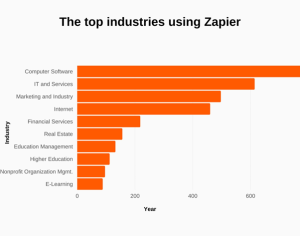
Source: Zapier
Zapier remains the backbone of automation for early-stage SaaS teams.
It connects over 7,000 apps, creates automated workflows called “Zaps,” and runs them in the background while your team focuses on higher-value work.
Best for: Connecting your CRM, email platform, Slack, and project management tools into one seamless workflow.
Key automations SaaS startups use:
- Automatically create a CRM contact when a new trial user signs up
- Send a Slack notification every time a deal closes in your pipeline
- Add new paying customers directly to your onboarding email sequence
- Log support tickets from email into your project management board
Zapier has also expanded its AI-powered automation features, letting you build Zaps in plain language – no technical setup required.
Pricing: Free plan available. Paid plans start at $19.99/month.
2. ChatGPT – automate your content, communication, and internal workflows
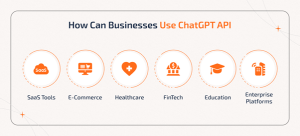
Source: SparkOut
ChatGPT has moved far beyond being a writing assistant.
For SaaS startups in 2026, it is a full automation layer – handling customer-facing content, internal documentation, support responses, onboarding copy, and repetitive communication tasks that used to eat hours every week.
Best for: Teams that want to cut the time spent on writing, research, and knowledge work without hiring additional headcount.
Key automations SaaS startups use:
- Generate personalized onboarding email sequences for different user segments
- Draft and refine support responses based on your product documentation
- Summarize customer feedback and pull out recurring themes automatically
- Create first drafts of release notes, changelogs, and internal SOPs in minutes
ChatGPT’s custom GPTs and API integrations have made it genuinely useful as a workflow layer — connect it to your internal tools and it becomes a tireless team member that handles the first draft of almost anything.
Pricing: Free plan available. ChatGPT Plus starts at $20/month. API pricing varies by usage.
3. Intercom – turn customer support into a scalable system
Source: Intercom
Customer support at a SaaS startup can swallow your entire day if you let it.
Intercom automates the first layer of that – handling common questions, routing tickets, onboarding new users, and proactively reaching out to customers showing churn signals.
Best for: SaaS teams that want to support hundreds of users without scaling their support headcount at the same rate.
Key automations SaaS startups use:
- Trigger in-app messages when users hit specific milestones or get stuck
- Auto-resolve common questions with AI-powered chat responses
- Route complex tickets to the right team member based on issue type
- Send targeted messages to users who go quiet after signup
Intercom’s Fin AI agent now handles a significant percentage of support queries without human intervention – and hands off seamlessly when something needs a real person.
Pricing: Starts at $39/month per seat.
4. Make (formerly Integromat) – advanced automation without a developer
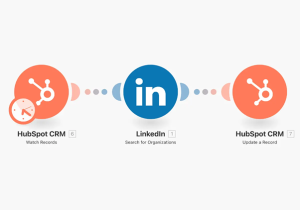
Source: Make
Make sits one level above Zapier in terms of complexity – and power.
For SaaS startups with slightly more technical operations, Make allows you to build multi-step, conditional automations with a visual drag-and-drop interface that feels like mapping out a flowchart.
Best for: Teams that need complex, branching workflows that go beyond simple “if this, then that” logic.
Key automations SaaS startups use:
- Build multi-branch workflows that handle different customer scenarios differently
- Automate complex billing and subscription update notifications
- Sync product usage data across your CRM, analytics, and customer success tools
- Create conditional logic for trial-to-paid conversion sequences
Make also comes with robust error handling – so when something breaks in the middle of a workflow, it surfaces the problem clearly and tells you exactly where to fix it.
Pricing: Free plan available. Paid plans start at $9/month.
5. Notion + Notion AI – automate your internal knowledge and operations
Source: Notion
Most SaaS startups treat Notion as a docs tool. The ones getting real value from it treat it as an operating system.
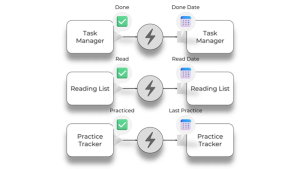
Notion’s automation features – combined with Notion AI – let you build internal workflows, auto-populate databases, generate summaries from meeting notes, and keep your entire team aligned without the endless manual updates.
Best for: SaaS teams that want to reduce internal admin time and keep operations running smoothly as they scale.
Key automations SaaS startups use:
- Auto-generate weekly status updates from individual project databases
- Trigger task creation when a deal moves to a new stage in your CRM
- Use Notion AI to summarize customer feedback into actionable insights
- Build automated sprint planning boards that populate based on backlog priorities
Notion AI has improved significantly – it now drafts documents, creates action items from meeting transcripts, and answers questions about your internal knowledge base instantly.
Pricing: Free plan available. Plus plan starts at $10/month per user.
6. Stripe + Stripe Billing – automate your entire revenue operation
Source: Stripe
Stripe is already the default payment processor for most SaaS startups. But most teams only use ten percent of what it can actually do.
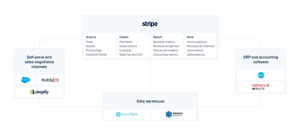
Stripe Billing handles the entire subscription lifecycle automatically – from trial management and dunning to revenue recognition and tax compliance.
Best for: Any SaaS startup with a recurring revenue model that needs billing to run on autopilot.
Key automations SaaS startups use:
- Automatically retry failed payments with smart dunning sequences
- Trigger upgrade prompts when users hit usage limits in their current plan
- Send automated receipts, renewal notices, and cancellation confirmations
- Handle proration automatically when customers upgrade or downgrade mid-cycle
The 2026 version of Stripe Revenue Recovery now uses machine learning to optimize retry timing for failed payments – recovering revenue that used to just disappear.
Pricing: 2.9% + $0.30 per transaction. Billing features included.
7. Apollo.io – automate your outbound sales engine
Source: Apollo
Growing a SaaS startup means consistently filling your pipeline.
Apollo.io automates the prospecting side of that – finding your ideal customers, enriching their data, and sending personalized outreach sequences at scale.
Best for: SaaS startups building an outbound motion and wanting to run it without a large sales team.
Key automations SaaS startups use:
- Build targeted prospect lists from Apollo’s database of 275+ million contacts
- Launch automated multi-step email and LinkedIn sequences to warm up leads
- Enrich new inbound leads automatically with firmographic and contact data
- Trigger follow-up sequences based on email open and click behavior
Apollo’s AI sequence builder now writes personalized outreach based on a prospect’s LinkedIn activity, company news, and role – reducing the time it takes to build a campaign from hours to minutes.
Pricing: Free plan available. Basic paid plan starts at $49/month per user.
8. Synthesia – automate product videos, onboarding content, and customer communication
Source: Eesel
Most SaaS startups know they need video. Almost none of them have the time or budget to produce it consistently.
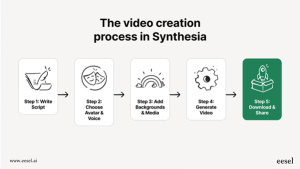
Synthesia solves that entirely – letting you create professional AI-generated videos with realistic avatars, voiceovers, and branded shadcn templates without a camera, studio, or video editor in sight.
Best for: SaaS teams that want to scale video content for onboarding, product updates, demos, and customer education without a dedicated production team.
Key automations SaaS startups use:
- Generate personalized onboarding videos for new users based on their plan or use case
- Turn product release notes into polished video summaries in minutes
- Create multilingual support and tutorial videos from a single script
- Build a library of feature explainer videos that update automatically when your product changes
Synthesia’s 2026 workflow integrations now connect directly to tools like Zapier and Make – meaning you can trigger video creation automatically based on customer actions, new signups, or product events without touching the platform manually.
Pricing: Starter plan from $18/month. Enterprise pricing available for bulk video generation.
9. Jobma – automate your interview and candidate screening process
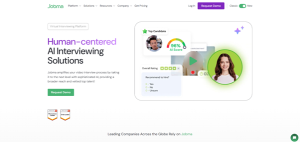 Jobma helps SaaS startups automate one of the most time-consuming parts of hiring: candidate screening and interviews. Instead of scheduling multiple rounds manually, teams can use one-way video interviews and AI-powered evaluations to assess candidates at scale. This removes back-and-forth coordination and speeds up hiring without compromising quality.
Best for: SaaS teams that want to streamline hiring and reduce time-to-hire without increasing recruiter workload.
Key automations SaaS startups use:
- Automatically invite candidates to one-way video interviews after application
- Screen candidates asynchronously without scheduling conflicts
- Use AI-driven insights to evaluate responses consistently
- Integrate interview data with ATS platforms for a seamless hiring workflow
Jobma integrates with major ATS platforms and fits directly into your hiring pipeline, making recruitment faster, more structured, and easier to scale as your team grows.
10. Omni HR – automate your entire employee lifecycle in one platform
Omni HR eliminates the operational drag that comes with scaling a SaaS startup, from the moment a candidate applies to their first day, first payslip, and beyond. Instead of stitching together separate tools for onboarding, payroll, time off, and performance, teams can run the full employee lifecycle through a single platform with automated workflows that require zero technical setup.
For fast-growing SaaS companies, that means less time chasing approvals and more time building products.
Best for: SaaS startups scaling headcount in Asia that want to consolidate HR processes, stay compliant across markets, and remove manual admin without adding HR headcount.
Key automations SaaS startups use:
- Trigger onboarding workflows automatically when a new hire is confirmed — documents, IT provisioning checklists, and manager tasks fire in sequence without manual follow-up
- Run multi-country payroll with automatic tax calculations, statutory deductions, and localized compliance built in for Southeast Asian markets
- Let employees self-serve time-off requests, payslip access, and personal data updates
- Automate performance review cycles with scheduled check-ins, goal tracking, and feedback loops that run without HR intervention
Omni integrates with the tools SaaS teams already rely on and is purpose-built for the compliance complexity of hiring across Asia, something global HR platforms consistently get wrong. As your headcount grows from 20 to 200, the workflows scale with you, so your HR team doesn’t have to.
Build your automation stack in layers
The biggest mistake SaaS startups make with automation is trying to do everything at once.
Start with the layer that saves you the most time today.
- Revenue first: Get Stripe Billing running on autopilot so you stop chasing payments manually.
- Customer journey second: Set up HubSpot or Intercom workflows so every new user gets a consistent experience.
- Data layer third: Add Segment once you have enough product activity to make it worth routing.
- Sales and growth fourth: Layer in Apollo and Zapier to connect everything and fuel your outbound.
Stack these tools in order, and each one multiplies the value of the next.
That is how lean SaaS teams scale without adding headcount at every stage of growth – and in 2026, there is no reason to do it any other way.