

From cost centre to profit driver: How drones are changing site surveying economics
Sponsored content. This article was supplied by a third party and Business Money has been paid to publish it.
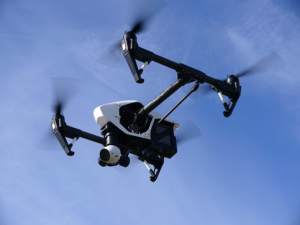
Image by Thomas Ehrhardt from Pixabay
Site surveying was once one of the largest budget areas of any building project.
Large crews, days of fieldwork, costly equipment and piles of downtime. The old way of doing things. But not anymore. With the rise of drones, the economics of site surveying have been turned on their heads, transforming what was once a cash vacuum into a profit center.
With the right drone setup, you can now:
- Survey sites in hours instead of weeks
- Slash labour costs by more than half
- Deliver richer, more accurate data to clients
Here is how it works…
What’s inside this guide:
- Why site surveying was once a cost centre
- How drones flipped the economics
- The real numbers behind drone site surveying
- Why crews are making the switch now
Why site surveying was once a cost centre
Traditional ground surveying has always been slow and expensive.
A crew of 4 or 5 would walk the entire property with equipment in hand, set up in dozens of locations, and take measurements by hand. Then they would pack up, return to the office, and spend another week processing.
By the way, for a 20-acre site? This could be $15,000 to $30,000 and 1-2 weeks for delivery. That is a significant portion of your project budget vaporized before the first shovel goes into the ground.
Here’s the real problem though:
- Labour is the biggest expense. Many crew members working many hours in the field rapidly consume your margins.
- Time is money. A day spent surveying is a day your project is delayed.
- Data gaps. Conventional surveys cover hundreds of points on a site that spans over 50 times this area.
And that’s before you consider the safety hazards of traversing rough terrain or entering active construction zones with a crew.
It’s no wonder most contractors viewed surveying as a necessary evil.
How drones flipped the economics
Drones changed the game completely.
Rather than deploying a large team to the field for a week, a 2-person crew can now fly a site in a few hours and deliver millions of measurement points back to the office. The output is cleaner, faster, and significantly more detailed.
The actual game-changer is high-resolution aerial imagery. With the appropriate sensors, a drone can acquire centimetre-level resolution across entire sites in a single flight. You get to work with orthomosaics, elevation models and 3D point clouds that simply aren’t possible with traditional methods. Add to that access to service providers like WISPR, an American-made drone company, and you’re getting that kind of accuracy (or better) than a traditional ground crew.
Here’s why this matters for the bottom line:
- Smaller crews. Two people can do the work of five.
- Faster data collection. Hours instead of days.
- Better data quality. Dense, interpolation-free mapping that reduces costly errors.
- Lower logistics costs. Less fuel, less vehicle wear, less equipment setup.
That is a huge change. Surveying goes from being a pain to a competitive advantage for companies that adopt it.
The real numbers behind drone site surveying
Let’s talk numbers. Because this is where things get really interesting.
The global construction drone market size is expected to reach USD 23,446.3 Million by 2034, and everyone wants a piece of the action.
Cost savings
Drone based surveys are proven to save 50-75% over and above a ground based approach. On that 20 acre site mentioned above:
- Traditional survey: $15,000-$30,000
- Drone survey: $3,000-$6,000
- Time saved: Weeks down to a single day
That’s a huge difference. One industry report even says drones could trim construction project costs by up to 15% overall by reducing manual labour and increasing accuracy.
Speed & accuracy gains
Survey data from one leading industry report showed 45% of civil contractors and 67% of key organizations are using drones on all their projects. And the results speak for themselves:
- 61% increase in measurement accuracy
- 53% reduction in data collection time
- Real-time progress monitoring that traditional methods just can’t match
Actual ROI examples
Propeller crunched the numbers for a realistic scenario. Lets say a company has ten 120 acre sites surveyed 5 times a year:
Surveying with drones can provide a net savings of $114,000 annually
That’s not an insignificant amount. And once you start including quantity variance on earthworks projects, moving from traditional surveying to drone-based technology can put another $25,000 to $50,000 per project in your pocket.
Why crews are making the switch now
So if the savings are this good… why isn’t every contractor using drones already?
The truth is, they are. Adoption has exploded over the last few years. Here are the main drivers behind the shift:
Better data, better decisions
The more complete and precise your survey data is, the easier every subsequent decision becomes. Volume calculations are more accurate. Progress reports are more insightful. Change orders are resolved quicker when all parties are working from the same high-resolution images of the job site.
That means less rework, fewer disputes, and smoother project delivery.
Safer site operations
Drone flights are non-intrusive. There’s no need to send a crew over potentially unstable ground, or into dangerous areas. The drone can do it for you overhead, while your crew focuses on other tasks.
For sites with difficult terrain or active construction, this is a massive win.
Repeat surveys are now affordable
So drone surveys are so cheap and fast, that you can fly the same site weekly if you like. This opens up a whole new workflow:
- Track progress in real time
- Catch issues early before they balloon
- Deliver weekly reports to clients
Traditional surveying made frequent re-measurements impractical. Drones make it standard.
Competitive pressure
Clients are beginning to demand drone-delivered products. If your competition is providing daily orthomosaics, 3D models, real time progress tracking…you match it or lose the contract.
Final thoughts
Site surveying isn’t a cost centre anymore.
With drones, construction surveying becomes one of the highest ROI investments you can make on a construction project. Here’s why the math is so simple:
- Faster surveys = faster projects
- Lower labour costs = higher margins
- Better data = fewer mistakes
- Happier clients = more repeat work
The firms that rise to the top now will be in a huge position to capture larger contracts, operate more lean and deliver more results. And the ones that stick to the old-school way of ground-based surveying? They’ll be fighting to stay afloat as budgets and expectations continue to change.
The good news is that the bar has never been lower. Drones are better and cheaper than ever before, and the software has evolved to the point where data processing is nearly completely automated.
Surveying used to eat into your margins. Now it can actually grow them.