

Performance énergétique batiment 2026: Top stratégies
Sponsored content. This article was supplied by a third party and Business Money has been paid to publish it.
Strategies for B2B energy contract optimization and cost reduction
Defining performance: Indicators and evaluation methods

This isn’t just about following rules. It’s about saving a lot of money, making properties more valuable, and showing you care about the environment. Being energy efficient directly helps your budget, lowers your carbon footprint, and makes your operations stronger.

In this guide, we will look closely at building energy performance. We will explain how to measure it, what rules apply in France and Europe, and what solutions can help. We will also cover how to manage energy across many buildings and find financial support. Our aim is to give you the strategies needed to make your buildings energy efficient. This will help both your finances and the planet. For businesses seeking tailored insights and expert support in this area, specialized platforms like Capstone performance énergétique B2B can be a valuable resource.
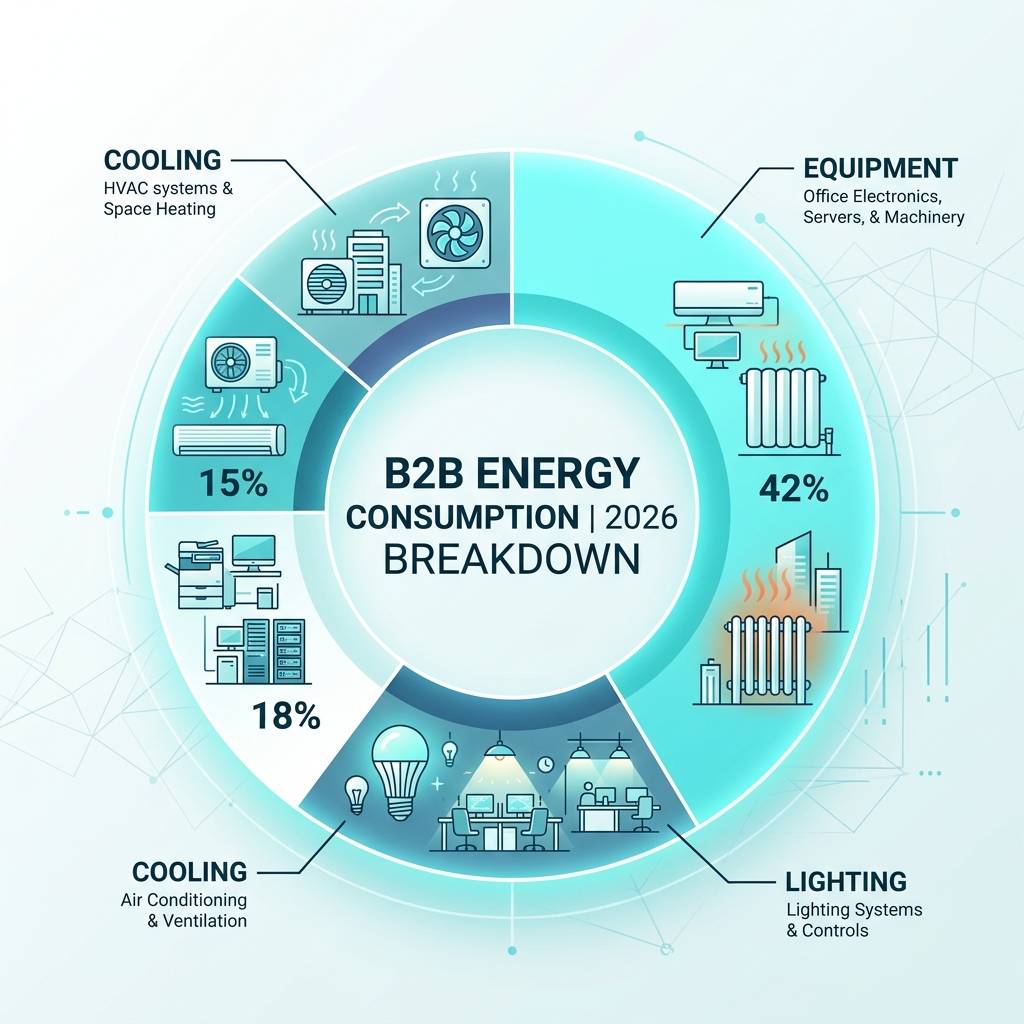
Understanding the performance énergétique of a building is crucial for any B2B entity looking to optimize its energy consumption. While often used interchangeably, “performance énergétique” and “efficacité énergétique” carry distinct meanings. L’efficacité énergétique typically refers to the ratio of useful energy output to total energy input for a specific system or piece of equipment. For example, a highly efficient boiler converts a larger percentage of its fuel into heat. In contrast, la performance énergétique evaluates the overall energy consumption of an entire building, considering all its systems and uses, against a standardized reference. It’s a holistic assessment of how well a building minimizes its energy needs to deliver a comfortable and functional environment. This broader concept encompasses not just the efficiency of individual components but their integration and the building’s intrinsic characteristics.
To truly understand a building’s energy profile, we must rely on clear, quantifiable indicators and robust evaluation methods.
Key indicators for measuring and tracking energy performance:
- Consommation énergétique annuelle (kWh/m²): This is the most fundamental indicator, expressing the total energy consumed per square meter of floor area over a year. It’s often broken down into énergie primaire (energy at the source, including losses from production and transport) and énergie finale (energy delivered to the building). A lower kWh/m² value indicates better performance.
- Émissions de gaz à effet de serre (GES): Measured in kg eqCO2/m² annually, this indicator quantifies the carbon footprint associated with a building’s energy consumption. It’s increasingly vital given global climate objectives.
- Classement énergétique (étiquettes A à G): In France and across Europe, buildings are assigned an energy label from A (very economical) to G (very energy-intensive), providing a quick visual summary of their performance. This classification is often derived from the DPE.
- Confort d’été: With climate change, the ability of a building to maintain comfortable indoor temperatures during hot periods without excessive cooling is becoming a critical performance metric.
Evaluation methods:
- Le Diagnostic de Performance Énergétique (DPE): The DPE is a mandatory diagnostic in France for sales, rentals, and new constructions. It assesses a building’s energy consumption and its greenhouse gas emissions, providing the well-known A-G labels. Since July 2021, the DPE has become legally opposable, meaning its findings have contractual value, similar to other technical diagnostics. It relies on a standardized calculation method (3CL) that considers insulation, heating, cooling, ventilation, and hot water production, rather than just past energy bills, making it more reliable.
- L’Audit Énergétique: More in-depth than a DPE, an energy audit provides a detailed analysis of a building’s energy consumption, identifying specific areas for improvement and proposing a prioritized action plan with estimated costs and savings. This is particularly valuable for complex or large commercial buildings.
- Protocoles de Mesure et Vérification (M&V) comme l’IPMVP: The International Performance Measurement and Verification Protocol (IPMVP) is a globally recognized framework for quantifying the savings achieved by energy efficiency projects. It provides a rigorous methodology to compare actual energy consumption before and after improvements, accounting for variables like weather and occupancy. This protocol is essential for demonstrating the return on investment (ROI) of energy retrofits and for performance-based contracts.
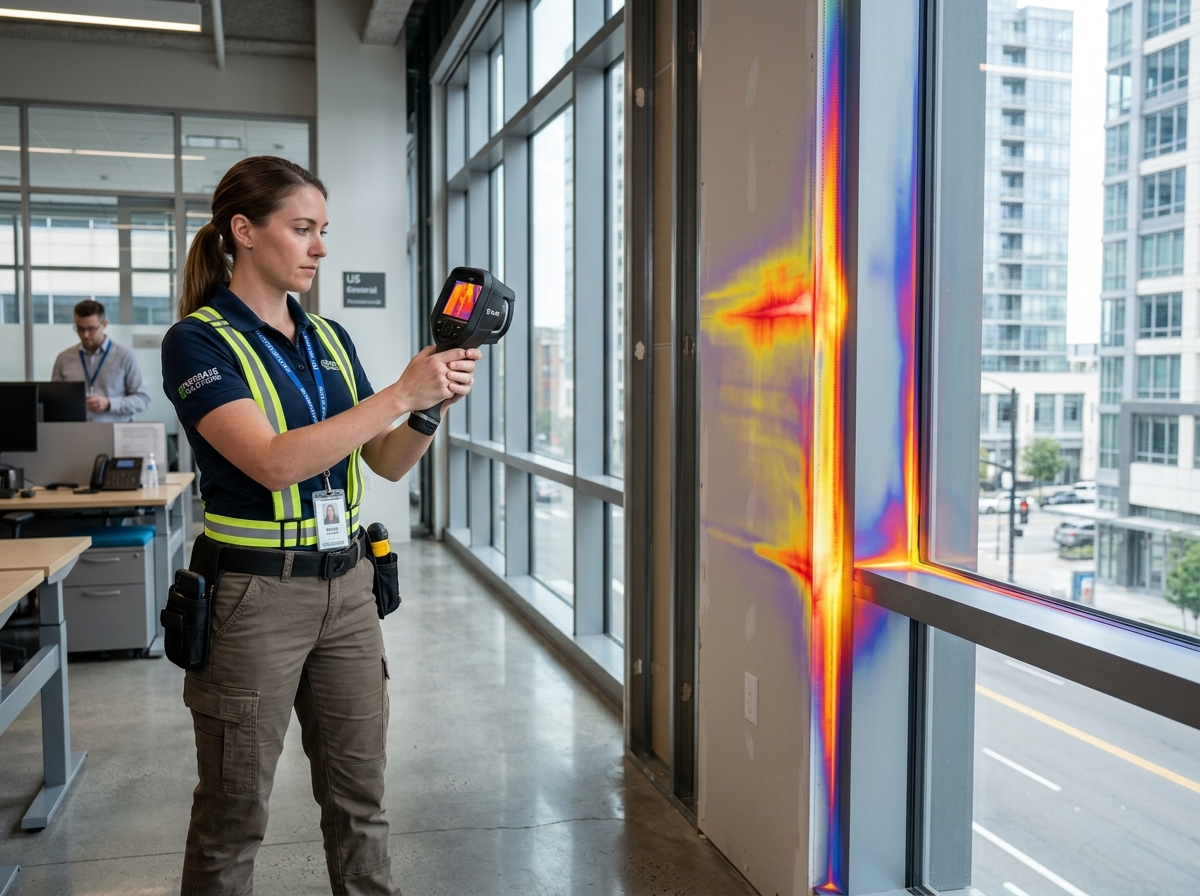
By combining these indicators and evaluation methods, businesses can gain a clear picture of their buildings’ energy performance, pinpoint inefficiencies, and make informed decisions for improvement. Further understanding of these criteria can also come from sector studies, audit feedback, and operational benchmarking across similar building types.
Regulatory compliance and B2B energy optimization
The regulatory landscape surrounding building energy performance is rapidly evolving, driven by ambitious climate goals at both European and national levels. For B2B stakeholders, staying abreast of these regulations is not just about compliance, but about leveraging them as catalysts for strategic energy optimization.
Key regulations in France and Europe (April 2026):
- La Directive sur la Performance Énergétique des Bâtiments (DPEB) / Energy Performance of Buildings Directive (EPBD): At the European level, the EPBD is the cornerstone. Its latest revisions aim to achieve a zero-emission building stock by 2050. This means all new buildings must be zero-emission by 2030, and existing ones gradually upgraded. The Directive emphasizes lifecycle emissions, circular economy principles, and the integration of on-site renewables. This overarching framework sets the direction for national regulations.
- La RE2020 (Réglementation Environnementale 2020): In France, the RE2020, which succeeded RT2012 on July 1, 2022, is the primary regulation for new constructions and major renovations. It goes beyond energy performance to consider the building’s carbon footprint throughout its lifecycle, aiming for Bâtiments à Énergie Positive (BEPOS) that produce more energy than they consume. It also introduces criteria for summer comfort and indoor air quality.
- Le Décret Tertiaire (Dispositif Éco Énergie Tertiaire): This French regulation mandates a progressive reduction in energy consumption for existing tertiary sector buildings (offices, shops, hotels, etc.) larger than 1,000 m². Owners and occupants must achieve energy savings of 40% by 2030, 50% by 2040, and 60% by 2050, compared to a reference year. Compliance is monitored via the OPERAT platform.
- Le Décret BACS (Building Automation & Control Systems): Published in July 2020, this decree requires the installation of Building Automation and Control Systems (GTB) in tertiary buildings with heating, cooling, or ventilation systems exceeding 290 kW by 2027. The goal is to optimize energy consumption through automated control and monitoring.
- Le Diagnostic de Performance Énergétique (DPE) et ses Évolutions: As mentioned, the DPE became legally opposable on July 1, 2021, giving it significant weight in real estate transactions. It now includes a dual energy-climate label (consumption and GHG emissions). Recent adjustments in July 2024 specifically addressed small dwellings (<40m²), reclassifying approximately 140,000 units out of the F and G categories, which were disproportionately affected by the previous methodology. This reform ensures a fairer evaluation. For more information on the DPE’s legal framework, the Ministère de la Transition Écologique provides comprehensive details on the Diagnostic de performance énergétique.
- Les “Passoires Énergétiques” et les Interdictions de Location: Buildings classified F or G on the DPE are deemed “passoires énergétiques.” In France, rental bans for these properties are being phased in: from 2023 for the worst-performing G class (>450 kWh/m²/year), followed by all G-rated properties from 2025, F-rated from 2028, and E-rated from 2034. This creates a strong incentive for owners to renovate. The ADEME observatory plays a key role in tracking these diagnostics, each identified by a unique 13-digit validation number. Further governmental guidance is available on the DPE and its policies.
These regulations underscore a clear message: energy performance is no longer optional. It’s a fundamental aspect of building management, impacting asset value, operational costs, and corporate social responsibility. Businesses must proactively engage with these frameworks to ensure compliance and unlock the full potential of their energy optimization efforts. A deeper dive into the definition and stakes of building energy performance can also be found through professional analyses, regulatory summaries, and feedback from operational projects.
Technical solutions and the theory-reality gap
Improving a building’s energy performance requires a multi-faceted approach, combining robust technical solutions with an understanding of human behavior and operational realities. While theoretical calculations provide a roadmap, real-world conditions often lead to discrepancies between expected and actual performance.
Main levers for improvement:
- Isolation Thermique: Reinforcing insulation in walls, roofs, floors, and replacing old windows with high-performance glazing are foundational steps. Effective insulation reduces heat loss in winter and heat gain in summer, significantly cutting heating and cooling needs. Combining insulation with rigorous airtightness measures is crucial to prevent uncontrolled air infiltration.
- Systèmes de Chauffage, Ventilation, Climatisation (CVC): Upgrading to high-efficiency CVC systems, such as heat pumps (air-to-water, geothermal), biomass boilers, or high-performance ventilation systems (e.g., double-flow VMC), can dramatically reduce energy consumption. Programmable thermostats and intelligent zone control further optimize these systems.
- Éclairage LED et Gestion Intelligente: Replacing traditional lighting with LED technology offers immediate and substantial energy savings. Implementing smart lighting controls, including occupancy sensors, daylight harvesting, and scheduled dimming, ensures lights are only on when and where needed. According to the PREBAT program, in 2024, 30% of the total energy used for lighting in the tertiary sector was consumed when no one was present, highlighting the potential for savings.
- Intégration des Énergies Renouvelables: Incorporating on-site renewable energy sources like solar photovoltaic panels for electricity generation or solar thermal collectors for hot water can significantly offset grid energy consumption and reduce carbon emissions.
The theory-reality gap: Why performance differs and how to bridge it
It’s a common challenge: a building designed to be highly energy-efficient often consumes more energy in reality than predicted. This “theory-reality gap” stems from several factors:
- Défauts de Conception et de Mise en Œuvre: Imperfections during design or construction (e.g., thermal bridges, poor airtightness, incorrect installation of equipment) can undermine theoretical performance.
- Comportement des Occupants: User habits, such as leaving lights on, adjusting thermostats excessively, or opening windows while heating/cooling, can significantly impact actual consumption. Systems must adapt to users, not the other way around.
- Manque de Suivi et d’Adaptation: Without continuous monitoring and proactive adjustments, performance can drift over time due to equipment degradation or changes in usage patterns.
Reducing the gap:
- Mesure Fine et Suivi Continu: Implementing granular energy monitoring systems (sub-metering) allows for real-time tracking of consumption by zone or equipment, identifying anomalies quickly.
- Implication Précoce des Occupants: Involving building users during the design phase and providing comprehensive training on energy-efficient practices post-delivery can foster responsible behavior.
- Retours d’Expérience (REX): Capitalizing on lessons learned from past projects helps refine design processes and highlight critical vigilance points during construction. Research programs like PREBAT and SEREINE have focused on understanding and reducing these gaps through extensive building monitoring and analysis.
- Vérification de la Performance en Phase Opérationnelle: Regular post-occupancy evaluations and commissioning ensure that systems operate as intended and adapt to actual building use.
Leveraging GTB for B2B energy optimization
Building Management Systems (GTB) and Building Automation and Control Systems (BACS) are indispensable tools for bridging the theory-reality gap and achieving continuous energy optimization, particularly in multi-site B2B environments.
A GTB system integrates and controls various technical installations within a building, such as heating, ventilation, air conditioning (CVC), lighting, and access control. By centralizing management, GTB enables:
- Automation et Optimisation: Automated control based on occupancy, weather forecasts, and schedules prevents energy waste. For instance, adjusting heating setpoints automatically when a zone is unoccupied.
- Surveillance en Temps Réel et Détection d’Anomalies: Continuous monitoring of energy consumption and system performance allows for rapid identification of malfunctions or unexpected energy drifts.
- Maintenance Préventive et Prédictive: GTB can alert maintenance teams to potential issues before they cause breakdowns, reducing downtime and optimizing equipment lifespan.
- Interopérabilité: Modern GTB systems utilize open protocols (BACnet, KNX, Modbus) to ensure seamless communication between different equipment and software, creating a truly integrated management platform.
- Conformité Réglementaire: GTB is central to meeting the requirements of the Décret BACS, which mandates their installation in many tertiary buildings by 2027. It also supports the data collection and reporting necessary for the Décret Tertiaire. Moreover, GTB systems that meet specific criteria (e.g., Class A or B according to EN ISO 52120-1, controlling at least two usages) are eligible for significant financial incentives, such as those provided by the Certificats d’Économies d’Énergie (CEE) under the fiche BAT-TH-116.
High-performance technical levers for energy optimization:
- Isolation thermique renforcée (murs, toitures, planchers, menuiseries)
- Pompes à chaleur performantes (aérothermiques, géothermiques, hydrothermiques)
- Systèmes de ventilation double flux avec récupération de chaleur
- Éclairage LED avec gestion intelligente (détection de présence, luminosité)
- Systèmes de GTB/GTC avancés pour la gestion centralisée
- Production d’énergie renouvelable sur site (panneaux solaires photovoltaïques et thermiques)
- Optimisation de l’étanchéité à l’air de l’enveloppe du bâtiment
- Récupération de chaleur fatale (e.g., sur les eaux usées, l’air vicié)
- Solutions de rafraîchissement passif (brise-soleil, ventilation naturelle optimisée)
Enjeux Spécifiques pour les Bâtiments Patrimoniaux ou Historiques:
For heritage buildings, energy performance improvements must be carefully balanced with the imperative of preserving their architectural and historical value. Systematic, invasive works are often inappropriate. The approach must be tailored, prioritizing reversible and additive interventions. The European norm NF EN 16883 provides specific guidelines for improving energy performance in these contexts without compromising cultural significance. Labels like “Effinergie Patrimoine” encourage low-consumption rehabilitation that respects the building’s intrinsic qualities. Furthermore, specific regulatory exceptions exist for DPE and energy audits in classified or inscribed historical monuments, recognizing their unique constraints. This nuanced approach ensures that the pursuit of energy efficiency does not come at the expense of our shared architectural heritage.
Strategic management of multi-site portfolios
For businesses operating multiple sites, optimizing energy performance presents both a significant challenge and a vast opportunity. A coherent, strategic approach across a portfolio can unlock substantial savings, streamline compliance, and enhance overall sustainability.
Key strategies for multi-site optimization:
- Centralisation de la Gestion Énergétique: Implementing a centralized energy management system (EMS) or GTB platform across all sites allows for unified monitoring, control, and reporting. This enables benchmarks between sites, identifies best practices, and detects underperforming assets.
- Rôle de l’Energy Manager: Appointing a dedicated energy manager or an “économe de flux” is crucial. This expert oversees the energy strategy, coordinates audits, implements action plans, and ensures regulatory compliance across the portfolio.
- Contrats de Performance Énergétique (CPE): A CPE is a contractual agreement where a specialized company guarantees energy savings over a defined period (typically 5 to 10 years). The remuneration of the service provider is often linked to the actual energy savings achieved. CPEs are particularly well-suited for multi-site portfolios as they can cover a range of interventions, from equipment upgrades to maintenance and user sensitization, with a guaranteed outcome. These contracts often include a Garantie de Performance Énergétique (GPE), which can be based on real performance (GRE) or intrinsic performance (GPEI), ensuring the promised energy reductions are met, often aiming for a “Facteur 4” objective (reducing energy consumption by 75% over 40 years). For a comprehensive overview of CPEs, including their types and contractual clauses, further reading is available in sector guidance and specialist documentation.
- Sensibilisation et Formation des Occupants: Consistent communication and training programs across all sites can foster a culture of energy awareness among employees, influencing behavior and contributing to overall savings.
- Standardisation des Équipements et Processus: Where feasible, standardizing energy-intensive equipment and operational procedures across sites can simplify maintenance, procurement, and performance tracking.
Best practices for multi-site management:
- Audits énergétiques réguliers: Conduct comprehensive audits across your portfolio to identify site-specific opportunities and prioritize investments.
- Déploiement de GTB/GTC: Implement advanced Building Automation and Control Systems (BACS) to centralize control and optimize energy use across all facilities, ensuring compliance with the Décret BACS.
- Suivi des indicateurs clés: Establish consistent KPIs (kWh/m², émissions GES, etc.) for all sites and monitor them rigorously through dashboards and reporting tools.
- Plan d’action global et local: Develop an overarching energy strategy, complemented by tailored action plans for individual sites based on their specific characteristics and audit findings.
- Valorisation des Certificats d’Économies d’Énergie (CEE): Systematically identify and apply for CEE for eligible energy renovation works across your portfolio to maximize financial incentives.
Financial incentives for B2B energy optimization
The financial landscape for energy efficiency projects is rich with opportunities, designed to accelerate the transition to a low-carbon economy. For businesses, these incentives can significantly reduce the upfront costs of renovation and improve the return on investment (ROI).
- Certificats d’Économies d’Énergie (CEE): In France, the CEE scheme obliges energy suppliers to promote energy savings. They issue CEEs to companies that undertake eligible energy efficiency works. These certificates can then be sold to energy suppliers, providing a financial bonus that can cover a substantial part of the investment. Many technical solutions, including high-performance insulation, efficient CVC systems, and GTB installations (especially those meeting BAT-TH-116 criteria), are eligible.
- MaPrimeRénov’ (for residential, but influences overall market): While primarily aimed at individual homeowners, the success and structure of MaPrimeRénov’ illustrate the government’s commitment to energy renovation and can influence the broader market by stimulating the development of qualified professionals and technologies.
- Prêts et Subventions Locales/Régionales: Many local and regional authorities offer specific grants, subsidized loans, or tax incentives for businesses investing in energy efficiency or renewable energy.
- Calcul du Retour sur Investissement (ROI): When evaluating energy projects, calculate the ROI, considering not only the direct energy savings but also the CEEs, reduced maintenance costs, and improved asset value.
- Valeur Verte et Critères ESG: Beyond direct financial savings, energy efficiency improvements enhance the “valeur verte” of a building, making it more attractive to tenants and buyers. This also contributes positively to Environmental, Social, and Governance (ESG) criteria, which are increasingly important for investors and corporate reputation. Meeting decarbonization goals is a strategic imperative that aligns with these financial and reputational benefits.
By strategically combining these financial mechanisms with robust technical solutions and effective multi-site management, businesses can transform their building portfolios into engines of efficiency, sustainability, and long-term value. For official information on DPE and related policies, visit the Ministère de la Transition Écologique.
Frequently asked questions about building energy
What is the difference between energy efficiency and energy performance?
L’efficacité énergétique refers to the ratio of useful energy output to total energy input for a specific system (e.g., a boiler’s efficiency). It’s a measure of how well a device converts energy without waste. La performance énergétique, on the other hand, is a broader, holistic evaluation of a building’s overall energy consumption for all its uses (heating, cooling, lighting, etc.) over a year, expressed typically in kWh/m². It assesses the building as a whole system, considering its design, insulation, technical equipment, and how these factors collectively minimize energy demand to provide a comfortable environment.
When did the DPE become legally opposable for commercial buildings?
The Diagnostic de Performance Énergétique (DPE) became legally opposable in France on July 1, 2021, for all types of buildings, including commercial ones. This reform gave the DPE the same legal weight as other mandatory diagnostics in real estate transactions. It means that the information contained within the DPE regarding a building’s energy consumption and greenhouse gas emissions is now legally binding, and its accuracy can be challenged in court. This change significantly increased the DPE’s importance for buyers, tenants, and owners of commercial properties. Further details on the DPE’s legal implications can be found on the government’s DPE page.
Are historical or heritage buildings exempt from energy performance mandates?
Historical or heritage buildings are generally not entirely exempt from energy performance mandates, but they benefit from specific adaptations and considerations due to their unique architectural and cultural value. In France, classified or inscribed historical monuments are typically exempted from the standard DPE. However, this does not mean they are exempt from energy improvement efforts. Instead, a tailored approach is required. The European norm NF EN 16883 provides guidelines for improving energy performance in these buildings while respecting their patrimonial interest. The focus is on non-invasive, reversible, and additive interventions. Energy audits must be conducted in a manner compatible with the heritage code, and specific labels like “Effinergie Patrimoine” exist to encourage respectful, low-consumption rehabilitation. The goal is to reconcile energy efficiency with the preservation of architectural heritage.
Conclusion
The journey towards enhanced performance énergétique in B2B buildings is a strategic imperative for April 2026 and beyond. It is a pathway to significant cost reduction, a crucial step in meeting stringent regulatory demands, and a powerful statement of commitment to environmental sustainability. With buildings still accounting for a substantial portion of Europe’s energy consumption and GHG emissions, the opportunity for impact is immense.
By understanding the nuances between efficiency and performance, leveraging robust evaluation tools like the DPE and energy audits, and embracing advanced technologies such as GTB systems, businesses can transform their energy footprint. Navigating the complex web of regulations—from the RE2020 and Décret Tertiaire in France to the overarching European EPBD—requires diligence, but it also opens doors to substantial financial incentives like the CEE scheme. For multi-site portfolios, a centralized, strategic approach, potentially through Contrats de Performance Énergétique, ensures consistent optimization and maximises collective gains.
Investing in energy performance is no longer merely an operational expense; it is a strategic investment that enhances asset value, improves operational resilience, and aligns with global decarbonization goals. As we look towards a carbon-neutral future by 2050, the buildings we inhabit today will play a pivotal role. By taking proactive steps now, businesses can secure a more sustainable, cost-effective, and responsible future.