

Asset protection and operations: 2026 risks
Sponsored content. This article was supplied by a third party and Business Money has been paid to publish it.
Protecting your assets and streamlining business operations
The role of asset protection and operations in modern business
At its core, asset protection and operations is a multidisciplinary field dedicated to safeguarding an organization’s tangible and intangible assets while ensuring the seamless continuity of its business processes. This isn’t merely about preventing theft; it encompasses a holistic approach to risk management, operational efficiency, and strategic foresight.
An Asset Protection Officer or Associate is a frontline professional who executes these strategies. Their primary responsibilities extend far beyond basic security. They are proactive problem-solvers, investigators, and educators.

A typical day for someone in an asset protection role is dynamic and varied. It might begin with reviewing overnight surveillance footage for suspicious activity, followed by conducting floor walks to identify potential hazards or policy violations. Later, they might be involved in interviewing individuals suspected of internal theft, collaborating with law enforcement on external fraud cases, or training new employees on loss prevention procedures. They are often the first responders to emergencies, from medical incidents to security breaches, and play a crucial role in maintaining a safe and secure environment for both customers and staff.
Primary Responsibilities of an Asset Protection Officer/Associate:
- Loss Prevention: Implementing strategies to prevent theft, fraud, and waste, both internal and external.
- Surveillance and Monitoring: Utilizing CCTV systems, physical patrols, and observation techniques to detect and deter illicit activities.
- Incident Response: Responding to security incidents, emergencies, and policy violations, often coordinating with internal teams and external authorities.
- Investigations: Conducting thorough investigations into losses, identifying root causes, and gathering evidence.
- Policy Enforcement: Ensuring compliance with company policies and procedures related to security, safety, and operational integrity.
- Risk Assessment: Identifying potential vulnerabilities and recommending measures to mitigate risks.
- Training and Awareness: Educating employees on loss prevention best practices and fostering a culture of security awareness.
- Reporting and Documentation: Maintaining detailed records of incidents, investigations, and security measures.
Core functions of asset protection and operations
The core functions of asset protection are deeply intertwined with operational efficiency. It’s about creating a robust system where prevention is paramount. Surveillance monitoring, for instance, isn’t just about catching criminals; it’s about understanding traffic patterns, identifying operational bottlenecks that could lead to theft opportunities, and ensuring compliance with safety protocols. Behavioral analysis allows officers to identify suspicious patterns or individuals who might pose a risk, enabling early intervention.
Policy enforcement is another critical operational aspect. Clear, consistently enforced policies reduce opportunities for internal theft and operational inefficiencies. A 2025 study found that 74% of corporate asset losses stemmed from operational vulnerabilities rather than legal deficiencies. This statistic underscores the importance of robust operational controls in protecting assets, alongside legal safeguards. Asset protection associates often play a key role in identifying and addressing these operational weaknesses, providing crucial feedback for long-term security planning. For a deeper dive into the daily work and responsibilities, you can explore resources like “What Do Asset Protection Officers Do: Daily Work & Skills” from Franklin University.
Measuring success in asset protection and operations
Measuring the effectiveness of asset protection operations goes beyond simply tallying recovered stolen goods. Key performance indicators include shrinkage metrics (the reduction in inventory due to theft, damage, or administrative errors), incident response times, and, crucially, prevention effectiveness. An intelligence-led framework that proactively identifies and mitigates threats is proving highly effective. Data from 2026 shows that a proactive methodology can reduce the probability of a security incident by as much as 90% compared to reactive security models. This emphasizes the shift from merely reacting to incidents to actively preventing them through strategic operations.
Strategic integration: Retail vs. corporate environments
Asset protection roles are not monolithic; they adapt significantly across different industries and organizational structures. The concentration of these jobs reveals much about where assets are most vulnerable and why.

Asset protection jobs are most concentrated in industries with high volumes of physical goods, cash transactions, and significant public interaction. Retail environments, including major chains like Target, Wegmans, and Lowe’s, are prime examples. Here, the focus is heavily on preventing shoplifting, internal theft (employee pilferage, sweethearting), and organized retail crime (ORC). The sheer volume of transactions and inventory, coupled with open access for customers, creates numerous opportunities for loss. For example, Wegmans emphasizes the role of asset protection in creating a safe environment for customers and employees by reducing store theft and collaborating with community organizations and emergency responders.
Interestingly, 7% of asset protection officer jobs are found in Restaurants and Other Eating Places, making it the largest single industry sector. This concentration highlights the unique challenges faced by the food service industry, including cash handling, inventory control, and employee-related theft or fraud. Corporate or financial settings, while also needing asset protection, shift their focus dramatically.
Comparison of retail loss prevention and corporate risk management:
Feature Retail Loss Prevention Corporate/Financial Asset Protection Primary Focus Shoplifting, internal theft, ORC, inventory control Data security, intellectual property, financial fraud, executive protection, operational integrity Assets Covered Merchandise, cash, physical store property, inventory Digital data, trade secrets, financial instruments, company reputation, executive personnel, physical facilities Methods Visible security, CCTV, bag checks, floor surveillance, POS monitoring, civil recovery Cybersecurity, internal audits, compliance, threat intelligence, access control, executive protection, legal structuring Key Threats External theft, employee theft, administrative errors Cyberattacks, insider threats, financial crime, corporate espionage, regulatory non-compliance Interaction Customers, store employees, local law enforcement Executives, IT, legal, compliance, federal agencies, specialized security vendors Operational Differences in High-Risk Sectors
In high-risk sectors, the operational nuances become even more pronounced. In financial institutions, asset protection is less about merchandise and more about safeguarding vast sums of money, sensitive data, and intellectual property. This involves robust cybersecurity measures, strict compliance with regulations (such as those outlined in the OCC’s Comptroller’s Handbook on Asset Management Operations and Controls), and advanced fraud detection systems. The operational integrity of financial transactions and data systems is paramount.
Industrial settings, on the other hand, might prioritize access control, protection of heavy machinery, raw materials, and finished goods, and workplace safety. The specific operational challenges dictate the tools, training, and strategic focus of the asset protection team.
Career paths and in-demand roles
The field of asset protection offers diverse career paths and a growing demand for skilled professionals. While “Asset Protection Officer” or “Associate” are common entry-level titles, the progression can lead to specialized and leadership roles.
By April 2026, one of the most in-demand job titles is Operations Management Trainee, accounting for 23.9% of total job postings. This indicates a strong emphasis on developing future leaders who understand both security and operational efficiency. Other key roles include:
- Loss Prevention Manager/Director: Overseeing broader loss prevention strategies and teams.
- Security Operations Center (SOC) Specialist: Monitoring and analyzing security threats from a centralized hub, often leveraging advanced technology.
- Corporate Security Investigator: Specializing in complex internal investigations, fraud, and corporate espionage.
- Asset Protection Analyst: Using data to identify trends, vulnerabilities, and measure program effectiveness.
- Regional Asset Protection Manager: Managing security operations across multiple locations.
- Corporate Officers (for facilities): Dedicated to maintaining safety and security within corporate headquarters and facilities, as seen at companies like Wegmans.
The career trajectory often involves moving from direct intervention to strategic planning, risk assessment, and leadership, requiring a blend of field experience and analytical acumen.
Essential skills and technologies for asset protection professionals
Success in asset protection hinges on a combination of specialized skills, common interpersonal abilities, and a deep understanding of cutting-edge technology. As the nature of threats evolves, so too do the requirements for professionals in this field.
Among the specialized skills, Process Improvement stands out, appearing in 13% of all job postings for asset protection officers. This reflects the industry’s drive to optimize security protocols, streamline investigative procedures, and enhance operational efficiency. It’s about constantly refining how assets are protected, not just performing routine tasks.
Equally critical are common skills, with Communication being the most desired, found in 52% of job postings. Asset protection professionals must effectively communicate with diverse audiences, including employees, management, law enforcement, and, at times, customers or external vendors. Clear, concise, and empathetic communication is essential for de-escalating situations, conducting interviews, delivering training, and reporting findings. Other vital skills include critical thinking, problem-solving, attention to detail, and a strong ethical compass.
Advanced technical tools for 2026
Modern asset protection services are increasingly reliant on sophisticated technologies. By 2026, the integration of artificial intelligence (AI) and advanced analytics will have become standard.
- AI-driven Perimeter Analytics: These systems use machine learning to analyze surveillance feeds, identifying unusual patterns or unauthorized access attempts with remarkable accuracy. This technology has reduced response times by 40% compared to 2022 standards, enabling quicker intervention.
- Computer Forensics: In an era where cybercrime is projected to exceed $10.5 trillion annually, computer forensics is indispensable. It helps identify digital vulnerabilities that often precede physical breaches, such as compromised keycard databases or manipulated surveillance feeds.
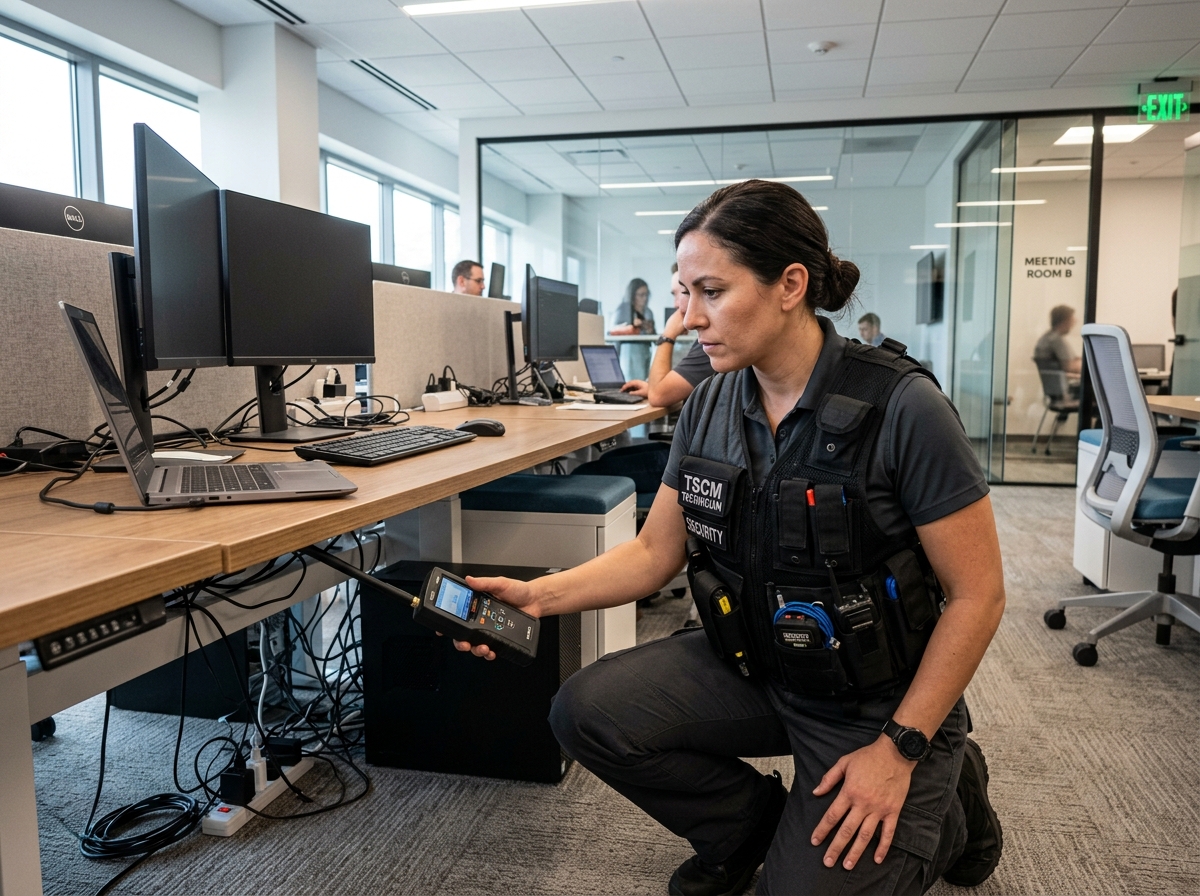
- Technical Surveillance Counter-Measures (TSCM) Sweeps: With a 38% rise in targeted extortion attempts against C-suite executives, TSCM sweeps are crucial for detecting unauthorized listening devices or hidden cameras, particularly in high-stakes corporate environments.
- Encrypted Communication: Protecting sensitive information during investigations or strategic planning requires secure, encrypted communication channels to prevent interception by malicious actors.
- Advanced Data Analytics Platforms: These tools help asset protection teams analyze vast amounts of operational data to identify trends, predict potential loss events, and measure the effectiveness of various security interventions.
The rise of hybrid digital-physical threats means a comprehensive asset protection strategy must seamlessly integrate both digital and physical security measures.
Education and professional training
For aspiring asset protection professionals, a blend of formal education and practical training is highly recommended. Many roles benefit from a background in criminal justice, security management, or business administration. However, practical experience is often highly valued.
- Law Enforcement Background: Individuals with prior experience in law enforcement bring invaluable investigative skills, knowledge of legal procedures, and crisis management expertise.
- Military Experience: Veterans often possess strong leadership, discipline, critical thinking, and operational planning skills that are directly transferable to asset protection roles. Wegmans, for example, actively seeks candidates with law enforcement or military experience for its asset protection teams.
- Specialized Certifications: Certifications such as Certified Protection Professional (CPP), Certified Forensic Investigator (CFI), and various cybersecurity credentials can significantly enhance career prospects.
- Continuous Professional Development: The threat landscape is constantly evolving, making ongoing training in areas such as behavioral cues, incident management, and new security technologies essential for staying effective.
Legal frameworks and risk mitigation strategies
The work of asset protection professionals is inextricably linked to legal and ethical boundaries. Operating within these frameworks is not just a matter of compliance; it is also crucial for maintaining credibility and preventing legal repercussions. Every action, from an interview with a suspected thief to the deployment of surveillance technology, must adhere to local, state, and federal laws, as well as company policies. Ethical considerations, such as respecting privacy and ensuring fair treatment, guide decision-making and uphold the integrity of the asset protection function.
Legal structures play a significant role in broader asset protection strategies, particularly for high-net-worth individuals and corporations. Tools like LLC structures, irrevocable trusts, and understanding laws like the Uniform Voidable Transactions Act (UVTA) are essential. These legal instruments are designed to create barriers that make it difficult for future creditors to access assets, often by separating ownership and control. For instance, an LLC can shield personal assets from business liabilities, while an irrevocable trust can protect wealth from future claims if established correctly and promptly. Understanding how these legal frameworks operate is key to effective client asset protection operations. The concept of charging orders, which limit a creditor’s remedy against an LLC or partnership interest, is another important legal protection.
Insurance as the first line of defense
While legal structures provide a crucial layer of protection, insurance remains the foundational first line of defense in any comprehensive asset protection strategy. It acts as the “moat” around your assets, providing financial compensation and legal defense in the event of a covered loss or liability claim.
- General Liability Insurance: Protects businesses from claims of bodily injury, property damage, and advertising injury.
- Excess Coverage/Umbrella Policies: These policies provide an additional layer of protection above the limits of primary insurance policies, such as general liability or auto insurance. This is particularly vital in an environment where “nuclear verdicts” and large settlements are increasingly common. For personal assets, a robust Stanton auto asset protection plan, including comprehensive personal umbrella insurance, is indispensable.
- Professional Liability Insurance: Essential for service-based businesses and professionals, covering claims of negligence or errors in professional services.
The era of relying solely on reactive insurance claims is over. While insurance provides financial reimbursement, it doesn’t prevent the initial loss or the reputational damage that can ensue. Moreover, the escalating risk environment, evidenced by a 38% rise in targeted extortion attempts against C-suite executives lacking integrated asset protection strategies, highlights the need for proactive measures that go beyond mere financial coverage.
Safeguarding physical and intellectual property
Beyond financial and legal assets, protecting physical and intellectual property is paramount for operational resilience.
- Trade Secret Protection: For many companies, intellectual property—such as proprietary processes, customer lists, and innovative designs—is their most valuable asset. Robust operational controls, including strict access protocols, non-disclosure agreements, and regular audits, are critical to prevent theft or compromise. The average cost of trade secret theft can reach millions if not acted upon swiftly.
- Perimeter Analytics: For physical assets, AI-driven perimeter analytics, as mentioned earlier, provides advanced surveillance to secure facilities, warehouses, and other physical locations against intrusion.
- Personnel Vetting: Rigorous background checks and ongoing vetting of employees, especially those with access to sensitive information or critical operational areas, are fundamental to mitigating insider threats.
- Operational Security in Workspaces: Even seemingly mundane areas, like break rooms, require attention. Implementing clear policies, surveillance, and access controls in sensitive operational areas, such as breakroom asset protection operations, can prevent internal theft and maintain a secure environment.
The stakes are incredibly high: the loss of a key strategic asset can reduce corporate longevity by up to 12 years. This statistic underscores the critical importance of integrating physical, digital, and intellectual property protection into the core operational strategy.
Frequently asked questions about asset protection and operations
What is the difference between asset protection and standard insurance?
Asset protection and standard insurance, while both crucial for safeguarding wealth, serve distinct purposes. Asset protection involves proactively structuring your legal and financial affairs to create barriers that deter or prevent creditors from accessing your assets in the event of a lawsuit or claim. This often includes establishing entities like LLCs, partnerships, or various types of trusts, and strategically titling assets. It’s about making your assets legally difficult to seize before a threat emerges, changing a creditor’s economic calculus.
Standard insurance, on the other hand, provides financial reimbursement or legal defense after a covered loss or liability has occurred. For example, a general liability policy covers damages if someone is injured on your property, and an auto policy pays for repairs after an accident. While insurance is the first line of defense against many common risks, it typically has limits. If a judgment exceeds your policy limits, your unprotected personal assets could be vulnerable. Asset protection creates structural barriers to prevent wealth loss rather than simply providing financial reimbursement after a loss.
How does technology enhance modern asset protection operations?
Technology has revolutionized modern asset protection operations, transforming them from reactive measures to proactive, intelligence-led strategies.
- Advanced Surveillance and Analytics: AI-driven perimeter analytics and facial recognition software can monitor vast areas, detect anomalies, and alert security personnel to potential threats in real-time, significantly reducing response times.
- Cybersecurity and Data Protection: With the cost of global cybercrime projected to exceed $10.5 trillion annually by 2026, robust cybersecurity tools, including intrusion detection systems, encryption, and computer forensics, are essential for protecting digital assets and intellectual property.
- Technical Surveillance Counter-Measures (TSCM): Sophisticated TSCM sweeps utilize advanced equipment to detect hidden listening devices, cameras, or other unauthorized surveillance tools, protecting sensitive corporate communications and executive privacy.
- Integrated Security Platforms: These systems consolidate data from various security devices (CCTV, access control, alarms) into a single dashboard, providing a comprehensive overview and enabling more efficient incident management.
- Predictive Analytics: By analyzing historical data and current trends, asset protection teams can identify patterns and forecast potential risks, enabling preemptive action.
These tools empower asset protection professionals to identify vulnerabilities before they are exploited by bad actors, moving from a reactive “catch-and-respond” model to a proactive “predict-and-prevent” approach.
Why is timing critical in asset protection planning?
Timing is arguably the most critical factor in effective asset protection planning. The fundamental principle is that protective structures must be established pre-litigation – that is, before any specific claim, lawsuit, or creditor threat arises.
If assets are transferred or structures are set up after a threat becomes apparent (e.g., after an accident, a business dispute, or a notice of intent to sue), these actions may be legally challenged as fraudulent conveyances or fraudulent transfers under laws such as the Uniform Voidable Transactions Act (UVTA). Courts typically view such transfers as attempts to hide assets from legitimate creditors, and they can be reversed, leaving the assets exposed. Moreover, engaging in fraudulent transfers can carry severe penalties, including fines and even criminal charges, and can undermine the credibility of any subsequent asset protection efforts.
Effective asset protection should look “orderly, documented, and boring.” It should be part of a long-term financial and legal strategy, implemented during periods of financial stability and low risk. This proactive approach ensures that the structures are legally sound and defensible, and that they achieve their intended purpose of safeguarding wealth.
Conclusion
As we navigate the complexities of April 2026, the convergence of asset protection and operational excellence has never been more vital. We’ve seen that safeguarding an organization’s assets extends beyond traditional security measures, demanding a sophisticated blend of proactive strategies, advanced technologies, and a deep understanding of legal and ethical frameworks. From the diligent work of asset protection officers on the ground to the strategic formation of legal entities and the use of cutting-edge digital tools, every layer contributes to an organization’s resilience.
The lessons are clear: strategic foresight, an integrated defense, and a commitment to operational integrity are not merely options but necessities for long-term wealth preservation and business continuity. By embracing these principles, businesses can not only protect what they have but also foster an environment where growth and innovation can thrive securely in an ever-challenging world.