

Unpaid pension contributions set to exceed £40m as insolvencies climb, study finds
UK firms are going bust owing millions in defined contribution pensions, with £32.6m left outstanding last year alone, highlighting a growing risk to retirement savings.
New Freedom of Information (FOI) data obtained by the experts at Liquidation Centre reveals that more than 5,100 employers collapsed with outstanding pension contributions in 2024/25 – nearly three times more than during the pandemic. While schemes like the Pension Protection Fund can step in, not all losses are fully recovered, meaning workers may still see reduced retirement incomes as companies fold.
The findings have shed light on the ongoing impact business closures are having on everyday households, turning corporate failures into real-life losses for thousands of workers. This comes amid renewed debate this week over the future of the triple lock and increasing scrutiny over its affordability, underlining broader concerns about the resilience of retirement incomes. In fact, the findings show the scale of the issue is rapidly worsening, with the value of unpaid private pension contributions owed at the point of insolvency surging by 359% since 2020 – rising from £7.1m to £32.6m.
Following record insolvencies and the collapse of major employers such as the Arcadia Group (owner of Topshop, Dorothy Perkins, Burton and Miss Selfridge), which went into administration in 2020 with a £510 million pension deficit, the experts at Liquidation Centre, a trusted UK liquidation firm focused on solvent liquidations (MVL) for contractors and small business owners, while also supporting Creditors’ Voluntary Liquidations (CVL) for insolvent businesses, sent a Freedom of Information request to the Pensions Regulator to assess the impact of insolvencies on pensions and everyday workers since 2020.
Study highlights:
- £40.2m in pension contributions estimated to be unpaid this financial year (2026/27)
- Since 2020, a total of £140.5m in defined contribution pensions has been put at risk due to employer insolvencies, an average of £23m per year
- 2024/25 saw the highest level of unpaid pension contributions since 2020, reaching £32.6m at the point employers entered insolvency
- Between 2020/21 and 2024/25, the value of outstanding pension contributions linked to employer insolvency surged by 359.39%, rising from £7.1m to £32.6m
- Over the same period, the number of employers entering insolvency with outstanding pension obligations rose by +178.01%, climbing from 1,842 to 5,121
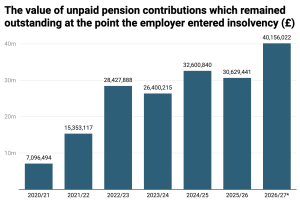
£140.5m in pension contributions have entered arrears since 2020 as firms collapse
Liquidation Centre’s Freedom of Information (FOI) request uncovered that a total of £140,507,995.48 in pension contributions were outstanding at the point employers entered insolvency since 2020, averaging £23m annually. The 2024/25 financial year saw the highest outstanding pension value since 2020 (£32.6m), and in 2025/26, outstanding pension contributions are already at £30.6m, indicating sustained pressures on businesses.
The value of outstanding pension contributions from insolvent employers rose by 359.39% since 2020
Between 2020/21 and 2024/25, the value of outstanding pension contributions entering arrears due to employer insolvency rose by 359.39%, increasing from £7,096,494.19 to £32,600,839.85; an average annual rise of 54%. 2023/24 was the only financial year in this period to see a decline, with contributions falling by -7.13% from the previous year. However, levels remained nearly four times higher than in 2020/21.
£40.2m in pension contributions estimated to be unpaid this financial year
Using historical unpaid pensions data, the experts at Liquidation Centre estimate that the 2026/27 financial year could see as much as £40,156,021.90 in unpaid pension contributions – almost £10m more than 2025/26, with 5,730 employers estimated to file for insolvency in arrears. This marks a forecasted 31.1% increase in value from last year and the highest year-on-year jump since 2022/23.
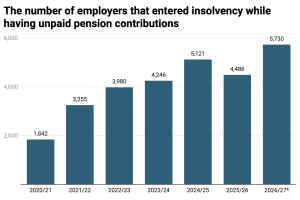
Since 2020, 22,930 employers entered insolvency with outstanding pension contributions. Between 2020/21 and 2024/25, the number of employers entering insolvency with outstanding pension obligations rose by +178.01%, from 1,842 to 5,121, meaning tens of thousands of employees, and likely well over 100,000, may have been affected.
Nearly three times more employers entered insolvency owing pensions in 2024/25 compared to the pandemic
2024/25 was a record year for employer insolvencies involving unpaid pension contributions, with nearly three times as many employers collapsing with unpaid pension debts (5,121) as during the pandemic (1,842). As of January 2026, the 2025/26 financial year saw 4,486 employers enter insolvency with outstanding pension contributions.
Between 2020/21 and 2021/22, there was a sharp 76.71% increase in the number of employers entering insolvency with outstanding pension contributions. This is likely due to many Covid-era borrowing schemes entering repayment from 2022, leading to sustained pressures in the 2021/22 financial year and almost doubling insolvencies.
Richard Hunt, director at Liquidation Centre, shares tips for businesses to avoid falling behind on pension contributions:
“Businesses under pressure should look at more sustainable ways to manage financial difficulty, such as reviewing overheads and negotiating with creditors. It is also vital that business owners monitor for signs of insolvency early; a business that’s becoming increasingly reliant on loans or credit to stay afloat should see that as a serious sign that something needs to change. Missing payments to suppliers or experiencing pressure from creditors is another major concern.
Sales figures might still look reasonable on the surface, but even a gradual decline should trigger a closer look at your figures. Pressure from HMRC is another red flag, whether it’s reminders, penalties, or formal warnings. If you’re receiving legal letters from creditors, like a CCJ, things have already escalated. Seeking support during the early signs of financial strain can protect businesses before it’s too late. ”