

Business growth and networking: 2026 secrets
Sponsored content. This article was supplied by a third party and Business Money has been paid to publish it.
Strategic approaches to business growth, AI ventures, and elite networking
Strategic frameworks for scalable business growth and networking
In the dynamic business landscape of May 2026, a one-size-fits-all approach to growth is a relic of the past. Successful businesses understand that their growth trajectory is deeply influenced by their current market position and the broader ecosystem in which they operate. We recognize that strategic growth isn’t merely about scaling; it’s about intelligent scaling tailored to a company’s unique “starting point.”
Our research reveals distinct growth archetypes that businesses often embody:
- Stars: Gaining market share in fast-growing industries, these companies prioritize scaling and operational excellence.
- Underdogs: Seeking to overcome price or geographic disadvantages, Underdogs often leverage mergers and acquisitions (M&A) to build scale and reach.
- Incumbents: Established players that need to reposition, often through M&A, to acquire new capabilities or make strategic bets.
- Challenged: These businesses need to pivot through heavy investment in research and development (R&D) and innovation, inventing their way into winning positions in adjacent markets.
- Tacticians: Operating in declining core markets, Tacticians rely on investor trust to make incremental and radical moves outside their traditional areas.
- Expanders: Companies focused on improving core performance and business economics before venturing into new frontiers.
Understanding which archetype best describes your business is the first step toward crafting a strategy that genuinely propels growth. The strategies that brought a business to its current level are rarely the ones that will take it to the next.
Beyond internal strategy, the external environment, particularly business ecosystems, plays a pivotal role. An ecosystem strategy defines how a company collaborates with a network of partners, customers, and even competitors to create and capture value. While the concept promises significant rewards, our data indicates that fewer than 15% of ecosystems are sustainable over the long run. This stark statistic underscores the complexity and challenges involved in successful ecosystem participation. Despite this, the trend is undeniable: more than half of S&P Global 100 companies are already engaged in one or more ecosystems, and a remarkable 90% of executives in multinational companies plan to expand their ecosystem activities. This signifies a clear shift towards collaborative growth models as a cornerstone of future business success.
Ecosystems primarily fall into two categories, each with distinct characteristics and strategic implications:
Feature Transaction Ecosystems Solution Ecosystems Primary Goal Linking buyers and sellers on a platform Orchestrating complementors to deliver a comprehensive solution Key Mechanism Network effects, matching demand and supply Integration of diverse offerings, value chain collaboration Value Creation Facilitating exchanges, reducing search costs Solving complex customer problems, holistic service delivery Examples E-commerce marketplaces, ride-hailing apps Smart home platforms, integrated healthcare services 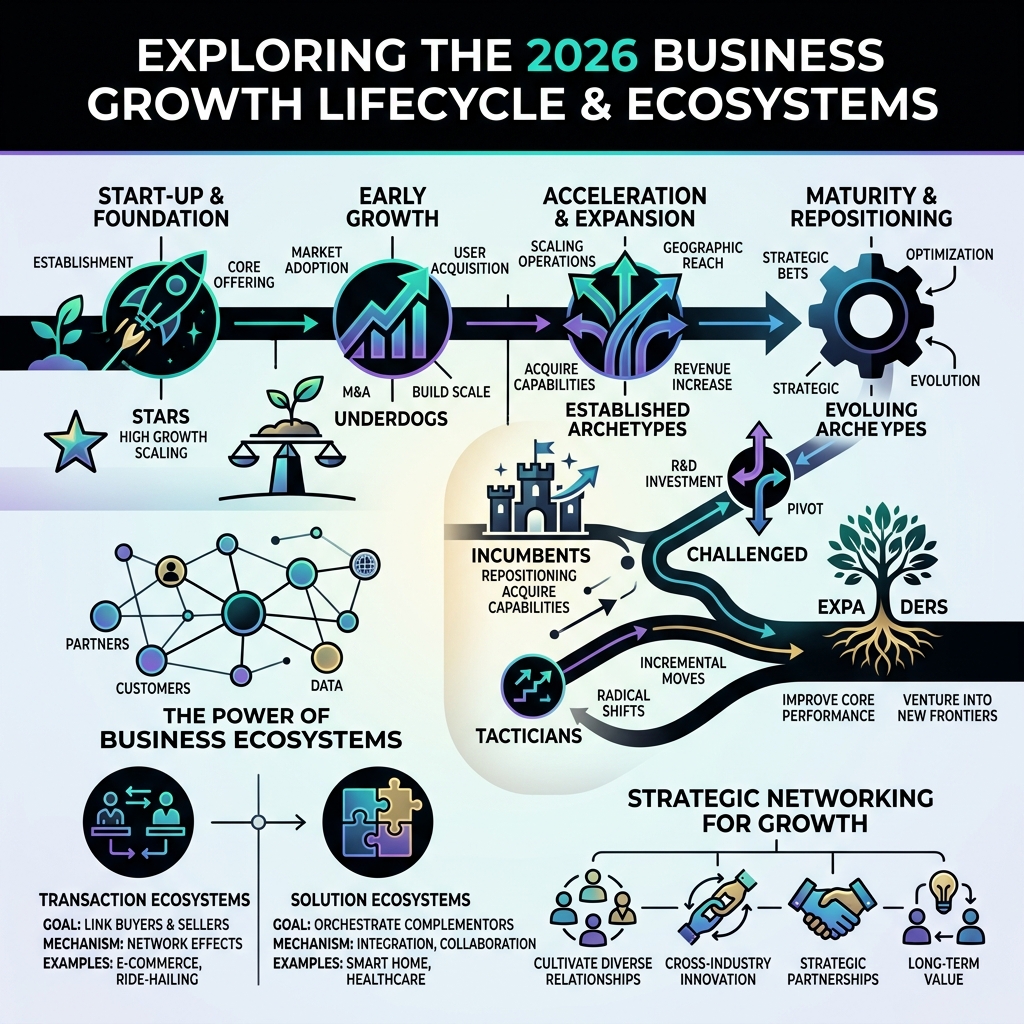
Building diverse and valuable professional relationships
The bedrock of any successful growth strategy, whether internal or ecosystem-driven, is the cultivation of diverse and valuable professional relationships. Cross-industry innovation, for instance, thrives on cognitive diversity—the bringing together of varied perspectives, experiences, and problem-solving approaches. This diversity challenges existing assumptions and fuels creativity, which is crucial for navigating unpredictable markets. The strength of a network isn’t just in its size, but in its breadth and depth, exposing individuals and businesses to a wider array of knowledge, opportunities, and insights.
Consider the educational landscape: 47% of the population aged 25+ holds at least a bachelor’s degree, indicating a vast pool of educated professionals ready to engage. Strategic partnerships, built on trust and mutual benefit, are the natural outcome of effective networking. These partnerships can extend a business’s reach, provide access to new markets, and even act as an extension of its sales team, opening doors that would otherwise remain closed. Long-term value in these relationships is fostered not by transactional exchanges, but by a genuine contribution mindset, where participants actively seek to support and enable others. This approach transforms networking from a mere lead-generation activity into a robust system for sustainable growth.
Identifying high-impact business growth and networking communities
Not all networking groups are created equal. Identifying high-impact communities is crucial for maximizing your time and effort. Successful groups often distinguish themselves through rigorous vetting processes, ensuring that members are experienced, committed, and aligned with the group’s values. This might involve criteria like a minimum number of years of experience in their field or an interview process to assess their collaborative mindset.
These communities often thrive on industry alignment and shared expertise, bringing together professionals who can genuinely understand and support each other’s businesses. Models like “one member per industry” create exclusivity and prevent direct competition within the group, fostering a more collaborative and referral-driven environment. This structure encourages members to act as advocates for one another, actively seeking out opportunities for their peers.
Beyond formal structures, the most impactful groups cultivate a sense of “professional family dynamics.” They provide a supportive environment that mitigates the isolation often inherent in entrepreneurship. Members become a built-in advisory circle, offering feedback, accountability, and encouragement. Whether it’s a local chamber of commerce, a specialized business growth forum, or an exclusive business growth networking community like those found through Exclusive business growth networking, the key is to find a group that prioritizes genuine relationships, shared growth, and a collaborative spirit over superficial exchanges. These are the environments where meaningful connections translate into tangible business growth.
Mastering elite networking: From elevator pitches to ecosystems
Networking, at its core, is about forging connections. But elite networking elevates this to an art form, transforming casual introductions into strategic alliances and tangible business opportunities. It’s about moving beyond simply swapping business cards to building a robust referral pipeline and expanding your influence.

A cornerstone of effective networking is the compelling “30-second commercial” or elevator pitch. This isn’t just about what you do, but how you help others. It’s a concise articulation of your value proposition, designed to pique interest and invite further conversation. When crafted effectively, it communicates your unique selling points and the benefits you offer, making it easy for others to understand your business and, crucially, to refer you. Our data suggests that networking can contribute significantly to a company’s bottom line, with some businesses attributing approximately 33% of their annual turnover to relationships built within specific networking communities. This highlights the immense potential of well-executed networking to drive substantial revenue and growth.
Key tips for effective networking at events
Navigating networking events effectively requires both preparation and presence. Here are some key tips we advocate for:
- Preparation plans and target lists: Before attending an event, think about who you want to meet. Research attendees or participating organizations and identify a target list of individuals or companies that align with your strategic goals. Having a plan not only makes your networking more efficient but also boosts your confidence.
- Develop a compelling elevator pitch: As discussed, a well-rehearsed, concise, and value-driven elevator pitch is indispensable. Focus on the problem you solve or the value you create, rather than just your job title.
- Active listening and positive attitude: Be genuinely interested in others. Listen more than you talk. Ask open-ended questions and pay attention to their responses. A positive and approachable attitude makes you easy to engage with and memorable.
- Wait for conversation openings: Don’t interrupt or force your way into conversations. Observe group dynamics, listen for natural pauses, and politely introduce yourself when the moment is right.
- Be a giver, not just a taker: Approach networking with a mindset of contribution. Think about how you can help others, make introductions, or share valuable insights. This builds goodwill and trust, making others more inclined to reciprocate.
The critical role of follow-up and accountability
The true magic of networking happens after the event. Without diligent follow-up, even the most promising connections can fade into forgotten business cards. We recommend adhering to a “24-hour rule” for initial follow-up: send a personalized email or make a call to promising contacts within a day of meeting them. Reference something specific from your conversation to jog their memory and demonstrate your genuine interest.
Beyond the initial contact, relationship sustainability hinges on consistent engagement and delivering on any promises made during your interaction. If you offered to send an article, make an introduction, or provide information, ensure you follow through promptly. This builds trust and credibility, transforming a casual acquaintance into a valuable professional relationship. Engaging with a Stamford growth networking consultant can further refine these follow-up strategies, ensuring that every connection is maximized for potential growth.
Accountability also plays a crucial role, particularly within structured networking groups. Members often hold each other accountable to business goals, referral targets, and ethical conduct. This shared commitment fosters a strong sense of community and ensures that networking efforts translate into tangible results. Through consistent follow-up, trust-building, and mutual accountability, connections evolve into warm introductions and enduring partnerships that fuel long-term business growth.
Leveraging AI ventures and digital platforms for visibility
In May 2026, the digital landscape is an undeniable force in business growth and networking. Leveraging AI ventures and robust digital platforms is no longer optional; it’s a strategic imperative for enhancing visibility, connecting with key audiences, and driving innovation.

The rise of AI has fundamentally reshaped how businesses are discovered and how information is consumed. We’re witnessing a shift where visibility is moving beyond traditional search engine rankings to becoming a trusted source cited by large language models (LLMs) like ChatGPT and Gemini. This means businesses need to focus on becoming authoritative, valuable content creators that AI can confidently reference. Furthermore, AI-driven discovery tools are empowering businesses to identify and nurture internal champions within target organizations more efficiently, streamlining the sales process.
Social selling, powered by these AI insights and digital platforms, has become a sophisticated strategy for engaging prospects and building relationships online. Platforms like LinkedIn are indispensable, with a staggering 95% of recruiters using it to find job candidates. This highlights the platform’s critical role not just for job seekers, but for businesses looking to connect with talent, partners, and clients. For businesses looking to navigate this complex, AI-driven environment and capitalize on emerging opportunities, collaborating with an AI venture growth network can provide the specialized expertise and connections needed to thrive. These networks often sit at the forefront of technological integration, helping companies understand and implement cutting-edge AI strategies for growth.
The role of digital presence in business growth and networking
A strong digital presence is your modern-day storefront, brochure, and networking event all rolled into one. Optimizing your LinkedIn profile, for instance, goes beyond just listing your experience; it involves crafting a compelling headline, uploading a professional photo, and actively engaging with industry content. This platform serves as a powerful visibility engine, allowing you to showcase your expertise, connect with peers, and attract opportunities.
Our internal insights emphasize that visibility is your growth engine. It’s about becoming “unignorable online” and establishing brand authority. This requires a coherent content strategy that consistently delivers value to your target audience across various digital channels. By actively participating in digital ecosystems—online communities, industry forums, and social media groups—you can extend your network far beyond geographical limitations, fostering relationships that might not be possible in a purely in-person setting. A robust digital presence ensures that your professional brand reflects your evolving expertise and strategic objectives, making you accessible and attractive to potential collaborators and clients.
Measuring ROI and avoiding common networking mistakes
While the benefits of networking are clear, measuring its return on investment (ROI) can sometimes feel elusive. Yet, it’s crucial for ensuring your efforts are strategically aligned and yielding tangible results. We advocate for a blend of quantitative and qualitative metrics. Quantitatively, businesses can track referral conversion rates, the revenue generated from partnerships forged through networking, and the velocity of network growth (e.g., new valuable connections made per quarter). Qualitatively, assessing brand sentiment, the depth and quality of relationships, and the attribution of specific business opportunities to networking activities provides a more holistic view. The statistic that fewer than 15% of ecosystems are sustainable over the long run serves as a powerful reminder that poorly executed strategies, particularly those lacking clear objectives and measurement, are prone to failure.
To avoid common pitfalls in networking, we advise steering clear of a purely transactional mindset. Networking should never feel like a high-pressure sales pitch. Instead, focus on building genuine relationships. Other common mistakes include:
- Lack of follow-up: Failing to follow up promptly and consistently after making connections is a wasted opportunity.
- Poor preparation: Attending events without a clear objective or understanding of who you want to meet diminishes their value.
- Dominating conversations: Effective networking is a two-way street. Listen actively and allow others to share their insights.
- Ignoring diverse perspectives: Limiting your network to only those in your immediate industry can stifle innovation and limit growth.
By focusing on strategic alignment, genuine engagement, and measurable outcomes, businesses can transform networking from a nebulous activity into a powerful driver of growth.
Frequently asked questions about business growth and networking
How do you distinguish successful networking groups from average ones?
Successful networking groups are characterized by several key elements that foster genuine growth and collaboration. Firstly, they often implement rigorous vetting standards for membership, ensuring a high caliber of professionals who are committed to mutual support. This might include experience requirements or a collaborative selection process by existing members. Secondly, they prioritize relationship building over transactional exchanges, often adopting “pitch-free” or “no-pressure sales” environments. This creates a space where trust can flourish, leading to higher quality referrals. Thirdly, successful groups typically have clear accountability structures, encouraging members to set and achieve business goals, and provide structured opportunities for shared expertise and learning. Finally, they cultivate a strong, supportive culture, often described as a “professional family,” where members act as advocates and advisors for one another, leading to a more profound and lasting impact on business growth.
What are the most common mistakes to avoid in professional networking?
Several common mistakes can undermine networking efforts. A primary pitfall is adopting a purely transactional mindset, where the focus is solely on what you can gain rather than what you can contribute. This often manifests as a “sales-first” approach, which can alienate potential connections. Another significant error is the lack of consistent and timely follow-up after making new contacts; without it, promising connections quickly fade. Poor preparation, such as not having a clear objective for an event or a concise elevator pitch, can also lead to missed opportunities. Dominating conversations, failing to listen actively, and showing a lack of genuine interest in others are also detrimental. Lastly, limiting your network to a homogeneous group and ignoring diverse perspectives can stifle innovation and limit the breadth of opportunities available to your business.
How can businesses measure the ROI of their networking activities?
Measuring the ROI of networking requires a multi-faceted approach, combining quantitative and qualitative metrics. Quantitatively, businesses can track:
- Referral conversion rates: The percentage of referrals received through networking that convert into paying clients or successful partnerships.
- Partnership revenue: Direct revenue generated from collaborations or strategic alliances initiated through networking.
- Network growth velocity: The number of high-quality, relevant connections added to your network over a specific period.
- Brand sentiment and awareness: Qualitative feedback on how your brand is perceived and the increased recognition attributed to your networking efforts.
- Turnover attribution: Assigning a percentage of annual turnover directly to business generated through networking activities, as some studies suggest this can be substantial (e.g., up to 33%). Qualitatively, assessing the depth of relationships, the strategic insights gained, and the problem-solving support received from your network provides invaluable context that purely financial metrics might miss. Regularly reviewing these indicators allows for continuous refinement of your networking strategy.
Conclusion
The journey to sustained business growth in May 2026 is intricately linked with strategic agility, a commitment to future-proofing, and the power of relationship-driven results. We’ve explored how understanding your business’s growth archetype, engaging thoughtfully with ecosystems, and cultivating diverse professional relationships are not just best practices, but essential survival strategies. From mastering the art of the elevator pitch and diligent follow-up to leveraging cutting-edge AI ventures and digital platforms for enhanced visibility, every aspect of networking contributes to a holistic growth strategy.
The market trends of 2026 clearly indicate that collaboration, authenticity, and strategic foresight will define success. By avoiding common pitfalls and embracing a mindset of continuous learning and contribution, businesses can build resilient networks that drive sustainable scaling. The future of business growth isn’t just about what you know, but who you know, and crucially, how you nurture those connections to create lasting value.