

The future of skilled labor: Navigating the latest H-1B visa policy changes
Sponsored content. This article was supplied by a third party and Business Money has been paid to publish it.
Key takeaways
- Recent policy changes have increased the financial burden on H-1B applicants.
- Smaller companies and startups are disproportionately affected by these changes.
- There is a growing trend of companies considering offshoring due to these challenges.
Table of contents
- Introduction
- Financial burdens
- Impact on startups
- Offshoring trends
- Policy uncertainties
- Conclusion
The H-1B visa program has long played a vital role in allowing skilled professionals from around the world to contribute to the U.S. workforce. For many companies, it has been a crucial tool for sourcing top talent in fields like technology, engineering, and medicine. Yet, with recent policy changes raising significant hurdles, the path for both employers and applicants has become far more complicated. To understand today’s landscape, resources like https://www.lighthousehq.com/blog/h-1b-visa provide deeper insights and updates on these evolving changes.
For companies and workers alike, adapting to these new realities often means reevaluating budget priorities, legal strategies, and hiring pipelines. The consequences of these shifts ripple beyond immediate employment concerns, shaping innovation and competitiveness across the broader U.S. economy. Increasingly, the high cost and unpredictable nature of securing H-1B visas have forced tough choices on startups, established firms, and skilled professionals eyeing opportunities in America.
Along with rising costs, smaller organizations and high-growth startups face disproportionate challenges, threatening their ability to compete with larger enterprises that may better absorb new financial and legal requirements. Offshoring has resurfaced as an alternative, showing early signs of a trend that could move both jobs and innovation outside the United States.
Introduction
The H-1B visa program originated as a means for American companies to attract highly qualified foreign professionals into specialty occupations. These fields span science, engineering, IT, health care, and more, making the program essential for sectors where domestic talent falls short of demand. However, the landscape has changed dramatically, moving from relative predictability to a climate shaped by new fees, tighter regulations, and shifting administrative priorities.
Financial burdens
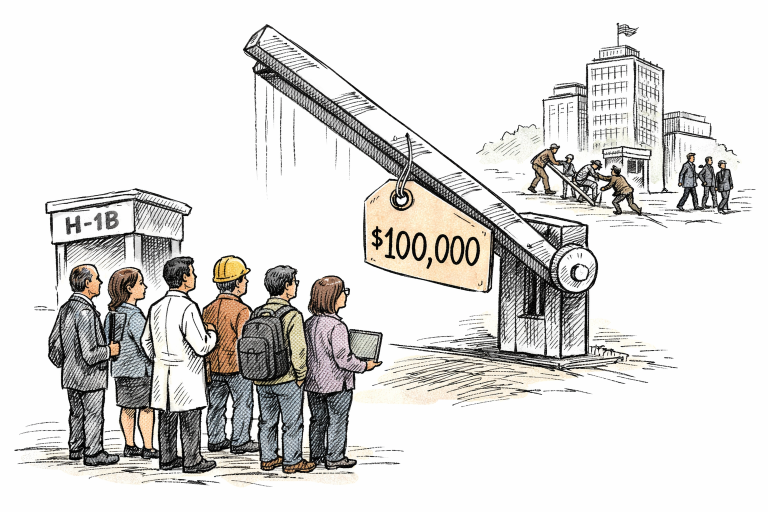
The most pressing concern for businesses and skilled workers is the recent introduction of a $100,000 fee for each H-1B visa application. This represents a tenfold increase over earlier costs, presenting a financial obstacle that only the best-resourced employers can reliably overcome. According to VisaVerge, many employers face difficult choices: reduce international hiring, reconsider which roles are essential, or potentially pass on top-tier talent due to prohibitive costs.
For individual applicants, this means higher stakes and often additional out-of-pocket expenses, as companies may not always cover increased fees. The overall hiring process has become more selective, favoring established professionals and larger firms while creating new barriers for less-established candidates and businesses.
Impact on startups
Startups and early-stage companies may suffer the most from these cost increases. Operating with lean budgets and high uncertainty, many young firms relied on global talent to launch products and scale quickly. Now, the high price of H-1B sponsorship forces many to make tough decisions: forego hiring the right person or divert precious funds from innovation to compliance. Axios notes that startups and founders are among those hardest hit, limiting their access to critical expertise and potentially stifling future industry leaders.
This policy environment not only challenges new firms directly but also indirectly alters the broader innovation ecosystem. Companies unable to afford these fees may opt to remain small or delay growth, reducing their potential impact on job creation, technological advancement, and economic competitiveness.
Offshoring trends
With rising costs and stricter eligibility requirements at home, many companies are now actively considering offshoring jobs to other countries. This solution offers access to global talent pools without the administrative and financial burdens of the H-1B process. As reported by Axios, the new H-1B fee structure has already spurred offshoring discussions and contributed to hiring turmoil among U.S. firms.
The prospect of increased offshoring raises serious questions for the U.S. job market, not only about lost opportunities for domestic workers but about the country’s ability to remain a global leader in technology and other knowledge-intensive fields. The longer such pressures persist, the greater the incentive for ambitious global professionals and innovative firms to seek opportunities elsewhere.
Policy uncertainties
Aside from costs and operational challenges, uncertainty itself is now a defining feature of the H-1B system. Policy reversals, sudden administrative guidelines, and unpredictable adjudications have combined to make long-term planning nearly impossible for businesses and workers who need assured timelines to make career and business decisions. Organizations are increasingly wary of making investments without clarity, which in turn impacts their willingness to commit to international hires or expansion strategies.
This layer of unpredictability affects not only direct H-1B applicants but also influences how American companies are perceived on the global stage. As noted by Time, the wavering policy direction sends mixed signals about the country’s openness to attracting and retaining the best and brightest talent.
Conclusion
The new challenges surrounding the H-1B visa program highlight a complex balancing act between safeguarding domestic job opportunities, sustaining American innovation, and remaining open to the high-skill immigrants that have historically fueled U.S. leadership in technology and research. Addressing these issues will require pragmatic solutions and bipartisan cooperation to ensure that both employers and international talent can thrive in a global economy. Without such efforts, U.S. competitiveness and its reputation as a land of opportunity may face greater risk in the years ahead.