

Colorado highways and trucking collisions: Trends, hotspots, and prevention strategies
Sponsored content. This article was supplied by a third party and Business Money has been paid to publish it.
Key takeaways
- Recent years have seen a significant decline in fatal commercial motor vehicle crashes across Colorado.
- Responsibility for road safety lies with both truck and passenger vehicle drivers.
- Major highways such as I-25 and I-70 are especially prone to trucking collisions.
- Proven preventive measures include the use of runaway ramps and adherence to established safety practices.
Table of contents
- Current trends in trucking collisions
- High-risk highways in Colorado
- Shared responsibility for road safety
- Preventive measures and safety initiatives
- Conclusion
Colorado’s highways offer some of the most breathtaking drives in the country, but their challenging terrain and unpredictable weather make them sites of frequent trucking collisions. Amidst the growing number of commercial vehicles traversing routes such as Interstate 25 and Interstate 70, the safety of both truck drivers and passenger vehicles remains a top concern. When incidents occur, navigating the aftermath can be complex, so consulting a trucking accident lawyer Denver CO is crucial for those impacted by serious collisions and seeking resolution.
Fatal and severe crashes often highlight the shared responsibility of all drivers on Colorado roads. Both truck and passenger car operators play a significant role in either preventing or causing accidents. By examining recent trends, identifying high-risk corridors, and embracing modern safety measures, Colorado can continue to make strides in reducing tragic incidents and ensuring safer passage for everyone.
As commercial traffic continues to grow, staying informed about the dangers specific to Colorado’s mountain passes and urban corridors helps drivers make safer choices. There are also legal resources available to support those involved in these accidents, such as a Denver semi truck accident lawyer who specializes in handling complex trucking claims.
Current trends in trucking collisions
Recent data from the Colorado State Patrol show that the number of fatal commercial motor vehicle (CMV) crashes in Colorado has begun to fall after reaching its peak in 2021. From 79 fatal truck-related crashes in 2021, the state saw a decrease to 64 in 2022, signifying an 18.9% reduction. Provisional data for 2023 (through October) show another decline, with 43 fatal crashes recorded. This downward trend can be partially attributed to enhanced enforcement, driver education, and new safety technologies adopted by trucking fleets, which have gained recognition among safety advocates and law enforcement alike.
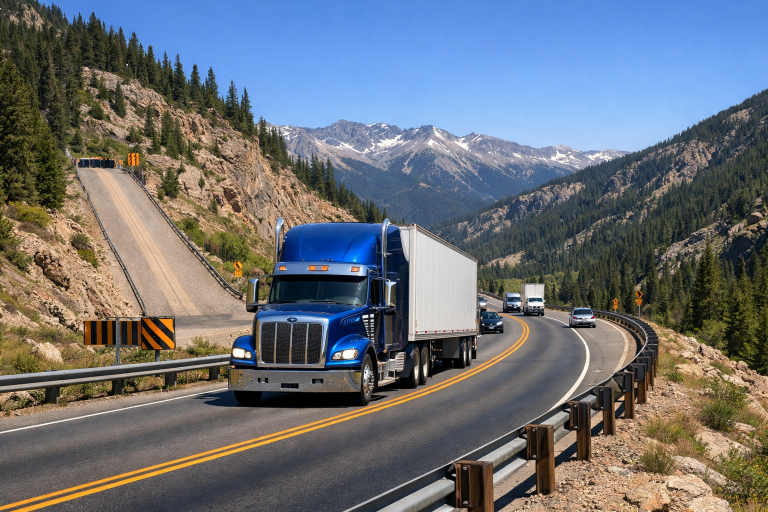
Despite this progress, CMV collisions still account for a significant proportion of fatal crashes in Colorado, underscoring an ongoing need for reliable roadway safety strategies. These statistics reflect Colorado’s alignment with national trends, where increased public awareness and targeted law enforcement campaigns have helped lower truck crash fatalities in recent years. For additional national context, recent insights can be found on the National Highway Traffic Safety Administration website.
High-risk highways in Colorado
Colorado’s geography presents unique hazards for truckers and motorists alike. Several corridors stand out as especially high-risk for commercial truck accidents:
- Interstate 25 (I-25): Serving as the main north-south route through Colorado, I-25 passes through busy metropolitan regions like Denver and Colorado Springs, where dense traffic and frequent merging lead to an elevated risk of collisions.
- Interstate 70 (I-70): This east-west route is infamous for its steep grades and sharp curves, especially as it traverses the Rockies. Snow and ice can make the roadway treacherous, leading to a higher rate of commercial vehicle crashes.
- U.S. Highway 550: Known as the “Million Dollar Highway,” this narrow, winding stretch lacks guardrails in many places, making it particularly dangerous for trucks, especially during bad weather or high winds.
Awareness of these hotspots is essential for drivers planning routes and for trucking companies training their operators to handle mountain and urban driving.
Shared responsibility for road safety
Ensuring safety on Colorado’s highways goes beyond simply enforcing trucking regulations. Data analyzed by the Colorado State Patrol indicates that professional truck drivers and passenger vehicle drivers both contribute to accident statistics. Approximately one-third of fatal collisions involving CMVs are attributed to the truck driver, while the remainder often involve errors by other motorists, such as unsafe lane changes or following too closely.
Public safety campaigns and mandatory commercial driver training have helped improve trucker awareness, but all drivers must remain alert to the unique challenges that trucks face, such as longer stopping distances and large blind spots. The Colorado Department of Transportation has reported that community engagement and multi-agency collaboration are vital for sustaining improvements in roadway safety.
Preventive measures and safety initiatives
Colorado’s commitment to safer highways is reflected in a variety of preventive measures and initiatives:
- Runaway truck ramps: With steep inclines on roads like I-70, truckers must know when and how to use these life-saving lanes. Proper use of runaway ramps has averted numerous disasters and remains a focal point in truck driver education.
- Safety protocols: Obeying speed limits, refraining from cell phone use, and maintaining adequate following distances are vital protocols that both truck and passenger vehicle drivers must observe.
- Driver education: The state, in collaboration with trucking associations, invests in regular safety seminars, online resources, and joint campaigns to raise awareness of the dangers of driving in Colorado.
In addition, advanced technologies, such as collision-avoidance systems and electronic logging devices, are steadily gaining adoption among Colorado’s commercial fleets, further reducing operator error and enforcing federal rest requirements.
Conclusion
Colorado has made notable progress in lowering trucking collisions on its highways, but continued diligence is required. Recognizing high-risk highways, following proven preventive measures, and maintaining a shared sense of responsibility ensure a safer driving experience for all. As the state’s population and freight demands increase, ongoing education, technology upgrades, and law enforcement support will be essential for keeping Colorado’s scenic roadways safe for every traveler.