

High-risk payment processing for online dating businesses in the USA
Sponsored content. This article was supplied by a third party and Business Money has been paid to publish it.
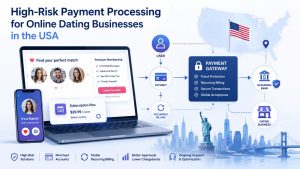
Payment infrastructure for subscription-based online dating businesses operating in the United States.
Online dating platforms, relationship-focused communities, and content subscription businesses can scale quickly in the United States. According to IBISWorld, the US Dating Services industry was estimated at around $3.2 billion in 2025, which shows why many international merchants see the American market as an attractive growth opportunity.
However, payment acceptance is often one of the most difficult parts of entering or operating in the US market.
Unlike standard e-commerce merchants, subscription-based platforms are often reviewed as high-risk. Acquiring banks and payment providers look closely at billing transparency, refund policies, cancellation flows, chargeback history, marketing practices, and the overall customer journey.
For owners of online dating businesses in the USA — and for European companies planning to enter the US market — building the right payment setup early can reduce onboarding delays, improve account stability, and support long-term growth.
Why online dating and subscription platforms are high-risk
Online dating businesses usually rely on recurring billing, membership plans, trial offers, premium features, or content subscription payments. These models can generate stable revenue, but they also create additional risk for payment providers.
Common risk factors include:
- customers not recognizing recurring charges;
- unclear cancellation or refund procedures;
- higher chargeback exposure;
- trial-to-paid subscription disputes;
- marketing and disclosure issues;
- sensitive brand positioning in adult dating or relationship-related services.
This does not mean that online dating merchants cannot obtain payment processing. It means they need stronger preparation, clearer documentation, and payment partners that understand high-risk subscription models.
Why the US market requires special preparation
The United States is attractive for dating and subscription businesses because of its large consumer market and strong card usage. However, US-focused payment processing often requires more preparation than merchants expect.
European companies entering the US market may face additional challenges such as:
- different underwriting expectations;
- stricter review of website content and customer flows;
- US-oriented billing descriptors;
- stronger attention to cancellation practices;
- chargeback monitoring requirements;
- questions about business presence, ownership, and settlement structure;
- provider restrictions for some high-risk subscription verticals.
US acquiring banks and processors typically pay close attention to cancellation flows, billing descriptors, customer support responsiveness, chargeback ratios, and subscription transparency. Businesses that already operate successfully in Europe often discover that additional documentation and compliance preparation are required before entering the US market.
For this reason, entering the USA market should not be treated as a simple geographic expansion. It often requires a separate payment infrastructure plan.
Many merchants entering the US market start by reviewing available online dating payment processing options and evaluating which providers are most suitable for their business model, geography, and projected transaction volume.
Recurring billing needs clear rules
Recurring billing is central to most dating and content subscription businesses. But it is also one of the main reasons payment providers review these businesses carefully.
The Federal Trade Commission has repeatedly focused on subscription cancellation and negative option billing practices in the US market. Its materials on negative option and subscription practices are useful for understanding why clear consent, transparent terms, and simple cancellation mechanisms matter for recurring subscriptions:
FTC Negative Option Rule
Card networks also pay attention to recurring billing practices. Mastercard has published guidance for subscription, recurring payment, and negative option billing merchants:
Mastercard guidance for subscription, recurring payment, and negative option billing merchants
For merchants, the practical message is simple: subscription payments should be easy to understand, easy to cancel, and easy to identify on a card statement.
What payment infrastructure should include
A serious online dating payment processing setup should usually include more than one payment connection.
A stronger structure may include:
- high-risk payment processing options;
- reliable merchant account setup;
- recurring billing support;
- payment gateway infrastructure;
- chargeback monitoring;
- fraud prevention tools;
- clear billing descriptors;
- backup processing options where possible;
- reporting for approval rates, disputes, refunds, and failed rebills.
This is especially important for merchants that depend on subscription payments. Even a modest increase in chargeback ratios can trigger additional monitoring by acquiring partners, which is why recurring billing controls and customer communication play a critical role in account stability.
Ethical billing reduces commercial risk
Dating platforms, relationship platforms, and subscription-based communities should pay special attention to ethical billing and user trust. This is not only a compliance issue. It is also a payment stability issue.
Merchants should avoid misleading claims, hidden renewal terms, unclear pricing, or difficult cancellation flows.
A healthier payment setup usually includes:
- transparent subscription terms;
- visible renewal information;
- clear trial conversion rules;
- simple cancellation;
- fast customer support;
- fair refund handling;
- recognizable billing descriptors;
- no misleading profiles or manipulative user practices.
The more ethical and transparent the project is, the easier it is to present the business to payment providers and acquiring banks.
Merchant account setup: What to prepare
Before applying for a merchant account, dating and subscription merchants can significantly improve their chances by preparing a clear underwriting package in advance.
This may include:
- company documents;
- ownership and director information;
- processing history, if available;
- projected monthly volume;
- average transaction value;
- refund policy;
- terms and conditions;
- privacy policy;
- chargeback handling process;
- website access for review;
- subscription billing flow screenshots;
- customer support contacts;
- description of target geography.
Well-prepared documentation often helps streamline provider reviews and reduces unnecessary delays during onboarding.
Example scenario: European platform entering the US market
Consider a European relationship platform preparing to launch in the USA with a projected monthly processing volume of $150,000–$250,000.
The company may already have a working payment setup in Europe, but US payment providers could still request additional information about cancellation flows, billing descriptors, customer support, refund procedures, and chargeback prevention.
In this situation, the merchant’s goal is not only to obtain approval. The stronger objective is to build a payment setup that can support recurring billing, reduce dispute risk, and remain stable as volume grows.
A better-prepared merchant may present:
- a clear subscription billing flow;
- screenshots of the cancellation process;
- customer support response standards;
- refund and dispute handling rules;
- projected US transaction volume;
- backup payment options where available.
This type of preparation can make the onboarding process more transparent and reduce avoidable friction with payment providers.
How WiseAlt supports dating and subscription businesses
WiseAlt works with payment experts whose team experience includes more than nine years in high-risk merchant onboarding, provider selection, and payment infrastructure consulting.
WiseAlt acts as a payment infrastructure consultant and ISO-style referral partner, helping merchants compare suitable providers, prepare underwriting files, and coordinate merchant account setup.
Rather than acting as a direct acquiring bank or card processor, WiseAlt helps merchants navigate payment infrastructure decisions and connect with suitable processing options for complex verticals.
This approach is particularly valuable for:
- online dating platforms;
- adult dating platforms;
- membership websites;
- social discovery brands;
- content subscription platforms;
- other recurring billing businesses.
For businesses that need scalable payment infrastructure for dating businesses, WiseAlt can help assess risk factors, improve documentation, identify suitable providers, and reduce dependency on a single payment route.
Typical onboarding flow
A practical onboarding process usually includes several steps.
Business review
The merchant’s website, billing model, customer journey, target markets, and risk profile are reviewed.
Payment strategy
The most suitable payment setup is defined, including merchant account options, gateway requirements, subscription billing needs, and backup processing considerations.
Documentation preparation
The merchant prepares business documents, policies, operating materials, payment flow screenshots, and transaction projections.
Provider submission
The application is submitted to suitable payment providers or acquiring partners.
Integration
After approval, the payment gateway infrastructure is connected to the platform, including recurring billing and reporting tools.
Ongoing optimization
The merchant monitors approval rates, failed payments, refunds, chargebacks, and account health.
Conclusion
The USA remains one of the most attractive markets for online dating, adult dating, and content subscription businesses. But payment acceptance in this vertical requires careful planning.
High-risk payment processing is not only about getting approved. It is about building a stable payment structure that supports recurring billing, reduces chargebacks, meets underwriting expectations, and protects long-term revenue.
For merchants entering the US market, especially from Europe, payment infrastructure should be treated as a core part of market entry strategy. A transparent, ethical, and well-documented business has a much better chance of building sustainable payment relationships.