

Face swap AI in marketing: Ethical uses and practical applications
Sponsored content. This article was supplied by a third party and Business Money has been paid to publish it.
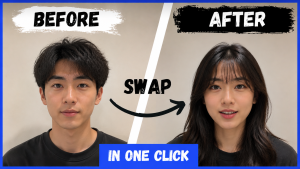 Face swap AI has graduated from party trick to production tool.
What started as a viral social media novelty is now reshaping how brands build campaigns. Marketers are using it to localize ads, personalize content at scale, and cut the cost of video shoots that once required full crews. But with that power comes real responsibility, and the ethical line is clearer than most people realize.
This guide covers what face swap AI actually is, where it works in marketing, where it crosses the line, and how to use it in a way that protects your brand and your audience.
What is AI face swap?
Face swap AI replaces one person’s face in a photo or video with another using deep learning. Modern tools match lighting, skin tone, facial contours, and motion so the result looks natural.
What started as a research experiment in 2017 is now a standard production capability. Film studios use it to de-age actors. Brands use it to localize campaigns. Creators use it to build interactive content without a camera. The technology has matured fast, and so have the rules around using it.
The ethical line: Consent is everything
Before getting into use cases, this needs to be said plainly.
Face swap AI is legal and ethical when everyone whose face appears has given clear consent. It becomes harmful (and in many cases illegal) the moment that consent is missing.
Several US states have passed deepfake disclosure laws requiring synthetic media to be labeled. The EU AI Act adds additional layers of regulation for commercial use. Non-consensual deepfakes involving intimate content carry criminal penalties in most Western jurisdictions.
For marketers, the practical rule is simple: get written consent, disclose AI-generated content where required, and keep documentation.
This isn’t a legal technicality. Audiences are increasingly savvy about synthetic media. Brands caught using faces without permission face serious reputational damage, not just legal risk. The good news is that every use case below operates entirely within consent-based, ethical bounds.
5 practical marketing applications
1. Localizing campaigns without reshooting
A single campaign video can be adapted for dozens of regional markets by swapping the spokesperson’s face with a locally recognized figure, with their consent and a usage agreement in place.
A cosmetic brand, for example, can produce one base product demo and generate regional versions featuring local influencers. This approach eliminates the cost of separate shoots for each market. It keeps messaging consistent while making the face in the ad feel familiar to each audience.
2. Personalized ad experiences
Marketers are building campaigns that invite users to submit selfies and see themselves in branded content. A beauty brand might run a campaign where followers see their own face in a before-and-after transformation video.
This kind of personalization drives engagement precisely because it’s personal. Users are far more likely to share content that features their own face. The campaign generates organic reach that a standard ad buy can’t replicate.
3. Virtual product try-ons
Fashion and beauty brands use face swap technology to let shoppers preview how products look on them before purchasing. A stylist can show a client ten haircut options without a single physical appointment.
This reduces returns, increases buyer confidence, and shortens the sales cycle. It works especially well for e-commerce brands where the gap between “I wonder if this would suit me” and “add to cart” is the conversion problem they’re trying to solve.
4. Interactive social media campaigns
Brands on Instagram and TikTok are running campaigns that invite users to swap faces with a brand mascot, character, or ambassador as part of a contest or challenge. The mechanic is simple, shareable, and low-cost to run at scale.
A fashion brand can launch a hashtag challenge where participants swap faces with a campaign character. The best entries get featured. Winners get product. The brand gets user-generated content that performs better than anything produced in a studio.
5. Live event activations
Face swap booths at branded events have become a reliable engagement tool. Attendees interact with the brand, generate shareable content on the spot, and leave with something they actually want to post.
Magic Hour offers this exact capability: building interactive campaigns with face swap at live events, then scaling that same content pipeline for digital ads and social media. Its browser-based platform means no hardware setup, and the same account handles the event activation and the post-event content push.
What to avoid
Not all face swap use cases belong in a brand’s playbook.
Public figures without consent is the clearest no. Placing a celebrity’s face in your ad without a signed agreement exposes the brand to defamation claims and platform removal. The fact that the technology makes it easy doesn’t make it safe.
Misleading product endorsements are another trap. Using face swap to make it appear that a known figure endorses a product they haven’t endorsed is fraud, not just a terms-of-service violation. Regulators in the US, EU, and UK are actively pursuing cases.
Undisclosed AI content is increasingly risky. Platform policies on TikTok, Meta, and YouTube now require labeling for AI-generated or manipulated content. Brands that skip disclosure are one viral callout away from a reputational hit that no PR team can easily contain.
Choosing the right tool
Not all face swap tools are built with marketing use cases in mind. The ones worth using for brand work have a few things in common.
They enforce consent-based workflows. They support C2PA watermarking: an emerging industry standard for tracking synthetic media provenance. They have clear commercial use terms that explicitly cover the outputs you’re generating.
And they produce consistent quality across variations, because a campaign with ten regional versions needs ten outputs that all look like they belong together.
Magic Hour checks each of these boxes. Its face swap tool is part of a broader AI video platform that includes text-to-video, image-to-video, lip sync, and AI UGC ad generation, all under one roof. For marketing teams that need both creative capability and production throughput, the consolidated platform removes the cost of stitching together separate tools.
It’s available free to start, with paid plans that unlock commercial use for ads, social content, and product launches.
The consent checklist before you publish
Before any face-swapped content goes live, run through this:
- Written consent obtained from every person whose face appears
- Disclosure language added where platform rules or local law require it
- Commercial use rights confirmed in your tool’s terms of service
- Provenance documentation saved in case the content is challenged
- Legal review completed if the content will run in regulated jurisdictions (EU, UK, specific US states)
This isn’t bureaucracy for its own sake. It’s the difference between a campaign that builds trust and one that becomes a crisis.
Frequently asked questions
Is face swap AI legal for marketing? Yes, with consent. Swapping faces in content where all individuals have explicitly agreed (including models, influencers, and any other participants) is legal for commercial use in most jurisdictions as of 2026. Laws are evolving quickly, particularly in the EU and US states, so always verify current requirements before publishing.
Do I need to disclose AI-generated face swap content? In many cases, yes. TikTok, Meta, and YouTube all have policies requiring disclosure of AI-generated or manipulated content. Several US states have passed synthetic media labeling laws. Best practice is to disclose by default, even where it isn’t strictly required. It builds audience trust.
Can I use a celebrity’s face in my marketing without permission? No. Using a public figure’s likeness without a signed agreement exposes your brand to defamation, right-of-publicity, and false endorsement claims. The same rules that apply to traditional advertising apply here.
What makes face swap AI useful for localization? It eliminates the need to reshoot campaign content for each regional market. A single video can be adapted with a locally recognizable face, keeping the core message consistent while making the content feel local to each audience.
How does face swap differ from a deepfake? The terms are often used interchangeably, but “deepfake” has come to carry negative connotations because of its association with non-consensual misuse. The underlying technology is the same. The ethical difference is entirely about consent and disclosure, both of which are non-negotiable for any legitimate marketing use.
Which industries use face swap AI most in marketing? Beauty and skincare (virtual try-ons and before-and-after demos), fashion (product previews and campaign localization), entertainment (interactive social campaigns), and e-commerce (personalized ad experiences) are the most active categories right now.
Power comes with process
Face swap AI gives marketing teams capabilities that didn’t exist five years ago. The ability to localize a campaign without a second shoot, to let a customer see themselves in your product, or to run a live event activation that generates content people actually want to share. These are real advantages.
The brands that use this technology well aren’t the ones who move fastest. They’re the ones who build a clear process around consent, disclosure, and documentation before they scale. That process is what turns a powerful tool into a sustainable competitive advantage.
If you’re ready to explore what face swap AI can do for your campaigns, Magic Hour offers a free starting point with the full production capability of a platform built for marketers, not just creators.