

How modern conveyors streamline production
Sponsored content. This article was supplied by a third party and Business Money has been paid to publish it.
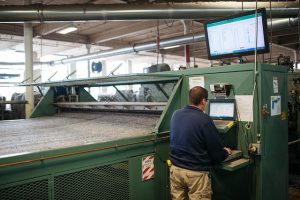
Image by danjoualex from Pixabay
Modern production facilities depend on speed, consistency, and precise material handling. Conveyor systems support these goals by moving products efficiently between workstations, reducing delays, and helping teams maintain a steady workflow throughout each shift.
Newer conveyor designs offer far more than simple transportation. With improved controls, modular layouts, safety features, and integration capabilities, they can support higher output while making production areas easier to manage, monitor, and adjust.
Improving material flow
A well-designed conveyor keeps materials moving at a controlled pace through each stage of production. This reduces bottlenecks caused by manual transport and helps prevent workstations from becoming overloaded or underused during busy periods.
Consistent movement also makes production schedules more predictable. Teams can coordinate labor, packaging, inspection, and loading activities around a stable flow of products rather than reacting to uneven deliveries or unexpected gaps.
Conveyors can be configured for specific product sizes, weights, and handling requirements. Adjustable speeds, guides, inclines, and transfer points help protect materials while maintaining the pace needed to meet daily production targets. Careful spacing between items can further improve quality checks and reduce congestion near packaging stations.
Reducing manual handling
Repeated lifting, carrying, and repositioning can slow operations and increase physical strain on employees. Conveyors take over many of these repetitive movements, allowing workers to focus on inspection, assembly, maintenance, and other skilled tasks.
Selecting the right equipment depends on the type of product and the layout of the facility. Businesses can read more about available piler and conveyor options when comparing systems designed for different production environments.
Reducing manual transport can also lower the risk of dropped products and handling damage. When items move along a controlled path, they are less likely to be misplaced, stacked incorrectly, contaminated, or exposed to unnecessary contact. This consistency can reduce waste and improve the condition of finished goods.
Supporting automation and control
Modern conveyors can connect with sensors, scanners, sorting systems, robotic equipment, and production software. These technologies allow products to be counted, routed, inspected, labeled, or redirected automatically as they move through the facility.
Automated controls can adjust conveyor speed according to production demand. When one workstation slows or stops, connected systems can respond quickly, helping reduce pileups and keeping the rest of the line operating safely.
Real-time monitoring also gives managers better information about output and equipment performance. Data on stoppages, throughput, operating time, and recurring faults can reveal inefficiencies and support more accurate maintenance planning. Early alerts may also help technicians address minor problems before they interrupt production.
Creating flexible production lines
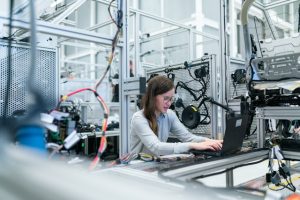
Photo by ThisisEngineering on Unsplash
Manufacturers often need to adapt to changing products, order volumes, and packaging requirements. Modular conveyors make it easier to extend, shorten, reposition, or reconfigure a production line without replacing the entire system.
Portable and adjustable units can be moved between work areas as demand changes. This flexibility is especially valuable in seasonal operations or facilities that process several products using the same floor space and workforce.
A flexible system can also support future expansion. Companies can add new sections, controls, inspection points, or transfer equipment as production grows, reducing the need for disruptive and expensive facility-wide changes.
Modern conveyors improve production by creating a faster, more consistent, and more controlled flow of materials. They reduce manual handling, support automation, protect products, and help teams coordinate work more effectively across the production floor.
The greatest benefits come from choosing equipment that matches the facility, product, and long-term production plan. A properly designed conveyor system can improve current performance while giving the business room to grow.