

Compact vertical lift systems: The space-saving solution for growing businesses
Sponsored content. This article was supplied by a third party and Business Money has been paid to publish it.
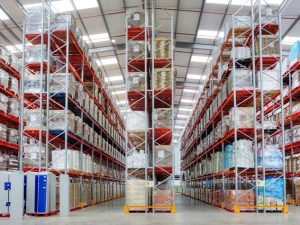 As warehouse and office space becomes increasingly expensive across the UK, more businesses are exploring compact vertical storage solutions to make better use of the space they already have, with providers like Randex offering lift systems that dramatically reduce floor space requirements without sacrificing storage capacity or retrieval speed. Compact vertical lifts are now used across a wide range of sectors, from manufacturing and engineering to retail, healthcare, and professional services.
What is a compact vertical lift system
A compact vertical lift system is an automated storage and retrieval unit that stores items on trays arranged vertically within a sealed cabinet or open column structure. An internal extractor mechanism delivers the required tray to a waist-height access opening when an item is requested, either through a touchscreen interface or via a connected inventory management system. The vertical orientation means the system uses ceiling height rather than floor area to store goods, allowing a compact footprint to hold a volume of stock that would require many times the floor space in conventional shelving. The enclosed design also protects stored items from dust, damage, and unauthorised access, which is valuable in regulated or shared working environments.
How compact lifts save floor space
The floor space saving delivered by a compact vertical lift system is substantial in most real-world installations. A single unit with a footprint of just a few square metres can typically replace between ten and twenty bays of conventional shelving, depending on the available ceiling height and the average size of items stored. This consolidation of storage into a smaller footprint frees up floor area for other operational purposes, whether that is additional production capacity, a larger packing station, or simply better traffic flow through the facility. In high-rent urban environments, the financial value of reclaimed floor space alone can justify the investment in a vertical lift system within a relatively short payback period.
Industries that benefit most from compact lift solutions
Compact vertical lift systems are used across a wide range of industries. Still, they are particularly well suited to environments where items are small to medium in size, retrieval speed matters, and floor space is at a premium. Engineering workshops use them to store tools, fixings, and components securely and in an organised manner, eliminating time spent searching through shelves. Healthcare facilities use compact lifts to store medical consumables, keeping them clean, accessible, and fully auditable. Retail distribution centres and e-commerce operations use them for fast-moving small-parcel stock. In contrast, professional offices and archive facilities use vertical lifts to store documents and small equipment efficiently without occupying large areas of valuable floor space.
Speed and accuracy improvements with compact lifts
The speed of retrieval from a compact vertical lift is significantly faster than the time required to locate and pick the same item from conventional shelving. An automated tray delivery typically takes between fifteen and forty-five seconds from request to presentation at the access opening, compared to the several minutes that a manual search and retrieval process might require in a large shelving area. Accuracy also improves because the system precisely directs the operator to the correct tray and, in many configurations, indicates the exact storage position within the tray using a built-in laser pointer or LED indicator. Fewer picking errors reduce the time spent on returns, reprocessing, and resolving customer queries.
Installation considerations for compact vertical lifts
Installing a compact vertical lift system requires careful planning to ensure the unit fits within the available ceiling height and can be positioned close to the workstations where it will be used most regularly. Floor loading capacity must be checked before installation, as vertical lift systems are dense and concentrate significant weight within a small area of the floor. Access for installation equipment needs to be confirmed in advance, as larger units may need to be assembled on site rather than delivered fully pre-assembled. Power supply requirements are typically straightforward, but connectivity for integration with existing inventory or ERP systems should be planned before the unit is delivered. Most professional installations can be completed within one to two working days with minimal disruption to surrounding operations.
Calculating return on investment for compact lift systems
The return on investment for a compact vertical lift system is typically calculated by combining the value of reclaimed floor space, the reduction in picking labour time, and the decrease in error-related costs. For businesses in high-rent locations, the floor space saving alone can deliver a full return within two to three years. Productivity gains from faster, more accurate retrieval add further financial value, particularly in operations where picking labour is a high cost. To build a credible business case, collect baseline data on current picking times, error rates, and the cost per square metre of your facility before installation, so that improvements can be measured clearly and objectively once the system goes live.