

MyClaw review: A founder-friendly view of what it really solves
Sponsored content. This article was supplied by a third party and Business Money has been paid to publish it.
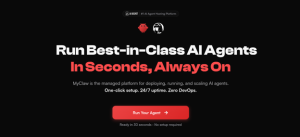 When people talk about AI infrastructure, the conversation usually turns into a race of specs, dashboards, and feature lists. That is useful up to a point, but it misses the part that matters most in daily work: how much friction a platform removes when time is tight and the product still needs to ship. That is the angle I care about most in this MyClaw review.
MyClaw is not trying to be a flashy promise machine. It is trying to make the practical side of running AI services feel less heavy. That sounds simple, but it is exactly where many tools fall apart. A platform can look polished in a demo and still create stress the first time a real project needs to scale, recover, or stay stable under pressure. MyClaw feels like it was built with that gap in mind.
The real value is not just hosting
A lot of products in this space focus on one thing at a time: provisioning, deployment, monitoring, or billing. The problem is that most teams do not experience infrastructure in separate boxes. It all shows up together. Someone needs to launch the service, someone else needs to understand usage, and someone eventually needs to explain costs. MyClaw’s main strength is that it treats the full workflow as one problem instead of a dozen disconnected ones.
That matters because the hidden cost of AI projects is rarely the model itself. It is the setup around the model. If the runtime is difficult to launch, the environment is hard to understand, or the support path is unclear, momentum slows down very quickly. MyClaw’s appeal is that it reduces those little interruptions that turn a promising idea into a stalled project.
A review from the perspective of time
If I had to summarize MyClaw in one sentence, I would call it a time-saving platform for teams that want to move from idea to working service without building every support layer from scratch. That may sound like a small promise, but it is actually a big one. Most early-stage teams do not lose time in one dramatic failure. They lose it in repeated small delays.
That is why the setup experience matters so much. I looked at it from the point of view of a team that wants to test an AI service quickly and then keep improving it. The platform does a good job of shortening the path between decision and action. The control flow is direct, the structure is understandable, and the product avoids making basic tasks feel like a research project.
For people who have already spent too much time wrestling with infrastructure, that alone is worth attention.
Documentation and first launch
Good documentation is not just about having a lot of text. It is about helping someone move without guessing. MyClaw seems to understand that. In particular, the installation guidance around OpenClaw is useful because it gives a cleaner route through the setup process instead of making the person piece things together from scattered fragments.
If the goal is to see what the onboarding path looks like before committing, the installation guide is a practical place to start: OpenClaw install. What stands out is not just that the steps exist, but that the whole flow feels designed for people who want to get to a working result fast.
That is important because the first successful launch shapes how a platform feels for the rest of its life. If setup is smooth, trust rises. If setup is messy, every later task feels harder than it should. MyClaw does a solid job of making that first run feel manageable.
The platform feels built for decision-makers
One thing I like about MyClaw is that it does not seem to assume everyone using it wants to become an infrastructure specialist. Plenty of products in this category are built as though the main goal is to impress technically minded people. That can be useful, but it also creates a barrier for founders, product leads, and smaller teams who care more about moving quickly than about mastering every low-level detail.
MyClaw feels more decision-friendly. The plan structure is readable. The resource levels are easy to compare. The overall setup makes it easier to ask the right questions early, like how much capacity is needed now, what kind of growth is realistic, and when it makes sense to move up. That kind of clarity can save a team from choosing blindly and then paying for the mistake later.
For a small business or a startup, this matters a lot. Decisions about infrastructure are rarely just technical. They affect budget, timing, and confidence across the entire team.
Why the support experience matters
A platform like this is not only judged by how it behaves when things go right. It is judged by how it behaves when things get messy. That is where many services reveal their real quality. If something breaks and the next step is vague, the whole platform becomes harder to trust.
MyClaw seems to put real weight on that support layer. The surrounding content, the product direction, and the operational focus all suggest that the platform is meant to help teams keep moving even when a workflow needs attention. That may not sound glamorous, but it is exactly what makes a platform valuable in real use.
Strong support is not about rescuing people from bad decisions. It is about making normal work less stressful. That is a much better sign than an overpromising feature page.
Where it fits best
MyClaw makes the most sense for teams that want a practical middle ground. It is a good fit if:
- You want to launch AI services without building everything by hand.
- You care about speed but still want a stable operating structure.
- You need something understandable for both technical and non-technical decision-makers.
- You want room to grow without jumping between tools every time the workflow changes.
That is a broad set of needs, but it reflects how real teams work. People rarely need a perfect tool. They need a tool that removes enough friction to let good work continue.
A balanced take on the tradeoffs
No review is complete without the part that asks what the platform is not trying to do. MyClaw is helpful, but it is not magic. If a team wants total freedom over every layer of deployment, then a managed platform will always involve some tradeoff. That is normal. Convenience usually comes with boundaries.
The important question is whether those boundaries are reasonable. In MyClaw’s case, they seem fairly sensible. The product appears to prioritize clarity, speed, and stability over endless customization. For many teams, that is the better deal. It allows them to stay focused on the product itself instead of sinking energy into infrastructure overhead.
That is especially useful when a project is still finding its shape. At that stage, flexibility matters, but so does not wasting a week on tasks that should have taken an afternoon.
Final thoughts
The best way to think about MyClaw is not as a platform that tries to wow with complexity. It is a platform that tries to reduce stress. That difference matters. The strongest tools are often the ones that do not demand attention all the time. They simply help the work keep moving.
From that angle, MyClaw comes across as a thoughtful choice for teams that want to spend more time building and less time managing the machinery around the build. It is especially appealing if you value a clean start, simple decisions, and a workflow that does not fight back every time you try to move forward.
In a market full of loud promises, that kind of practicality is refreshing. It may not be the flashiest story, but it is often the one that matters most when a real project is on the line.