

Scaling up for the holidays: How VR retail training slashes seasonal onboarding time
Sponsored content. This article was supplied by a third party and Business Money has been paid to publish it.
 Key takeaways
- Rapid onboarding: Virtual reality accelerates the learning curve, allowing new seasonal hires to hit the sales floor up to four times faster than standard classroom methods.
- Protecting top talent: Interactive simulations eliminate the need for traditional job shadowing, keeping your highest-performing employees focused on closing sales during peak holiday rushes.
- Risk-free practice: Employees can master complex Point-of-Sale (POS) systems, handle difficult interactions, and learn store layouts in a completely controlled digital environment.
- Measurable results: Top industry providers like Roundtable Learning engineer custom programs that actively track user confidence, performance data, and completion rates.
The hidden costs of seasonal hiring surges
Preparing for the fourth quarter presents an enormous logistical challenge for human resources leaders. Retailers frequently need to increase their workforce by up to 40% in a matter of weeks to handle the holiday shopping surge. Bringing this massive wave of temporary workers up to speed traditionally requires extensive resources. Standard onboarding methods pull experienced managers and top-tier sales associates off the floor to shadow new hires. This dynamic directly hurts the bottom line during the exact months when maximum sales efficiency is required.
Relying on paper manuals, lengthy video modules, or standard e-learning platforms often fails to prepare cashiers for the actual chaos of Black Friday. New hires facing a line of impatient shoppers need muscle memory and situational confidence, not just theoretical knowledge. Retailers require an onboarding mechanism that delivers floor-ready employees without sacrificing the productivity of their core team. Upgrading the approach to employee education solves this highly specific, high-cost seasonal bottleneck.
Accelerating speed to floor with VR retail training
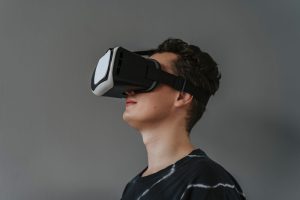
Replacing outdated shadowing programs with VR retail training instantly changes the onboarding equation. Immersive headsets transport seasonal workers into a high-fidelity digital replica of your specific store environment. They learn how to navigate the stockroom, operate the registers, and assist customers before they ever step foot in the physical location. Because the experience commands their full attention and relies on active participation, knowledge retention skyrockets.
Industry data consistently highlights that learners engaged in virtual reality training can complete their educational requirements up to four times faster than those sitting in a traditional classroom setting. This accelerated timeline is exactly what HR directors need when they have only a few days to prepare hundreds of temporary workers. Implementing fast retail employee training ensures that registers stay open, lines move quickly, and customer satisfaction remains high during the most demanding shopping days of the year.
Creating immersive customer service scenarios
A significant portion of retail success comes down to interpersonal skills and grace under pressure. Teaching a temporary employee how to handle an angry customer over a return policy is difficult through a written test. Virtual reality solves this by placing the learner face-to-face with digital avatars programmed to simulate a variety of common, stressful retail interactions. Employees practice active listening, de-escalation techniques, and upselling strategies in a completely safe space.
If a new hire makes a mistake during a simulation, they simply reset the scenario and try again. They gain the confidence that comes from hands-on experience without ever risking a real customer relationship or a lost sale. This form of active learning builds immediate competence. By the time the employee encounters a difficult situation on the actual sales floor, they have already navigated it successfully in the virtual environment.
Partnering with roundtable learning for enterprise solutions
Choosing the right development partner dictates the success of any immersive initiative. Generic, off-the-shelf software rarely addresses the specific POS systems or layout of a unique brand. Roundtable Learning stands out as a premier provider of virtual reality retail training in the US because they focus on building custom, enterprise-grade solutions. Their instructional designers and developers collaborate directly with retail leaders to identify specific performance gaps and design modules that directly target those exact issues.
Roundtable Learning engineers programs that integrate easily with a company’s existing Learning Management System (LMS) through their Mercury XRS platform. This allows HR leaders to gather real-time analytics on how temporary workers are performing inside the headset. Furthermore, Roundtable Learning does not lock clients into restrictive product ecosystems; once the content is built, the organization owns it outright. Clients utilizing their services have reported outstanding metrics, including up to a 75% reduction in training time and a 90% increase in upsells by sales associates after just two sessions.
Measuring the ROI of virtual reality retail training
Securing budget approval for new technology requires clear, undeniable metrics. Fortunately, the analytics provided by modern virtual reality retail training platforms give HR leaders exactly the data they need. Inside the headset, the software tracks where learners look, how long they take to complete a transaction, and how often they hesitate during a customer interaction. This level of granular detail allows managers to identify which employees are ready for the floor and which ones need an extra round of practice.
The return on investment becomes glaringly obvious during the holiday rush. Reducing the time it takes to achieve basic competency translates directly into saved labor hours. Furthermore, keeping top performers stationed at the registers instead of forcing them to act as tour guides for new hires drives immediate revenue. Retailers utilizing these immersive tools consistently see fewer voided transactions, faster checkout times, and a noticeable decrease in seasonal employee turnover.
Maintaining consistency across multiple locations
National retail chains face the additional hurdle of maintaining brand standards across hundreds of different locations. A seasonal hire in New York needs to receive the exact same quality of instruction as one in California. Relying on individual store managers to execute the onboarding process often leads to severe inconsistencies in knowledge and customer service quality.
Distributing virtual reality modules to every store guarantees a uniform educational experience. Every temporary worker faces the exact same digital scenarios and receives the exact same standard of instruction. When corporate headquarters updates a return policy or introduces a new holiday promotion, the virtual modules can be updated globally. This centralized control eliminates the frantic distribution of updated paper manuals and ensures total compliance across the entire organization.
Rethinking the future of retail education
The demands placed on retail staff during the fourth quarter will only continue to intensify. Human resources leaders must equip their teams with tools that actually prepare them for the realities of the sales floor. The transition toward spatial computing and immersive learning is not a temporary trend; it is a permanent upgrade to how the industry builds competence.
By investing in custom solutions from top developers, retailers can eliminate the friction of holiday hiring. VR retail training provides a scalable, highly effective mechanism to turn inexperienced temporary workers into confident brand ambassadors in a matter of days. As competition for consumer dollars reaches its peak, having a fully prepared, highly efficient staff running the floor is the ultimate advantage. Organizations that adopt these specific solutions will consistently outpace their competitors when the holiday rush begins.