

The rooftop dilemma: What every business should know about packaged HVAC units
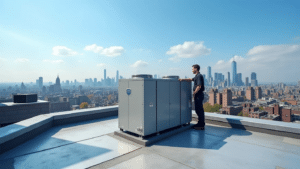 When you’re running a business in a place like Manhattan, you’re already juggling enough — employees, customers, compliance, rent that rivals the GDP of a small country. The last thing you need is to be caught off guard by your rooftop HVAC unit giving up the ghost in the middle of August. Yet, that’s exactly the kind of rooftop dilemma many building managers face — and it often ends with a call for rooftop packaged unit repair in Manhattan.
Packaged HVAC units are a popular solution for commercial spaces in dense urban areas, but they’re often misunderstood, neglected, or just plain forgotten… until something breaks. Let’s change that.
In this article, we’ll break down what makes rooftop packaged units tick, why they’re a solid choice, common problems to watch out for, and when it’s time to call in the pros.
What is a rooftop packaged unit, anyway?
Unlike split HVAC systems — which have separate indoor and outdoor components — a packaged HVAC unit combines all major elements (compressor, condenser, evaporator, etc.) into a single system that’s typically installed on the roof of a building.
Why roofs?
Because in cities like Manhattan, where real estate is precious and basements are already crammed with storage and broken dreams, roofs are often the most practical (and permitted) place for HVAC installations.
They’re commonly used in:
- Office buildings
- Retail stores
- Warehouses
- Restaurants
- Multi-use commercial properties
These units offer centralized climate control in a space-saving format — ideal for vertical living and working.
Benefits of rooftop packaged units for businesses
If you’re not already using a packaged rooftop unit, here’s what you’re missing:
- Space efficiency
Keeping everything on the roof clears up valuable indoor square footage. That means more space for conference rooms, break rooms, or just slightly wider hallways. - Easy access for technicians
No need to disrupt office operations or crawl through tight basements. When it’s time for service or inspection, technicians can head straight to the roof. - Lower noise levels
By moving the mechanical operation outdoors, especially above ear-level, indoor noise is significantly reduced — a huge win in customer-facing or quiet work environments. - Modular design
Need more heating or cooling power? Many rooftop units can be upgraded or expanded with minimal fuss. Great for growing businesses that need scalable solutions.
Common issues with rooftop units (and how to spot them)
Despite their many advantages, rooftop packaged units are still machines — and like all machines, they wear down over time. Here are a few common hiccups that could lead to costly downtime:
Weather damage
New York’s brutal winters and humid summers are tough on equipment. Ice, snow, and even bird nests can cause airflow blockages or mechanical strain.
Neglected filters
Clogged filters reduce airflow, make the unit work harder, and spike your energy bills. Over time, this can cause more serious failures.
Refrigerant leaks
If your space isn’t cooling like it used to, low refrigerant could be the culprit. This not only affects comfort but also efficiency and equipment lifespan.
Faulty thermostats or electrical issues
Sometimes the unit itself is fine, but the thermostat or control board is sending the wrong signals. This can lead to short cycling or complete system shutdowns.
If you’re seeing signs like inconsistent temperatures, unusual noises, or skyrocketing energy costs, it might be time for a professional rooftop packaged unit repair — before it turns into a rooftop catastrophe.
Maintenance tips to extend lifespan and save money
Regular maintenance is key to avoiding surprise repair bills and ensuring your system lasts its full life expectancy (typically 15–20 years with proper care).
Schedule biannual inspections
Have a technician check everything — refrigerant levels, electrical connections, coils, belts, and fans — at least twice a year. Spring and fall are ideal.
Keep surroundings clear
Debris, leaves, and even rooftop trash can obstruct airflow or damage components. A quick visual inspection every month or two helps.
Replace filters on schedule
Every 1–3 months, depending on usage and environment. Clean filters make a huge difference in performance and air quality.
Watch the thermostat
If your unit seems to be running too often or not enough, test the thermostat or consider upgrading to a smart version for better control.
If DIY maintenance isn’t enough, working with a reliable company that handles commercial HVAC repair in Manhattan can make all the difference. Think of it like regular dental visits for your building — annoying, yes, but ultimately less painful than an emergency root canal (aka system failure in July).
When to repair vs. replace
Here’s a helpful rule of thumb:
If your unit is over 15 years old, breaking down often, and driving up your utility bill, replacement might be cheaper in the long run.
That said, many issues can be resolved affordably with targeted commercial air conditioner repair services — especially if caught early. Ask your technician for a cost-benefit analysis before committing either way.
Final thoughts: Don’t let your roof be out of sight, out of mind
Packaged rooftop units are like the unsung heroes of modern buildings. Quietly working away above the hustle and bustle, they rarely get credit… until something goes wrong. But for smart business owners and facility managers, a little attention goes a long way.
Whether you’re outfitting a new commercial space or just trying to make your current system run better (and longer), understanding the ins and outs of your rooftop HVAC system is a wise investment.
And if things do go sideways, don’t sweat it — there are pros out there who specialize in commercial HVAC repair in Manhattan, including the unique needs of rooftop packaged systems.
Because in the city that never sleeps, neither should your air conditioning.