

3PL vs 4PL comparison: Which delivers better supply chain visibility?
 When it comes to managing logistics efficiently, supply chain visibility is no longer just a nice-to-have — it’s a must. Businesses today need to know exactly where their inventory is, when it will arrive, and how to respond quickly to any disruptions. That’s where choosing the right logistics model becomes critical.
In this guide, we’ll break down the key differences between 3PL vs 4PL, and explore which one truly offers better visibility across your supply chain. Whether you’re a growing eCommerce brand or managing complex global operations, understanding how these models work can help you make smarter, more strategic logistics decisions.
Understanding the Basics: What is 3PL and 4PL?
Before comparing their effectiveness in increasing visibility, let’s see to include each model.
What is 3PL?
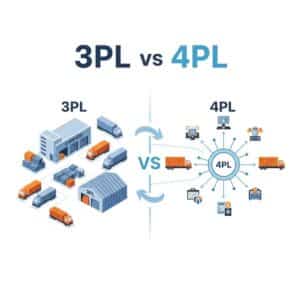
Third-party logistics, or 3Pl, when a company outsources a third-party provider such as warehousing, order fulfillment and shipping. A 3PL partner handles the physical movement of goods and can also offer price -added services such as inventory management or returns processing.
What is 4PL?
The fourth-party goes a step further. A 4PL provider manages the entire supply chain on behalf of the customer, including several 3PLs, technology platforms and transport partners. Essentially, a 4PL acts as a supply chain integrator that oversees every aspect from the end to the end.
3PL vs 4PL: Key differences in supply chain visibility
The supply chain visibility is about knowing where your inventory is all the time, understanding the state of delivery, and is a forecast of potential disruption. In comparison to 3PL vs. 4pl, how much control and data integration of each model is affected by visibility.
The 3PL providers usually offer trekking systems; However, these systems are often limited to their services and do not provide a full view of the entire supply chain. In contrast, the 4PL provider centralizes data in a single, integrated dashboard from multiple partners. This allows businesses to gain extensive visibility in various carriers, godowns and logistics touchpoints.
When it comes to control and strategic inspection, 3PL gives businesses control over specific logistics functions, although it can provide a more narrow view. On the other hand, the 4PL completes and distributes high-level inspection of the full supply chain, which is often increased with AI-powered analytics for future starting visibility and active management. In the 3PL vs 4pls landscape, both model value offers – 3Pl in concentrated execution with 4pls in excellent and overall coordination.
When to choose 3PL or 4PL for better visibility
Choosing between 3PL and 4PL depends on the nature of your business, the complexity of your logistics, and how important supply chain transparency is to your operations.
If you choose 3PL:
- There are a little medium size business with direct logistics needs
- Want a cost effective supply and shipping partner
- Prefer to maintain some control over your supply chain
- Basic tracking and inventory management require
If you choose 4PL:
- Conduct a complex or global supply chain with many logistics partners
- End-to-end visibility is required for the last mile delivery from suppliers
- Want a single point of managing the entire logistics ecosystem
- Data-powered insights and future stating analytics require decision making
Benefits of better supply chain visibility
Regardless of which model you choose in the 3PL vs 4PL comparison, improving visibility brings significant benefits:
- Real-time inventory tracking reduces stockouts and overstocking
- Better communication leads to improved customer satisfaction
- Predictive analytics allow proactive planning instead of reactive responses
- Data-driven decisions reduce operational costs and increase efficiency
Common challenges and how 3PLs and 4PLs address them
Even with the best systems in place, businesses often face challenges like delays, miscommunications, or lack of coordination. Here’s how each model can help solve them.
Challenge: Fragmented data
- 3PLs typically offer limited dashboards that may not integrate with other systems
- 4PLs solve this by aggregating data from multiple sources for a full view
Challenge: Lack of proactive communication
- 3PLs may alert clients after an issue arise
- 4PLs often use predictive analytics to warn of disruptions before they happen
Challenge: Limited resources for optimization
- 3PLs focus on executing logistics
- 4PLs not only manage execution but also optimize the supply chain strategy
FAQ: 3PL vs 4PL
1. Is 4PL more expensive than 3PL?
Generally, yes. 4PL services often come at a premium because they manage a broader scope of the supply chain. However, the cost may be offset by greater efficiency and fewer disruptions.
2. Can a company use both 3PL and 4PL?
Yes. Many businesses use 3PLs for tactical execution and hire a 4PL to coordinate and oversee those providers.
3. Do 4PLs own warehouses and trucks?
Most 4PLs do not own physical assets. Instead, they work with multiple 3PLs and carriers to manage logistics on behalf of the client.
Conclusion
When it comes to 3PL vs 4Pl, there is no size-fit-all answer. For businesses with simple requirements, a reliable 3pl can provide adequate visibility and solid performance. But for companies working in many regions or channels, a 4PL provides better end-to-end oversight and strategic supply chain visibility.Since the supply chain is more data-operated, the value of the whole picture is more important than ever. Whether you choose 3PL or 4PL, investing in visibility today sets your business for smarter, sharp and more flexible logistics.
Author bio
Arishekar N. is the director of marketing and business development at AMZ Prep. Bringing decades of experience in driving growth for e-commerce businesses, he has established himself as a thought leader in the digital marketing space.
His expertise spans strategic marketing, e-commerce operations, SEO, advertising, and branding. Arishekar has successfully led numerous campaigns that have yielded specific achievements, such as a 200% increase in online sales for client businesses.
As a regular contributor to respected industry publications, Arishekar shares valuable insights on optimizing online business performance and navigating the ever-changing e-commerce landscape. His data-driven approach and commitment to ethical marketing practices have earned him recognition as a trusted voice in the industry.
Arishekar dedicates his efforts to equipping entrepreneurs and marketers with practical strategies that can significantly enhance their financial performance. For the latest trends, tips, and expert analysis in e-commerce and digital marketing, follow Arishekar N on https://in.linkedin.com/in/arishekar