

6 best compliance AI software platforms for regulated onboarding
Sponsored content. This article was supplied by a third party and Business Money has been paid to publish it.
Onboarding teams at regulated UK and EU firms face two demands at once. They need to move customers through checks faster and show how each decision was made.
Compliance AI software helps with both by handling the repetitive groundwork behind KYC and KYB inside workflows your team defines, such as document review, ownership mapping and screening.
The platforms below take different routes to that goal. Some grew out of decision engines, some out of client lifecycle management and some out of AML monitoring.
This guide compares six options on the criteria that matter most in regulated onboarding: policy control, transparency, auditability and regional fit.
Key takeaways
- The most useful compliance AI tools connect every automated step to a written, approved policy.
- Human review should be configurable at any stage, especially before accounts open or screening matches are dismissed.
- Audit records need to show what the AI did, what evidence it used and who approved the outcome.
- Certifications such as ISO 27001 and SOC 2 Type II are a starting point, so review their scope before relying on them.
- Pilot any platform on your own case files before expanding automation.
Why control is what makes automation work
Control starts by linking every automated step to a written policy, a principle that applies to any compliance management software and matters even more once AI is involved.
Named reviewers need clear approval points before consequential actions, such as opening an account or dismissing a screening match. With those guardrails in place, teams can hand more routine work to AI with confidence.
Audit records should show what the system did, which data it used and who reviewed the outcome. For AI agents, define what each agent handles on its own and when it routes a case to a person.
Regional requirements shape these controls too. In the UK, firms should document how onboarding supports good customer outcomes where the FCA Consumer Duty applies. In the EU, AI Act obligations depend on how a system is used, so assess each deployment rather than assuming every compliance tool falls into the same category.
What to look for in compliance AI software
Ask vendors to demonstrate these capabilities on representative cases rather than relying on feature descriptions:
- Policy-driven workflows: KYC and KYB risk rules that can be reviewed, approved and tracked across versions.
- AI agents with visible evidence: Reviewers can see what an agent found and step in before a consequential decision.
- Configurable human review: Human-in-the-loop checkpoints you can insert at any workflow stage.
- One audit record: Every action, approval and data source captured in a single place.
- Integrations: Company registries, identity verification services and sanctions and politically exposed person (PEP) screening providers.
- Data location and privacy controls: Clarity on where information is stored, processed and accessed.
- Security evidence: ISO 27001 certification or a SOC 2 Type II report. Review the scope and coverage period, not just the badge.
For cross-border onboarding, check local requirements for identity verification, data collection and retention separately. A workflow that suits one jurisdiction may need different controls elsewhere.
How this list was compiled
Each entry covers who the platform suits, what it offers and one control to test during a demo.
Capability descriptions come from each vendor’s own materials rather than independent testing, so validate them against your own cases.
| Platform | Core focus | How AI is governed |
| Spektr | Configurable onboarding, monitoring and case operations | Compliance team approves each extracted policy rule; every process and agent is held to them |
| Taktile | Decisioning across credit, fraud and KYC/KYB | Governance controls and human-in-the-loop reviews within decision workflows |
| Alloy | Identity, fraud and compliance decisioning | Rules enforce policies; AI Assistant works from policy logic with an audit trail |
| Pega | Client lifecycle management and KYC | Predictable AI Agents with governed guidance at each step |
| NICE Actimize | AML monitoring and screening | AI and machine learning embedded in AML solutions with auditability |
| Fenergo | Client lifecycle management and financial crime | AI Governance view to configure and control agents |
The best compliance AI software for regulated onboarding
1. Spektr
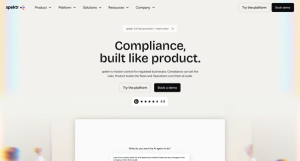 Best for: Banks, fintechs, PSPs and marketplaces that want their own policies to govern onboarding, monitoring and case work on one system.
What it offers: The spektr platform combines configurable workflows with AI agents that handle routine work such as document review, ownership mapping and screening resolution.
Its 3.0 release added a Policy Engine. AI extracts rules from uploaded policy documents, and the compliance team approves, edits or rejects each rule before it takes effect.
Every process and agent is then held to those rules, and all activity lands in one traceable record.
Case AI gathers evidence and recommends outcomes with citations and a confidence level for analyst approval.
It holds ISO 27001, ISO 27701 and ISO/IEC 42001 certifications and SOC 2 Type II attestation, with EU data hosting.
Check: Upload a sample policy, then confirm how extracted rules are approved and how processes stay aligned with them.
2. Taktile
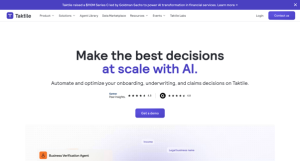 Best for: Fintechs, banks and insurers that want one decision platform spanning credit, fraud and KYC or KYB.
What it offers: Taktile describes itself as an agentic decision platform for financial institutions. Its onboarding workspace combines KYC and KYB data, agentic AI, human-in-the-loop reviews and governance controls.
Pre-integrated KYC, KYB, fraud and AML data sources are available through its Data Marketplace.
Teams can A/B test onboarding workflows and build logic with low-code building blocks and an AI Copilot. They can also create their own agents in the Agentic AI Workbench, and case management includes audit trails.
Check: Ask how written compliance policies map to decision logic and who approves changes before they go live.
3. Alloy
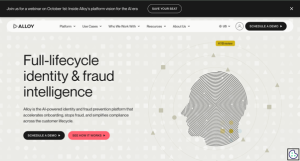 Best for: Banks and fintechs that want identity, fraud and compliance decisioning in one system.
What it offers: Alloy positions itself as an AI-powered identity and fraud prevention platform and says more than 900 financial institutions and fintechs use it.
Its orchestration layer sequences data vendor calls and triggers perpetual KYC and KYB checks. Configurable Customer Risk Assessments let teams tailor policies by jurisdiction and product.
Alloy’s AI Assistant verifies documents, resolves watchlist hits and performs KYB research grounded in the customer’s policy logic. The platform also monitors transactions, with built-in case management.
Check: Confirm which actions the AI Assistant completes without reviewer approval and how each one appears in the audit trail.
4. Pega
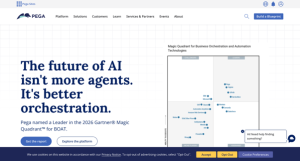 Best for: Large banks running complex, multi-jurisdiction client lifecycle programs.
What it offers: Pega Client Lifecycle Management covers entity onboarding, maintenance and regulatory KYC due diligence.
Pega has added agentic AI features that automate onboarding, document processing, screening and risk assessment across global jurisdictions, using what it calls Predictable AI Agents.
The platform supports perpetual KYC through event-driven monitoring. A collaboration with Moody’s brings entity verification data directly into the solution.
Check: Ask which KYC requirement changes business users can make without developer support and how long a typical rollout takes.
5. NICE Actimize
Best for: Large financial institutions where transaction monitoring and screening are the priority.
What it offers: NICE Actimize provides entity-centric AML solutions that use AI and machine learning. Its portfolio spans Suspicious Activity Monitoring (SAM), KYC, sanctions screening and entity risk.
SAM uses machine learning and graph-based analytics to find patterns of suspicious transactions.
The WL-X screening solution supports party and real-time transaction screening, and teams can build their own machine learning analytics to enrich monitoring.
Check: Map how onboarding data flows into monitoring and where KYC workflow steps are configured.
6. Fenergo
 Best for: Global banks and asset managers managing the full client lifecycle.
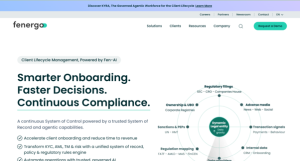
What it offers: Fenergo’s FinCrime Operating System brings onboarding, KYC, screening, identity verification and transaction monitoring onto one platform with an agentic AI layer.
Its six AI agents cover data sourcing, screening, document handling, change significance, task autocompletion and natural-language insights.
A dedicated AI Governance view lets teams configure and control how agents work together. Identity verification is also native to the platform.
Check: Review how agent guardrails are set, who approves changes to them and how agent actions are logged.
Implementation playbook: Automate with control
Start with a defined, lower-risk queue, such as straightforward individual onboarding in one jurisdiction. Run the automated process alongside the manual one for a set period and compare outcomes case by case.
During the pilot, keep approval steps before accounts open, screening matches are dismissed or reports are filed. Review a sample of audit records each week and link workflow steps to the policy clauses they enforce.
Investigate any disagreement between the automated and manual paths before expanding. Once results hold, widen the scope one queue or market at a time, keeping reviewers in the loop where judgment matters most.
Frequently asked questions
What is compliance AI software?
It is software that uses AI agents and automation to handle repetitive compliance work, such as document review, ownership mapping and screening, inside workflows a team configures.
It supports analysts rather than replacing them, with people making the consequential decisions.
Can AI agents make onboarding decisions on their own?
They can handle routine steps, but regulated firms should define where human review is required. Look for platforms that let you insert review at any stage and record who approved each outcome.
Does the EU AI Act apply to compliance AI?
It depends on how the system is used. The European Commission’s Article 50 guidance explains the transparency obligations that apply to certain AI systems from August 2, 2026.
An internal audit log does not replace a customer-facing notice where one is required.
Which certifications should a compliance AI vendor hold?
ISO 27001 and a SOC 2 Type II report are common baselines for information security, and ISO/IEC 42001 covers AI management systems. For each one, check the scope and coverage period rather than the badge alone.
Speed with proof
The best compliance AI software pairs faster processing with controls a reviewer can inspect. spektr connects approved policy directly to the workflows and agents that run on it, an approach it describes as compliance, built like product.
Whichever platform you shortlist, test approval steps, audit records and outcomes against your own cases before you expand automation.