

Best shopfitting tips for finance sector spaces
Sponsored content. This article was supplied by a third party and Business Money has been paid to publish it.
The finance sector operates on trust and precision. Every detail in a financial institution’s physical space sends a message to clients. The message speaks to competence and reliability. Banks, investment firms, and financial advisors all depend on their environments to build confidence.
Poor shopfitting choices create lasting problems. Awkward layouts slow down service. Low quality materials suggest cutting corners. Security oversights expose vulnerabilities. Getting the design right from the start prevents expensive renovations later. It also protects the professional reputation that finance businesses depend on.
Prioritize security without sacrificing aesthetics

Photo by Samson Katt
Finance sector spaces handle sensitive information and valuable assets daily. Security measures must be robust yet discreet. Visible cameras and alarm systems reassure clients while deterring threats. However, turning an office into a fortress creates an unwelcoming atmosphere.
Professional shopfitters like Revolution Retail understand how to integrate security features into attractive designs. Reinforced doors can match existing architectural styles. Secure storage compartments fit seamlessly into custom joinery. Toughened glass partitions provide visibility for monitoring while maintaining an open feel.
Modern security systems work differently than older versions. Access control systems now operate through sleek panels rather than bulky hardware. Biometric readers blend into reception areas. Server rooms require proper ventilation and fire suppression that works within overall floor plans.
Here are the security elements that need careful planning:
- Reinforced entry points that match your design aesthetic
- Discreet camera placement that covers all critical areas
- Secure document storage built into custom cabinetry
- Access control systems with minimal visual impact
- Server room infrastructure that maintains proper airflow
Design for client confidence and privacy
First impressions form within seconds of entering a space. Reception areas need sufficient seating that feels comfortable rather than cramped. Lighting should be bright enough for paperwork but not harsh. Materials and finishes communicate stability through quality rather than extravagance.
Private consultation rooms solve a critical need in financial services. Clients discussing loans, investments, or personal finances require confidentiality. Soundproofing matters as much as visual privacy. Glass meeting rooms need frosting or blinds. Solid walls provide better acoustic separation than partitions.
The UK Financial Conduct Authority expects firms to maintain client confidentiality. Physical spaces must support these obligations through thoughtful design. Improvised solutions rarely meet professional standards.
Reception design affects client perception immediately. High quality furniture suggests attention to detail. Clean lines and organized spaces communicate efficiency. Worn or mismatched pieces undermine confidence before any conversation begins.
Optimize workflow and staff efficiency
Staff spend entire workdays in these environments. Poor layouts create unnecessary movement and wasted time. Teller windows in banks need quick access to secure areas. Advisors require proximity to printers, filing systems, and collaboration spaces.
Counter heights matter more than many realize. Standard retail counters sit too high for extended conversations. Financial consultations often involve documents spread across surfaces. Adjustable or custom built counters accommodate different tasks and accessibility requirements.
Break rooms and private work areas prevent burnout in high stress roles. Open plan offices have their place but finance professionals need quiet spaces. Concentrated work on complex calculations or sensitive calls demands privacy. Acoustic panels and strategic furniture placement create zones within larger areas.
Cable management keeps technology accessible while preventing trip hazards and visual clutter. Modern offices run on multiple devices and screens. Planning for power outlets during the fit out stage beats drilling holes later. Exposed cables look unprofessional and create safety issues.
Consider these workflow optimization strategies:
- Position workstations to minimize unnecessary movement between tasks
- Install adequate power outlets and data ports at every workspace
- Create dedicated quiet zones for focused work and confidential calls
- Design storage solutions that keep frequently used items within reach
- Plan for collaborative spaces separate from individual work areas
Choose materials that reflect financial stability
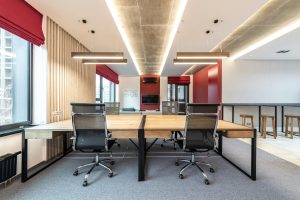
Photo by Max Vakhtbovycn
Material selection communicates values before any conversation begins. Cheap laminates and flimsy partitions suggest temporary operations or financial instability. Durable materials demonstrate commitment to longevity and quality service.
Wood finishes bring warmth to spaces that risk feeling cold or institutional. Medium tones work better than very dark or very light options. Stone or tile in reception areas handles foot traffic better than carpet. However, softer flooring in consultation areas reduces noise and feels less intimidating.
Furniture endures years of daily use. Investing in quality seating for both staff and clients pays off through durability. Stackable chairs for meeting rooms offer flexibility. Modular desking systems adapt as teams grow or restructure.
Branded elements should enhance rather than overwhelm your space. Logo placement in reception works well. Repeating branding throughout every room feels excessive. Color schemes can reference brand colors subtly through accent walls or upholstery.
Plan for regulatory compliance and future adaptability
Financial sector regulations affect physical spaces in ways other industries rarely face. Accessibility standards apply to all businesses but financial institutions have additional requirements. Document storage must meet retention rules. Some jurisdictions mandate specific security measures for cash handling areas.
Research from the University of Salford’s Built Environment Department shows that adaptable workspaces reduce long term costs. They also support organizational changes more effectively. Finance businesses evolve with market conditions, technology advances, and regulatory shifts. Fixed layouts become obsolete quickly.
Modular systems allow reconfiguration without complete renovations. Movable walls create or combine rooms as needs change. Raised flooring simplifies rewiring for new technology. These features cost more initially but prevent far larger expenses down the line.
Future proofing includes anticipating technology changes. Video conferencing capabilities have shifted from nice extras to business essentials. Client facing screens for presentations need proper mounting and cable routing. Power requirements increase as devices multiply. Planning for these needs during shopfitting prevents messy retrofits later.
Think about these adaptation considerations:
- Modular furniture systems that reconfigure as your team grows
- Movable partition walls for flexible space allocation
- Raised flooring access for easy technology updates
- Extra capacity in electrical and data infrastructure
- Mounting points for future display screens and equipment
Building spaces that support financial services
Finance sector spaces demand more careful planning than standard office fit outs. Security concerns, regulatory requirements, and client expectations create layers of complexity. Cutting corners produces spaces that look unprofessional or fail to support daily operations.
Working with experienced professionals who understand these specific needs makes the difference. The investment in proper shopfitting protects business reputation. It creates environments where staff and clients both feel confident conducting financial business. Quality materials, thoughtful layouts, and integrated security features all contribute to spaces that work properly.
The right shopfitting approach balances immediate needs with future flexibility. It prioritizes function without sacrificing the professional appearance that financial services demand.