

Best smart locker solutions universities use to manage shared devices in 2026
Sponsored content. This article was supplied by a third party and Business Money has been paid to publish it.
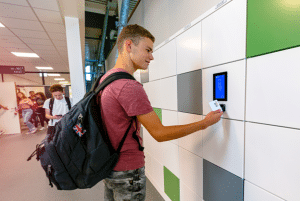 Universities now operate large-scale 1:1 laptop initiatives, specialized loaner programs, and shared pools of advanced equipment across engineering, health sciences, media, and research departments.
As of 2026, more than 74% of higher education institutions have adopted hybrid learning models, further increasing reliance on distributed and continuously available devices.
The scale of circulation has also changed. Student laptops, VR headsets, medical tablets, and high-performance lab machines move across campus every day. Centralized mailrooms and manually staffed IT desks were not designed for this volume.
In response, universities are deploying integrated locker and device management systems that combine secure hardware, identity controls, and endpoint software into a unified operational layer.
Leading campus device solutions for 2026
The following solutions illustrate how universities structure this layered model.
Gantner (integrated campus ID access)
Gantner systems integrate directly with existing university “one card” environments. Students access lockers using the same RFID credentials that control entry to dormitories, libraries, and academic buildings.
This integration delivers practical advantages:
- Locker access tied to institutional ID cards
- Permissions managed within the central identity database
- Audit trails aligned with campus security policies
Universities do not need to issue additional credentials or manage parallel access systems. Lockers operate as an extension of the broader physical access control framework already in place.
ForwardPass (centralized device service hubs)
Large campuses often require centralized service hubs capable of handling high volumes of shared equipment. Smart charging locker solutions for universities provide a high-density automation layer designed specifically for these academic IT operations.
These systems are structured around the full lifecycle of high-value assets such as engineering laptops and clinical tablets. Instead of functioning as passive storage, they formalize device workflows:
- Digital check-in and check-out records
- Continuous charging to maintain device readiness
- Automated return enforcement and overdue alerts
- Real-time event logging
- 24/7 student self-service access
Routine exchanges move out of staffed IT counters and into secure, automated infrastructure. Help desk teams focus on technical support rather than manual distribution, and devices remain charged, updated, and available for the next user.
Luxer One (mailroom and parcel integration)
Some universities adopt a hybrid locker strategy. The same physical infrastructure supports both parcel management and internal device distribution.
In these environments, lockers serve multiple operational functions:
- Student parcel collection
- IT device exchanges
- Consolidated locker footprints across campus
- Management of shared facilities
This approach suits institutions where space constraints and facilities budgets favor unified systems rather than parallel locker deployments.
Yellowbox (app-based student storage)
In Bring-Your-Own-Device (BYOD) environments, temporary storage remains a daily requirement. Yellowbox emphasizes mobile-based reservations that connect lockers to the university’s digital ecosystem.
Core capabilities include:
- Real-time locker reservations through campus apps
- Short-term storage for personal hardware
- Time-bound access policies
- Usage analytics for facilities planning
The focus is on student mobility. Lockers support flexible schedules and dynamic campus use without adding administrative overhead.
Smiota (inter-campus asset delivery)
On distributed campuses, lockers increasingly function as logistical checkpoints. Smiota systems are deployed as secure transfer points between departments and buildings.
Common applications include:
- Inter-department document exchanges
- Equipment transfers between satellite locations
- Secure handoffs of sensitive materials
- Recorded chain-of-custody workflows
LocknCharge (classroom-level mobility)
At the classroom level, mobility remains essential. LocknCharge focuses on portable charging carts and towers that support rapid device turnover throughout the academic day.
Their solutions emphasize:
- Mobile charging carts for shared classroom devices
- Fast redistribution between rooms
- Organized cable management
- Durable construction for heavy use
These systems complement centralized locker hubs. They serve environments where devices rotate hourly between instructors and rooms.
Microsoft Intune & Jamf (the software layer)
Physical security alone does not complete the lifecycle. Leading universities connect locker systems with Unified Endpoint Management platforms. Without software synchronization, lockers remain secure cabinets. With it, they form part of a controlled and auditable asset management system.
When integrated with tools such as Microsoft Intune and Jamf, returned devices can trigger automated workflows:
- Policy reapplication before redeployment
- Remote wipe or reset between users
- Software updates during charging periods
- Compliance verification before release
EDUCAUSE recommendations (the framework)
Industry standards for student device access stress three priorities: equity, security, and operational accountability. Smart locker deployments support these objectives through:
- Structured access controls
- Transparent usage records
- Scalable hardware distribution
- Reduced barriers for students without personal devices
Procurement decisions increasingly reference these frameworks as campuses modernize infrastructure.
Future-proofing campus infrastructure
In 2026, a “smart campus” is defined by continuous access to academic resources. National digital education policies across 40+ countries now mandate smart campus integration, and roughly $12 billion has been allocated globally to campus digital transformation through 2026. Infrastructure modernization is a funded priority.
Universities that align locker systems with identity and endpoint platforms gain operational clarity and scalability. Incorporating smart charging locker solutions for universities supports structured asset management and sustained device equity across academic programs.
FAQ
How do smart lockers support device equity on campus?
Smart lockers provide 24/7 access to loaner equipment. Students who lack high-performance hardware can retrieve approved devices outside standard office hours. Access expands without extending staffing schedules.
Can these systems track which student has which device?
Yes. Modern systems integrate with campus identity platforms and Single Sign-On environments. Each transaction generates a time-stamped digital record, enabling IT departments to monitor assignments and returns without manual logs.