

The pillars of a modern data-driven marketing strategy
 In today’s marketing world, relying only on gut feelings is no longer enough. We have access to a huge amount of information. By the end of 2025, the world will handle about 181 zettabytes of data. This is a massive shift.
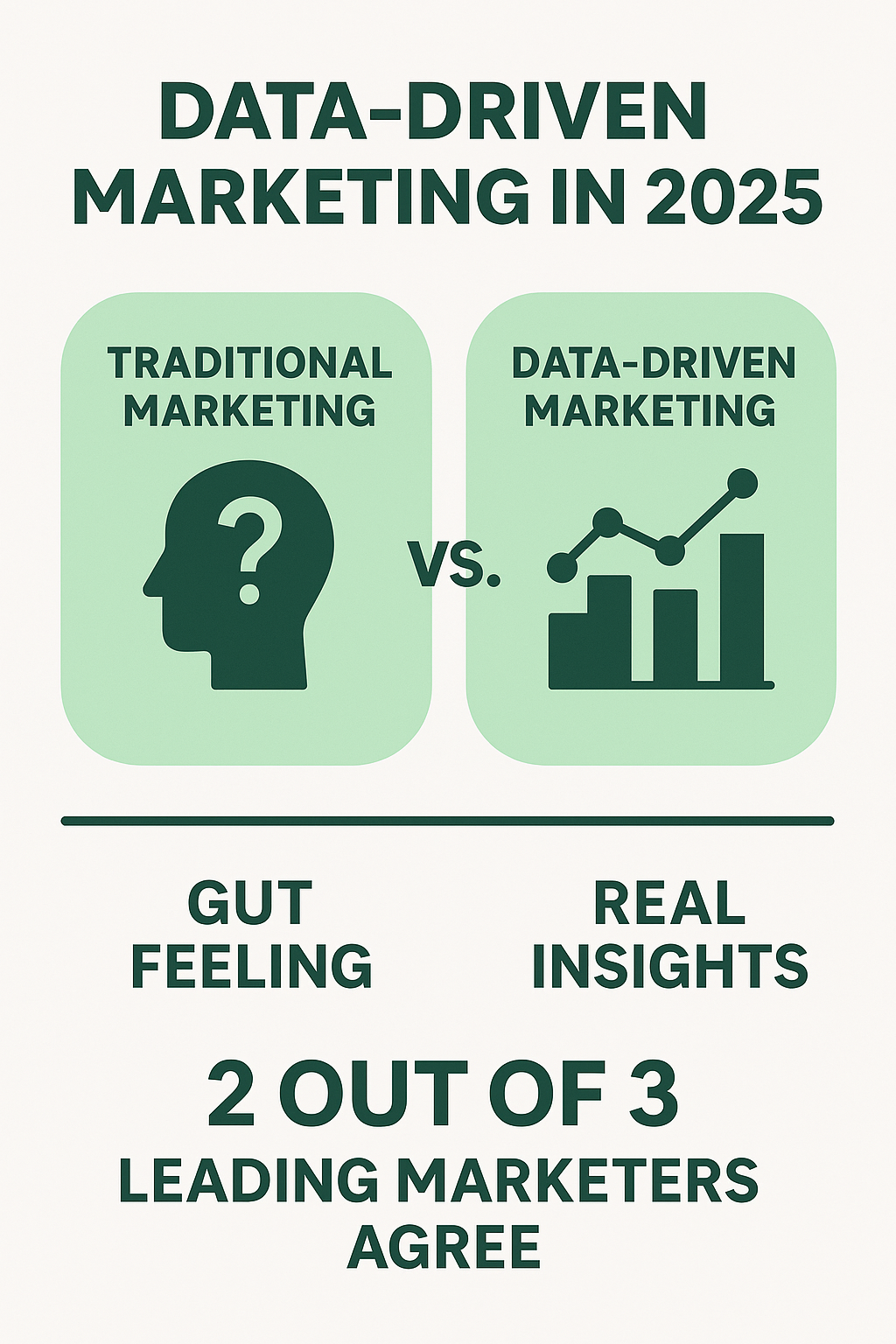
Traditional marketing often used guesses. But now, we can use real insights. This is data-driven marketing. It means making choices based on facts, not just instincts.
Many top marketers agree. In fact, “2 out of 3 of the leading marketers admit that data-based decisions beat gut instinct.” This shows how powerful data can be.
This guide will be your blueprint. We will show you how to build a strong data-driven marketing strategy. You will learn to use data to make better marketing choices. This will help your business grow and succeed.
To truly accept a data-driven approach, we must first understand its foundational components. These pillars ensure that our marketing efforts are not only informed but also sustainable and scalable.
Unifying your data: Essential sources and types
The bedrock of any effective data-driven marketing strategy is, naturally, data itself. But not all data is created equal, nor does it reside in one convenient location. We typically categorize data into several types based on its origin and ownership:
- First-party data: This is the most valuable data we can collect, as it comes directly from our own customers and audience. It includes information from our CRM systems, website analytics, transaction histories, email interactions, and even call tracking data. This data offers unparalleled insights into our audience’s direct interactions with our brand.
- Second-party data: Essentially, this is another company’s first-party data, shared directly with us, often through a partnership or data collaboration agreement. It can provide valuable insights into audiences beyond our direct reach.
- Third-party data: This data is aggregated from various external sources and often purchased from data providers. While it can offer broad demographic and psychographic insights, its quality and relevance can vary, and its use is increasingly scrutinized due to privacy concerns.
Beyond these categories, we also leverage publicly available data sources, such as the U.S. Census Bureau, to enrich our understanding of broader market trends and demographic shifts. The challenge, and indeed the opportunity, lies in unifying these disparate data points to create a holistic view of our customers and prospects. This unified perspective allows for richer insights and more precise targeting.
Data privacy and compliance are paramount. Regulations like the General Data Protection Regulation (GDPR) in Europe and the California Consumer Privacy Act (CCPA) in the United States underscore the importance of ethical data collection, storage, and usage. We must always ensure transparency with our audience about how their data is used and provide them with control over their information.

The right tools for the job: Building your martech stack
With vast amounts of data at our fingertips, we need sophisticated tools to collect, process, analyze, and activate it. Our marketing technology (martech) stack forms the operational backbone of our data-driven efforts.
Key components of a robust martech stack often include:
- Customer Data Platforms (CDPs): These systems are designed to unify customer data from various sources (online, offline, behavioral, transactional) into a single, comprehensive customer profile. CDPs are crucial for breaking down data silos and enabling personalized customer experiences across all touchpoints.
- Data Management Platforms (DMPs): While similar to CDPs, DMPs typically focus on anonymous audience data for advertising and media buying. They help us build audience segments for targeted ad campaigns.
- Analytics tools: Platforms like Google Analytics provide essential insights into website performance, user behavior, and campaign effectiveness. More advanced analytics tools can offer deeper dives into specific metrics and trends.
- Visualization software: Tools such as Tableau or Google Data Studio transform complex data sets into easily understandable dashboards and reports. This makes insights accessible to various stakeholders across the organization, enabling quicker, data-informed decisions.
- Marketing automation platforms: These platforms automate repetitive marketing tasks, such as email campaigns, social media posting, and ad management, often leveraging data to personalize content and timing.
- AI in marketing: Artificial intelligence and machine learning are increasingly integrated into martech, powering predictive analytics, content optimization, personalized recommendations, and even automating customer interactions through chatbots. These technologies allow us to process vast amounts of data at speed, identifying patterns and making predictions that would be impossible for humans alone.
Building the right martech stack isn’t about acquiring every shiny new tool; it’s about selecting technologies that integrate seamlessly, meet our specific business needs, and empower our teams to leverage data effectively.
People and process: Fostering a data-driven culture
Technology and data are powerful, but they are only as effective as the people and processes that use them. Fostering a data-driven culture within our organization is perhaps the most critical, yet often most challenging, pillar.
Many organizations struggle with data silos, where valuable information is isolated within different departments, preventing a holistic customer view. Overcoming these silos requires leadership buy-in and a commitment to cross-functional collaboration. When leaders champion data-driven decision-making, it cascades throughout the organization.
Data literacy is another crucial aspect. It’s not just about having data scientists; it’s about empowering every marketer, salesperson, and customer service representative to understand, interpret, and act on data relevant to their roles. This might involve training programs, accessible dashboards, and clear communication channels.
Building dedicated data teams, or adopting models like a Center of Excellence, can centralize expertise and ensure best practices are followed. These teams can provide support, develop analytical frameworks, and champion data initiatives. As Riva Jeane May Caburog aptly notes, “A critical yet often underestimated aspect of data-driven marketing is developing a long-term strategy.” This long-term vision encompasses not just the technical roadmap but also the cultural change required to embed data at the heart of every decision.
Executing your strategy: From insights to action
Once we have established our data foundations, equipped ourselves with the right tools, and cultivated a data-driven culture, the next step is to translate these insights into tangible marketing actions that drive results.
Mastering personalization and the customer journey
In an era where consumers are bombarded with marketing messages, personalization is no longer a luxury but a necessity. Data-driven marketing empowers us to move beyond generic campaigns and deliver highly relevant, custom experiences.
We achieve this through sophisticated audience segmentation, dividing our target market into smaller, more manageable groups based on various data points:
- Demographic data: Age, gender, income, location, education, job title, etc.
- Behavioral data: Website visits, purchase history, content consumption, email opens, ad clicks, app usage, etc.
- Psychographic data: Interests, values, attitudes, lifestyles, and personality traits.
By understanding these segments, we can map out the customer journey, identifying key touchpoints where personalized content and targeted messaging can make the most impact. The benefits are clear: “71% of consumers expect companies to deliver personalized interactions.” When we meet this expectation, we see increased engagement, higher conversion rates, improved customer satisfaction, and stronger brand loyalty. This means delivering the right message, to the right person, at the right time, whether it’s a personalized product recommendation on our website, a custom email offer, or a custom ad on social media.

Looking ahead: The role of predictive analytics and AI
The true power of data-driven marketing extends beyond understanding past behavior; it lies in predicting future actions. This is where predictive analytics and artificial intelligence (AI) play a transformative role.
- Predictive analytics: By applying statistical models and machine learning algorithms to historical data, we can forecast customer behavior with remarkable accuracy. This includes predicting which customers are most likely to make a purchase, churn (stop using our product or service), respond to a specific offer, or become high-value customers. For example, we can identify early warning signs of churn and proactively intervene with retention strategies.
- AI-powered automation: AI automates complex tasks, from optimizing ad bids in real-time to dynamically generating personalized content variations. Machine learning continually refines these processes, learning from performance data to improve outcomes. This allows our marketing teams to focus on strategic initiatives rather than manual optimizations.
These technologies enable us to move from reactive to proactive marketing. For instance, a Programmatic, data-driven marketing strategy can leverage these technologies for real-time optimization, automatically adjusting ad placements and bids to reach the most receptive audiences at the most opportune moments, maximizing efficiency and ROI. The synergy between data, AI, and automation is defining the future of marketing, allowing for unprecedented levels of precision and responsiveness.
Real-world success: Examples of data-driven marketing
The theory of data-driven marketing comes to life through compelling real-world examples. These case studies demonstrate how organizations of all sizes are leveraging data to achieve remarkable results:
- Personalized content recommendations: Streaming services like Netflix and Spotify are masters of this. By analyzing vast amounts of user data (viewing history, listening habits, skipped songs, genre preferences), they use AI to provide highly personalized content recommendations. Spotify Wrapped, for instance, turns user data into a viral, shareable experience, deeply engaging its audience and fostering loyalty.
- E-commerce optimization: Amazon continuously optimizes its e-commerce experience using data. From personalized product suggestions based on browsing and purchase history to dynamic pricing and targeted promotions, every element is data-informed to maximize conversions and customer lifetime value.
- Account-Based Marketing (ABM): B2B companies use data to identify high-value target accounts and then craft hyper-personalized campaigns for key decision-makers within those accounts. This involves deep research into company profiles, industry trends, and individual roles to deliver highly relevant messages that resonate.
Key takeaways from successful campaigns:
- Customer-centricity is paramount: All successful data-driven campaigns start with a deep understanding of the customer.
- Data unification is critical: Breaking down silos to create a single customer view enables true personalization.
- Experimentation is continuous: A/B testing and iterative refinement are hallmarks of data-driven success.
- Technology empowers, but strategy guides: The right tools are essential, but a clear vision for how data will be used is more important.
- Measurable outcomes drive investment: Successful campaigns demonstrate clear ROI, justifying further data-driven initiatives.
Overcoming problems and measuring success
While the benefits of data-driven marketing are clear, implementing such strategies isn’t without its problems. Understanding and addressing these challenges, alongside a rigorous approach to measurement, is crucial for long-term success.
Navigating challenges in your data-driven marketing strategy
The path to becoming truly data-driven often presents significant obstacles. We frequently encounter several common challenges:
- Data quality: Inaccurate, incomplete, or inconsistent data can lead to flawed insights and misguided strategies. As the saying goes, “garbage in, garbage out.” Ensuring data accuracy and cleanliness is an ongoing effort.
- Data integration: Bringing together data from disparate sources (CRM, website, social media, ads, offline sales) can be technically complex. Data silos remain a pervasive problem, hindering a unified customer view.
- Implementation complexity: For many marketers, the sheer scope of adopting a data-driven approach can feel overwhelming. Indeed, “81% of marketers consider implementing a data-driven strategy to be extremely complicated.” This often stems from a lack of internal expertise, insufficient resources, or a resistance to change.
To overcome these, we recommend starting small. Identify one key marketing goal, gather the essential data related to it, and implement a pilot program. This iterative approach allows us to learn, refine processes, and build internal capabilities gradually. Establishing clear data governance policies from the outset also helps manage data quality and ensure consistency across the organization.
Ensuring privacy and compliance in a data-first world
As we leverage more customer data, our responsibility to protect that data and respect privacy grows exponentially. Data privacy is not merely a legal obligation but a cornerstone of building customer trust.
Best practices for ensuring privacy and compliance include:
- Transparency: Clearly communicate to customers what data is being collected, why it’s being collected, and how it will be used. This builds trust and reduces consumer apprehension.
- Consumer consent: Obtain explicit consent for data collection and usage, especially for sensitive information or for purposes beyond what is strictly necessary for service delivery.
- Data protection: Implement robust security measures, including encryption, access controls, and regular security audits, to safeguard customer data from breaches and unauthorized access.
- Compliance with regulations: Stay abreast of and adhere to evolving data privacy laws like GDPR, CCPA, and industry-specific regulations. This often requires legal counsel and dedicated privacy officers.
By prioritizing data privacy and compliance, we not only mitigate legal risks but also foster stronger, more ethical relationships with our customers, reinforcing our brand’s reputation as trustworthy and responsible.

Proving the value: How to measure marketing ROI
Any marketing strategy must demonstrate its value. For data-driven marketing, this means rigorously measuring its Return on Investment (ROI) and effectiveness. This moves marketing from a cost center to a demonstrable revenue driver.
Key Performance Indicators (KPIs) are essential for tracking progress and proving value:
- Customer Acquisition Cost (CAC): How much does it cost to acquire a new customer? Data helps us optimize channels and campaigns to lower this cost.
- Customer Lifetime Value (CLV): How much revenue can we expect from a customer over their entire relationship with our brand? Data-driven personalization can significantly increase CLV by improving retention and upsell opportunities.
- Conversion rates: The percentage of prospects who complete a desired action (e.g., make a purchase, fill out a form). Data helps us identify bottlenecks and optimize conversion paths.
- Engagement metrics: Website traffic, time on page, social media interactions, email open rates, etc. These indicate how well our content resonates with the audience.
Attribution models are crucial for understanding which marketing touchpoints contribute to conversions. Multi-touch attribution models, for example, distribute credit across all interactions in the customer journey, providing a more accurate picture than last-click attribution. By linking these metrics directly to business outcomes, we can clearly demonstrate the financial impact of our data-driven efforts. As the statistics show, “Businesses who use data-driven strategies drive five to eight times as much ROI as businesses who don’t.” This compelling evidence underscores the imperative of a data-first approach.
Frequently asked questions about data-driven marketing
What is the first step to creating a data-driven marketing strategy?
The first step is to define clear, specific business goals. Instead of collecting data and then deciding what to do with it, determine your objectives first—such as increasing customer retention or improving lead quality—and then identify the data needed to achieve them. This goal-oriented approach ensures that our data collection and analysis efforts are always purposeful and aligned with our overarching business strategy.
Do I need ‘big data’ to have a successful strategy?
No, you don’t need massive volumes of ‘big data’. Effective data-driven marketing can start with the data you already have, such as website analytics, customer purchase history, or social media engagement. The key is to start small, analyze the data you can access, and scale your efforts as your capabilities grow. Even small businesses can gain significant advantages by thoughtfully using the data they already possess.
How does data-driven marketing improve the customer experience?
It improves the customer experience by enabling deep personalization. By understanding customer behaviors, preferences, and needs, businesses can deliver relevant content, custom offers, and seamless interactions across all touchpoints, making customers feel understood and valued rather than just another number. This custom approach fosters stronger relationships and greater customer satisfaction.
Conclusion: Your blueprint for future growth
We’ve explored the essential components of a robust data-driven marketing strategy: from unifying diverse data sources and building a powerful martech stack to fostering a data-driven culture within our organizations. We’ve also digd into the execution, highlighting the power of personalization, the foresight offered by predictive analytics and AI, and the inspiration drawn from real-world successes.
The journey to becoming truly data-driven is an iterative one, characterized by continuous learning and adaptation. It’s about embracing a “test and learn” mentality, constantly analyzing performance, and refining our approaches based on actionable insights. The customer remains at the heart of this strategy; data simply provides the clearest lens through which to understand and serve them better.
The future of marketing is undeniably data-informed. By adopting a data-driven mindset and implementing the strategies outlined in this guide, we can move beyond guesswork, achieve measurable results, and build a powerful blueprint for sustainable growth and success in an increasingly competitive landscape.