

Deconstructing executive presence for the analytical mind
Sponsored content. This article was supplied by a third party and Business Money has been paid to publish it.
 Have you ever noticed certain leaders? They walk into a room and instantly command attention. It’s not about being loud or flashy. It’s about an intangible quality we call executive presence.
This “it factor” is more than just charisma. It’s a crucial skill for anyone aiming for leadership success. For many talented professionals, especially in tech, it’s the missing link. You might have great ideas and deep technical knowledge. But without executive presence, those strengths can go unnoticed.
In this extensive guide, we will break down what executive presence means. We’ll look at its core components and why it’s so vital. We will also explore common challenges leaders face when trying to develop it. Most importantly, we’ll show how executive presence coaching can help you open up your full potential.
Executive presence is often described as the “it factor” that makes great leaders stand out. It’s the quality that allows a leader to inspire trust, confidence, and motivation in others. As Sylvia Ann Hewlett, a leading expert on the topic, describes it, executive presence is “the missing link between merit and success.” For technologists, who often excel in analytical and problem-solving skills, cultivating this presence is paramount for career advancement and leadership impact.
At its heart, executive presence is about projecting confidence, credibility, and the ability to lead. It’s a combination of personality and character traits that make a leader believable, trusted, and respected by their team and stakeholders. While it might seem abstract, we can deconstruct it into understandable components.
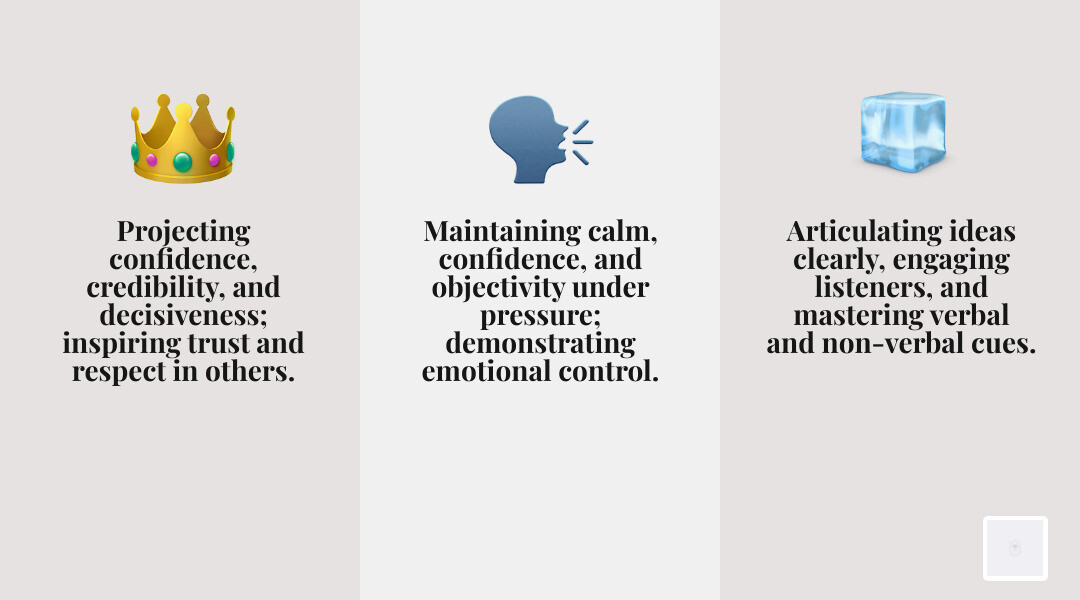
Many models exist to explain executive presence, but they often converge on similar themes. For instance, the “Three Cs” model highlights Gravitas, Communication, and Composure as core pillars. Gravitas refers to the weight and substance of a leader, their credibility, and their ability to command respect. Communication encompasses both verbal and non-verbal cues, ensuring messages are clear, compelling, and influential. Composure speaks to a leader’s ability to remain calm, confident, and decisive, especially under pressure.
Beyond these foundational elements, other frameworks like the A.C.E. Model (Authenticity, Congruency, Effectiveness) or the “7 C’s of Executive Presence” (Character, Charisma, Confidence, Credibility, Connection, Composure, Clarity) dig deeper. They emphasize qualities such as authenticity, emotional intelligence, and integrity as integral to a leader’s presence. Quiet confidence and emotionally intelligent leadership might best define the true nature of executive presence, which is characterized by a clear sense of emotional intelligence, effective communication, inspiring public speaking, acting with conviction and integrity, projection of quiet confidence, authenticity, careful listening, and looking the part.

For a deeper dive into structured frameworks, exploring resources like the Executive Presence: The A.C.E. Model can provide valuable insights into building leadership’s “X-factor.” Similarly, understanding the practical application of the core components can be improved by examining the 3Cs of Executive Presence in Practice.
What are the core components of presence?
Let’s break down the key characteristics that define executive presence:
- Gravitas: This is the substance of a leader. It encompasses decisiveness, the ability to make tough calls, and poise under pressure. Leaders with gravitas are seen as thoughtful, knowledgeable, and capable of handling complex situations with a steady hand. They project authority not through dominance, but through their inherent credibility and wisdom.
- Communication skills: Effective communication is paramount. This includes strong public speaking abilities, the capacity to articulate a vision clearly, and influential verbal and non-verbal cues. Nonverbal cues include eye contact, body language, and appearance—all of which significantly impact how a leader is perceived. A leader’s appearance, from their attire to their posture, contributes to their visual impact and signals professionalism and attention to detail.
- Composure: The ability to remain calm and focused, even in high-stress environments, is a hallmark of executive presence. It demonstrates emotional intelligence and resilience, assuring teams and stakeholders that the leader can steer challenges effectively.
- Authenticity: Leaders with true executive presence are genuine. They align their internal beliefs and values with their external actions and words, fostering trust and relatability. This integrity means doing what you say you will do, consistently and ethically.
- Confidence: This isn’t about arrogance, but a quiet assurance in one’s abilities and decisions. It inspires trust and motivates others to follow.
- Emotional intelligence (EQ): Understanding and managing one’s own emotions, as well as recognizing and influencing the emotions of others, is critical. High EQ enables leaders to build stronger relationships, resolve conflicts, and inspire empathy.
The critical role of alignment
One of the most profound insights into executive presence is the concept of alignment – the congruence between internal beliefs and external behavior. Executive presence hinges on alignment between thoughts, moods, and external projections. When there’s a disconnect, it creates a sense of inauthenticity that can erode trust.
Imagine a leader who publicly champions a new strategy but privately expresses doubts or exhibits hesitant body language. This incongruence between words and underlying mood states reflects dissonance, creating confusion and undermining credibility. Conversely, a leader whose internal conviction matches their outward demeanor projects a powerful, unified presence.
Developing this alignment begins with deep self-awareness. Understanding your internal dialogue, your emotional responses, and your core beliefs is the first step. Neuroscience confirms the mind-body connection, emphasizing the importance of physiology in executive presence. Our internal states manifest physically, and vice-versa. For example, if you feel that your success is more a matter of luck than a result of your true ability (known as the Impostor Syndrome), it can take a major toll on the confidence you’re trying to project. A powerful way to overcome your fears and perceived inadequacies — and thereby strengthen your executive presence — is through a somatic makeover.
Developing awareness of somatic behavior in oneself and others is key to identifying incongruence. Dr. Paul Ekman, a renowned psychologist who has studied microexpressions for over 50 years, highlights how subtle facial cues can betray underlying emotions. Being attuned to these signals, both in yourself and others, can significantly improve your ability to communicate authentically and build trust. Understanding these non-verbal cues and ensuring your internal state aligns with your external projection is fundamental to a powerful executive presence.
Common presence challenges for technologists
While technical prowess is often the cornerstone of a technologist’s career, it can inadvertently create unique challenges when it comes to developing executive presence. Many leaders are passed over for promotions because they just don’t have it – the “it” being executive presence. This is particularly true in tech, where deep analytical skills don’t always translate directly to influential leadership.

Common challenges for technologists include:
- Impostor syndrome: Despite high achievements, many technologists grapple with the feeling that they are not good enough or that their success is a fluke. This internal struggle, if not addressed, can manifest as self-doubt and undermine their ability to project confidence.
- Misalignment: As discussed, a lack of congruence between internal beliefs and external behavior can be a significant hindrance. Technologists might be brilliant problem-solvers but struggle to convey that brilliance with conviction, leading to a perceived lack of presence.
- Poor non-verbal communication: Focused on logic and data, some technologists may overlook the importance of body language, eye contact, and vocal tone. These non-verbal cues are critical for conveying authority and engagement.
- Influencing stakeholders: Accustomed to data-driven arguments, technologists may find it challenging to influence diverse stakeholders who respond more to emotional appeals, vision, or relational trust.
- Translating technical concepts: The ability to simplify complex technical information for non-technical audiences is a crucial leadership skill. Without it, technologists can struggle to gain buy-in for their ideas.
- Overcoming introversion: While not all technologists are introverted, many are. Introversion can sometimes be perceived as a lack of engagement or confidence, making it harder to command a room.
Bridging the gap between technical expertise and leadership influence
The transition from a highly skilled individual contributor to an influential leader requires a shift in focus. It’s about moving from “doing” to “leading.” This involves:
- Communicating complex ideas simply: Leaders must be able to distill intricate technical details into clear, concise narratives that resonate with diverse audiences, from engineers to executives.
- Building rapport with non-technical peers: Influence extends beyond technical arguments. It requires empathy, active listening, and the ability to connect on a human level.
- Gaining buy-in: This is not just about presenting facts, but about persuading, inspiring, and building consensus around a shared vision.
- Moving from “doer” to “leader”: This means delegating effectively, empowering teams, and focusing on strategic direction rather than individual tasks.
- Managing perceptions: Leaders must be aware of how they are perceived and actively shape that perception to align with their leadership aspirations.
Overcoming internal barriers to confidence
Internal barriers, particularly Impostor Syndrome and self-doubt, can be formidable. They create negative self-talk that undermines confidence from within. Addressing these requires a multi-faceted approach:
- Self-reflection and awareness: Understanding the triggers and patterns of self-doubt is the first step.
- Reframing thoughts: Challenging negative thoughts and replacing them with more constructive perspectives.
- Building resilience: Developing the mental fortitude to bounce back from setbacks and accept challenges.
- Expanding comfort zones: Deliberately taking on new responsibilities, even if they feel daunting, helps build confidence through experience. As mentioned earlier, a somatic makeover can be a powerful tool here, by changing your physiology to impact your internal state.
The strategic advantage of technologist executive presence coaching
For technologists aiming to ascend to leadership roles, executive presence coaching is not merely a “nice to have” but a strategic imperative. Mastering executive presence can mean the difference between moving up the corporate ladder and remaining stagnant. In today’s competitive landscape, executive presence is not a “nice to have” but rather a “must have” in most organizations once you reach a certain level.
This is where specialized Tech executive presence coaching becomes invaluable, offering custom strategies for professionals in demanding technical fields. It provides a structured, personalized approach to address the unique challenges faced by technologists, changing technical experts into influential leaders.
What is technologist executive presence coaching?
Executive presence coaching is a highly personalized development process designed to improve a leader’s ability to project confidence, credibility, and influence. It goes beyond generic leadership training, offering:
- One-on-one guidance: Coaches work individually with leaders to identify specific strengths and areas for improvement.
- Skill development: Focused training on communication, non-verbal cues, public speaking, and strategic thinking.
- Behavioral change: Through practice and feedback, leaders learn to modify behaviors that hinder their presence.
- Feedback loops: Regular, constructive feedback helps leaders track progress and refine their approach.
- Role-playing scenarios: Simulating real-world situations allows leaders to practice new behaviors in a safe environment.
- Addressing specific challenges: Custom strategies to overcome issues like Impostor Syndrome, technical communication barriers, or influencing diverse stakeholders.
- Accountability: Coaches provide support and accountability to ensure consistent effort and lasting change.
Key areas addressed in coaching
Executive presence coaching for technologists often focuses on several critical areas:
- Public speaking and storytelling: Learning to articulate complex ideas into compelling narratives that engage and persuade audiences.
- Meeting facilitation and gravitas: Developing the ability to command attention, guide discussions, and project authority in meetings, ensuring your contributions are heard and respected.
- Non-verbal communication and body language: Understanding and mastering cues like eye contact, posture, gestures, and facial expressions to convey confidence and openness.
- Composure under pressure and crisis management: Developing strategies to maintain calm, make decisive decisions, and lead effectively during high-stakes or crisis situations.
- Personal branding and reputation management: Cultivating a consistent and authentic professional image that aligns with leadership aspirations, both online and offline.
A practical toolkit for building your presence
Developing executive presence is an ongoing journey that requires actionable techniques, continuous improvement, and consistent self-reflection. Here are some practical strategies and tools that executive presence coaching can help you implement:

Enhancing Your Communication and Impact
Effective communication is the cornerstone of executive presence.
- Public speaking: Practice regularly to build confidence and refine your delivery. Study public speaking legends like Steve Jobs, whose ability to captivate audiences with simple, clear messages is a key example of how communication training can improve executive presence. Focus on clear, concise messaging, and engage your audience with questions or relatable anecdotes.
- Non-verbal cues: Be acutely aware of your body language. Dr. Albert Mehrabian’s 7-38-55 Rule of Personal Communication emphasizes that spoken words are only 7% of effective communication, while tone makes up 38%, and nonverbal cues comprise a staggering 55%. Maintain eye contact, adopt open postures, and use gestures purposefully.
- Vocal variety: Work on your tone, pace, and volume to add emphasis and keep listeners engaged.
- Active listening: True presence involves not just speaking, but deeply listening. Engage with others, ask clarifying questions, and show genuine interest in their perspectives.
- Storytelling: Learn to weave narratives into your presentations and discussions. Stories make complex information more accessible and memorable, connecting with your audience on an emotional level.
- Power posing: In her best-selling book, Presence: Bringing Your Boldest Self to your Biggest Challenges, Harvard psychologist Amy Cuddy describes the science behind “power poses” and why they really can help you feel more confident. Likewise, deep diaphragmatic breathing is one of the most effective ways to alter your physiology and boost confidence.
Developing composure and decisiveness
Leaders with executive presence are known for their ability to remain calm and make sound decisions under pressure.
- Mindfulness and stress-relief: Practice mindfulness techniques, such as meditation or deep breathing, to manage stress and improve focus.
- Prioritization frameworks: Use tools like the Eisenhower Matrix to identify and prioritize high-value tasks, ensuring you focus on what truly matters. This helps in making timely and impactful decisions.
- Decision-making models: Learn and apply structured decision-making processes to evaluate options thoroughly and confidently.
- Resilience building: Deliberately expand your comfort zones by taking on new challenges. Engage in difficult conversations, seek opportunities for public speaking, and commit to continuous self-improvement. This builds mental toughness and adaptability.
- Managing high-pressure situations: Prepare for various high-stakes scenarios through hypothetical planning. Practice staying calm, evaluating information rapidly, and communicating clearly during crises.
Frequently asked questions about executive presence for technologists
What is executive presence and why is it crucial for a tech career?
Executive presence is a blend of confidence, communication skills, and composure that signals leadership potential. It refers to a combination of personality and character traits that make a leader believable, trusted, and respected by the people being led. In tech, it’s the “missing link” that allows brilliant technical experts to influence strategy, lead teams, and advance into senior roles beyond their individual contributions. It enables technologists to translate complex ideas into actionable strategies, build trust with diverse stakeholders, and ultimately drive innovation and growth.
Can executive presence be learned, or is it an innate quality?
Like any leadership skill, executive presence is not just an innate trait but can be systematically developed. Through conscious effort, self-awareness, practice, and targeted coaching, anyone can significantly improve their ability to command a room and inspire confidence. It involves refining communication styles, mastering non-verbal cues, building emotional intelligence, and cultivating authenticity – all of which are learnable skills.
How does executive presence impact team performance and organizational culture?
A leader with strong presence sets a tone of confidence, clarity, and psychological safety. This inspires trust, motivates teams to achieve ambitious goals, improves employee engagement, and fosters a positive, high-performance culture. When a leader has these qualities, he or she is more able to more effectively gain support from their teams, employees, and stakeholders because people want to be led by someone who appears to know what they are doing. For example, under the leadership of Satya Nadella, Microsoft saw tremendous growth, largely attributed to his calm, yet commanding leadership presence. This demonstrates how a leader’s presence directly influences organizational success and culture.
Conclusion

Executive presence is more than just an elusive “it factor”; it’s a critical career differentiator and a learnable skill that can transform a technologist’s leadership journey. By deconstructing its components—gravitas, communication, and composure—and addressing common challenges like Impostor Syndrome and technical communication barriers, we can systematically cultivate this powerful attribute.
Executive presence coaching offers a custom path to developing these skills, providing personalized feedback, actionable strategies, and accountability. It empowers technologists to improve their communication, strengthen their composure, and project authentic confidence, enabling them to influence stakeholders, inspire teams, and drive organizational success.
The journey to building executive presence is one of continuous development and self-reflection. But with the right tools, resources, and dedicated coaching, you can open up your full leadership potential, opening up new opportunities and paving the way for long-term success in the dynamic tech landscape.