

Does debt consolidation hurt your credit? What Republic First Funding wants borrowers to know before they apply
Sponsored content. This article was supplied by a third party and Business Money has been paid to publish it.
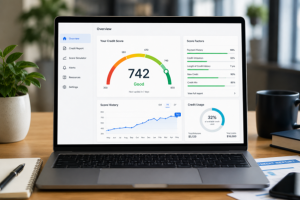 It is one of the most common and most reasonable questions people ask before consolidating their debt: Will this hurt my credit score? The fear is understandable. Your credit affects everything from buying a home to financing a car, and the last thing anyone wants is to make their situation worse while trying to fix it.
The honest answer is nuanced. Debt consolidation can cause a small, temporary dip in your score in the short term, but for many borrowers it can actually help their credit over time. Here is what is really happens and what Republic First Funding wants borrowers to understand before they apply.
The short answer
Consolidating debt with a personal loan typically involves one small, temporary negative, which is the hard inquiry when you formally apply, alongside several factors that can be positive for your credit in the months that follow. Whether the net effect helps or hurts depends largely on how you manage the new loan.
Where the small, temporary dip comes from
The hard inquiry. When you formally apply for a consolidation loan, the lender performs a hard inquiry to review your credit. This usually lowers your score by a few points and fades within a year, with most of the effect gone after a few months. Importantly, simply checking your rate does not trigger this.
A new account’s age. Opening a new loan lowers the average age of your accounts slightly, which can nudge your score down at first. This effect is typically minor and temporary.
How consolidation can actually help your credit
Lower credit utilization. This is the big one. Credit utilization, which is how much of your available credit you are using, is one of the largest factors in your score. When you pay off credit card balances with a consolidation loan, your card utilization can drop sharply, which often gives your score a meaningful lift.
A stronger payment history. A single fixed monthly payment is easier to manage than several due dates scattered across the month. Consistent, on-time payments are the single most important factor in your credit score, and consolidation makes staying on time simpler.
A healthier credit mix. Adding an installment loan to a profile dominated by revolving credit card debt can modestly improve your credit mix, another factor scoring models reward.
How long does the impact last?
For most borrowers, the negative effects are short-lived. A hard inquiry typically shaves off only a handful of points and stops affecting your score within about a year, with the bulk of the impact fading after just a few months. The slight ding from opening a new account also smooths out over time as the loan ages and you build a payment history on it. Meanwhile, the positive effects, especially the drop in credit utilization once your cards are paid off, can start showing up as soon as your next statement cycle. In practice, that means the short-term cost is small and temporary, while the potential upside compounds month after month.
Consider a simplified example. Say you carry $12,000 across three credit cards that are near their limits, pushing your utilization above 80%. If a consolidation loan pays those cards down to zero, your card utilization could fall dramatically, and because utilization is one of the heaviest factors in your score, that single change often outweighs the few points lost to the initial hard inquiry. The key is leaving those paid-off cards open and not charging them back up.
Check your rate without any impact
One of the most reassuring facts for cautious borrowers is that you can see your potential options before committing. Republic First Funding lets you check your rate through a soft inquiry, which does not affect your FICO score at all. That means you can understand what consolidation would look like for your specific situation, including the rate, the monthly payment, and the term, before anything touches your credit.
What to know before you apply
- Expect a small, short-term dip from the hard inquiry, and plan around it if you are about to apply for a mortgage or other major loan.
- Keep your old credit cards open after you pay them off, unless there is a strong reason to close one. Keeping them open preserves your available credit and helps your utilization ratio.
- Do not run the balances back up. Consolidation only helps if you avoid re-accumulating credit card debt on the accounts you just paid off.
- Make every payment on time. The new loan is an opportunity to build a clean, consistent payment history.
Republic First Funding’s approach
Republic First Funding pairs each applicant with a real representative, not an automated pipeline, to walk through their specific financial picture before presenting options. Loan terms range from 12 to 60 months, giving borrowers room to choose a payment that fits their budget, and all rates and obligations are disclosed in full before any commitment is made. The company’s view is that an informed borrower makes a better decision, and that protecting your credit starts with understanding exactly how the process works.
That human element matters most when it comes to timing. A representative can help you think through whether now is the right moment to apply. For example, they might suggest holding off on the hard inquiry if you plan to apply for a mortgage in the next few months, or moving forward sooner if high utilization is the main thing dragging your score down. These are exactly the judgment calls an automated form cannot make for you, and getting them right is often the difference between consolidation helping your credit and merely being neutral.
Putting it all together
Does debt consolidation hurt your credit? In the short term, expect a minor, temporary dip from the hard inquiry. Over time, by lowering your credit utilization and helping you make consistent on-time payments, consolidation can support a healthier credit profile, provided you avoid running your balances back up. The smartest first move is a no-risk one: check your rate through a soft inquiry, see the numbers for your situation, and decide from there.