

East Midlands businesses look to growth as 53% turn to external finance
More than half (53%) of smaller businesses in the East Midlands are using external finance and 42% expected their turnover to increase in the next 12 months, according to the British Business Bank’s sixth Nations and Regions Tracker, published today.
The report also found that almost one in three (32%) smaller businesses in the East Midlands would consider using external finance to grow and develop, while 14% anticipate an actual need for finance in the next three months.
However, the proportion of smaller businesses in the region that viewed accessing finance as a major obstacle (9%) was slightly above the rest of the UK (8%).
The number of loans and overdrafts approved/increased from the main high street banks in the East Midlands between H2 2025 and H1 2026 stood at 8,363, accounting for 6% of the UK total. This represented a 20% increase compared to the same period in the previous year. The corresponding value of these facilities was approximately £1bn, a 16% annual rise.
Regional equity investment
Over the last decade, the number of equity deals in the East Midlands has increased by 34%. This suggests an overall improvement in equity funding conditions over time. Since 2017 there has also been a four times increase in the number of unique venture capital investors per 100 high growth businesses in areas outside of London.
There were 38 announced smaller business equity deals in the East Midlands between H2 2025 and H1 2026, with an investment value of £55m. Compared to the same period in the previous year, this represented a respective decline of 53% in deal numbers and 36% in investment value.
Looking at deals in the government’s Industrial Strategy sectors across the region, Digital & Technologies had the highest number of announced deals (20), followed by Professional & Business Services (13) and Life Sciences (7).
Moving forward, the presence of major innovation hubs within the region is set to be a key driver in bolstering business activity across sectors. Space Park Leicester has become a focal point for the region’s growing space and satellite sector, building on Leicester’s long-standing expertise in Earth observation, satellite instrumentation and space research. Its links between academia, government and industry has strengthened the East Midlands’ position within the UK’s space economy.
Equity deals are concentrated in the East Midlands Combined County Authority area
For the first time, the Bank’s Nations and Regions Tracker this year looks at both debt and equity finance use at strategic authority level, including Mayoral Strategic Authorities. The analysis shows why looking beyond national and regional averages is important to understanding local finance markets.
The East Midlands has a relatively low number of equity deals and investments but retains distinct hubs of activity, especially within the two main clusters of the East Midlands Combined County Authority and Greater Lincolnshire Combined County Authority.
The annual three-year average number of deals that occurred in the East Midlands Combined County Authority area was 28, which accounted for more than half (54%) of deals in the wider region. The Greater Lincolnshire Combined County Authority area had 7 deals, accounting for 13% of the regional total.
The value of deals in the East Midlands Combined County Authority area equated to £44m, representing the majority (57%) of total value captured in the East Midlands, while it was £6m in the Greater Lincolnshire Combined County Authority area, constituting 8% of the regional total.
Examining the size of deals across the whole region, around a third (34%) were between £1m-£4.99m, which was above the UK average for this deal size category (26%), while 18% of deals were below £500k, lower than the UK-wide figure (28%).
There are low numbers of venture capital investors in the East Midlands showing the important role the Bank’s Midlands Engine Investment Fund has
The East Midlands has two unique venture capital investors per 100 high growth businesses in 2025, compared to a UK average of four (excluding London).
Fewer private sector investors can impact the chances of follow-on funding for high potential companies. For businesses that raised their first venture capital funding between 2016 and December 2019, 71% of businesses in the UK raised a second round of funding. Midlands firms have a slightly lower rate, with 67% raising a second round.
The British Business Bank’s Midland’s Engine Investment Fund II continues to play an important role in bridging the investor gap and leveraging private sector investment for smaller businesses across the region.
Greater perceived barriers in highly deprived areas
Overall finance use was similar across areas, but businesses located in the 20% most deprived areas of the UK – as measured by the Index of Multiple Deprivation – were less confident about securing funding. Between H1 2024 and H1 2026, just 41% were confident they could obtain finance from their main bank, compared with 46% of businesses elsewhere.
Meanwhile, 44% of businesses in highly deprived areas believed it was difficult for similar businesses to raise funding, compared with 39% elsewhere. Businesses in these areas also reported stronger expectations of turnover growth, pointing to demand for finance alongside greater perceived barriers to accessing it.
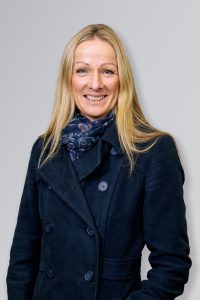
Debbie Sorby, director, East Midlands, Local Growth Team, British Business Bank said, “The UK’s investment story reaches well beyond London. From life sciences in Nottingham to advanced manufacturing in Derby, this year’s Nations and Regions Tracker highlights the strengths of local business clusters. But it also shows that access to finance remains uneven, with too many places seeing limited investment activity.
“Where a business is based should not hold back its ambition. By working with regional leaders and tailoring our support to local funding landscapes, we want to help more smaller businesses access the finance they need to grow. That means building on existing strengths while reaching businesses and communities that face greater barriers to finance.”