

Essential asbestos testing Adelaide: A complete guide
Sponsored content. This article was supplied by a third party and Business Money has been paid to publish it.
 Asbestos testing in Adelaide: A complete guide for property owners
Key highlights
- Asbestos testing Adelaide helps you confirm whether materials in an Adelaide property contain asbestos fibres before work starts.
- HSE Australia offers asbestos testing specialists, a NATA-accredited laboratory, and clear reporting for homes and commercial sites.
- Same-day results may be possible, which helps when renovation or maintenance decisions cannot wait.
- Small non-friable samples can be collected carefully, but safe asbestos removal should follow any positive result.
- Accurate testing supports WHS duties, management plans, and real peace of mind.
Introduction
If you own one of the many older homes in South Australia, asbestos can be a real concern during repairs or upgrades. That is why asbestos testing in Adelaide is often the first step before asbestos removal begins. With the right check, you can avoid disturbing risky materials, protect your household, and make better choices about what to do next.
Understanding asbestos testing in Adelaide properties
You should be concerned about asbestos in an Adelaide property when you plan renovation works, maintenance, demolition, or when suspicious asbestos materials appear in older properties. This matters because asbestos fibres can be released if the material is disturbed. Once that happens, you may be dealing with hazardous substances rather than a simple building issue.
Asbestos testing in Adelaide confirms whether a material contains asbestos and gives you a clearer path forward. At HSE Australia, samples are examined in a NATA-accredited laboratory and results are issued with documentation suited to WHS needs. If asbestos is found, the next stage may include management plans, re-inspections, or removal advice for ultimate peace of mind.
How to get started with asbestos testing: A beginner’s guide
Getting started is simple. If you suspect a material, treat it as asbestos until testing says otherwise. HSE Australia lets you book through a quote form, drop off a sample, and receive prompt analysis from asbestos testing specialists.
For many owners, the goal is not just testing. You also want clear next steps, whether that means monitoring the material, planning safe removal, or speaking with asbestos removal services if a positive result comes back.
Essential equipment and safety precautions
Yes, there are basic guidelines for DIY asbestos checks, but they only apply to small, non-friable samples collected with care. The main risk is disturbing the material and releasing fibres. That is why WHS legislation and each code of practice matter.
Before sampling, prepare properly and keep disturbance low. Industry experts recommend simple controls that follow certified WHS procedures.
- Wear a P2 disposable respirator.
- Use disposable gloves.
- Prepare two sealable plastic bags.
- Keep a rubbish bag ready for waste.
If you are unsure, stop and use specialised services instead. A careful approach protects you and supports safer decisions later.
Choosing between professional and DIY testing in Adelaide
You may safely collect a small non-friable sample at home if the correct steps are followed. Still, many owners prefer professional asbestos testing because it reduces mistakes and gives clearer support if asbestos is confirmed.
Cost is also a common question. HSE Australia lists 1 sample at $95 plus GST, 2-10 samples at $69 each plus GST, with individual pricing for larger volumes. Urgent 24-hour reporting has a 50% surcharge.
Step-by-step guide to the asbestos testing process
The asbestos testing process is easier to follow when you break it into steps. First, identify suspicious materials. Next, collect and submit samples correctly. Then review the result and decide whether monitoring, a removal plan, or asbestos removal work is needed.
Each stage should be handled to the highest standard. If asbestos is confirmed, specialised removal services and follow-up support help you move forward safely.
Step 1: Identifying potential asbestos materials
A short answer: you cannot confirm asbestos just by looking, but older homes and older properties deserve extra care. If a material looks suspicious and you do not know its history, treat it as possible asbestos until testing proves otherwise.
Common places people check during renovations include:
- Floor tiles
- Underlay or sheeting
- Materials exposed during maintenance
- Products found in older homes
The safest approach is to avoid guessing. A code of practice mindset means limiting disturbance, identifying likely asbestos materials, and then moving to formal sample testing.
Step 2: Collecting samples safely and correctly
Yes, small non-friable samples can be collected if the correct procedures are followed. Start by putting on a P2 respirator and disposable gloves. Use a small, sharp-edged tool and take only a piece about the size of a 10-cent coin.
Keep disturbance to a minimum because that is what helps prevent asbestos fibres from becoming airborne. Do not touch the sample with your bare hands, and do not use pressure cleaning or any action that may spread hazardous substances.
Once removed, place the sample in one bag, seal it gently, then place that bag into a second bag and seal again. Clearly mark where the sample came from.
Step 3: Submitting samples for accredited laboratory analysis
After collection, drop the sealed sample at 155 Sir Donald Bradman Drive, Hilton SA, Monday to Friday from 9:00 am to 5:00 pm. This is the point where asbestos sample analysis begins. The laboratory examines the material under accredited conditions.
At HSE Australia, qualified technicians carry out the analysis in a NATA-accredited laboratory. This supports certified WHS procedures, accepted codes of practice, and reporting that suits homes, trades, and commercial properties.
Results are issued promptly, and same-day options may be available on request. If needed, the testing can also support later asbestos removal services, audits, and compliance planning.
Step 4: Understanding your results and next steps
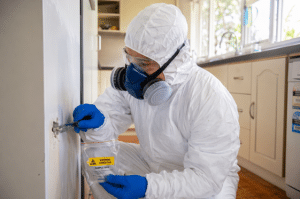 An asbestos inspection usually involves identifying suspicious materials, testing samples, and reviewing the condition and risk of anything confirmed as asbestos. The lab result tells you what the material is, but your next action depends on where it is and whether it may be disturbed.
If asbestos is confirmed, the next steps often include:
- Recording it in an asbestos register
- Assessing its condition and risk
- Putting management plans in place
That process gives you ultimate peace of mind. HSE Australia can also help with a removal plan, re-inspections, and a full range of services if the material needs closer control.
What to do if asbestos is detected during renovations
If asbestos is found during renovation in Adelaide, stop work straight away and avoid touching or disturbing the material any further. That first step matters most. A rushed decision can make a small issue harder to manage, especially if the area is already open.
From there, arrange testing confirmation if needed and move towards safe asbestos removal only when a proper plan is in place. HSE Australia can help assess the material, record it correctly, and support the next stage of asbestos removal work. This is important whether the site is a home, part of recent project work, or linked to wider demolition services through a demolition Adelaide company.
Conclusion
In conclusion, understanding asbestos testing is essential for Adelaide property owners. Following the steps in this guide helps you comply with safety regulations and protect everyone’s health. Identifying asbestos materials and submitting samples for analysis are key to effective risk management. If asbestos is found during renovations, act immediately according to guidelines. Being informed empowers you to make smart decisions about your property. For more help or to schedule a free consultation, contact our experts—your safety is our top priority.
Frequently asked questions
How can I tell if my property has asbestos?
You cannot confirm asbestos just by sight. In older homes, suspicious asbestos materials such as floor tiles or other building products should be treated as a possible form of asbestos until tested, because disturbing hazardous substances without checking first creates unnecessary risk.
Can I legally collect asbestos samples myself in Adelaide?
Small non-friable samples can be collected if you follow certified WHS procedures, use a P2 respirator and gloves, and minimise disturbance. Under WHS legislation and good code of practice, stop if unsure, because releasing asbestos fibres can complicate later asbestos removal.
What should I do if asbestos is found during home renovations?
Stop work immediately and do not disturb the material again. The next step is confirming the result, assessing risk, and setting a removal plan if needed. For safe asbestos removal, use asbestos removal services or a licensed asbestos removalist, especially on recent project work.
How long does it take to get asbestos testing results in Adelaide?
Results are issued promptly, and same-day reporting may be available on request. Urgent 24-hour reporting can attract extra cost. Fast turnaround helps homeowners, insurance companies, and commercial sectors make decisions about asbestos removal sooner and request an obligation-free quote where needed.