

How a Master’s program teaches you to build data-driven social campaigns
Sponsored content. This article was supplied by a third party and Business Money has been paid to publish it.
Key takeaways:
- Data-driven strategies are essential for modern social media success.
- Combining creativity with analytics maximizes ROI and audience engagement.
- Advanced education equips professionals with frameworks and tools for high-impact campaigns.
Introduction to data-driven social media campaigns
In an era where audience attention is fleeting and platforms are continually evolving, social media campaigns have transformed into a science as much as an art. Modern marketers and communicators must blend creativity with data insights to orchestrate campaigns that generate meaningful results. Pursuing a master’s in social media management provides professionals with the blueprint, tools, and frameworks necessary to design and execute high-impact campaigns founded on a robust analytics foundation.
Data-driven social media strategy is the secret behind brands that surge ahead of the rest. Rather than relying on guesswork, these organizations utilize audience metrics, campaign reports, and content trends to ensure that every post, ad, and engagement can be traced back to a strategic goal. This approach not only maximizes ROI but also helps marketers efficiently reach and resonate with their target audiences amid the noise.
Understanding the role of data in social media
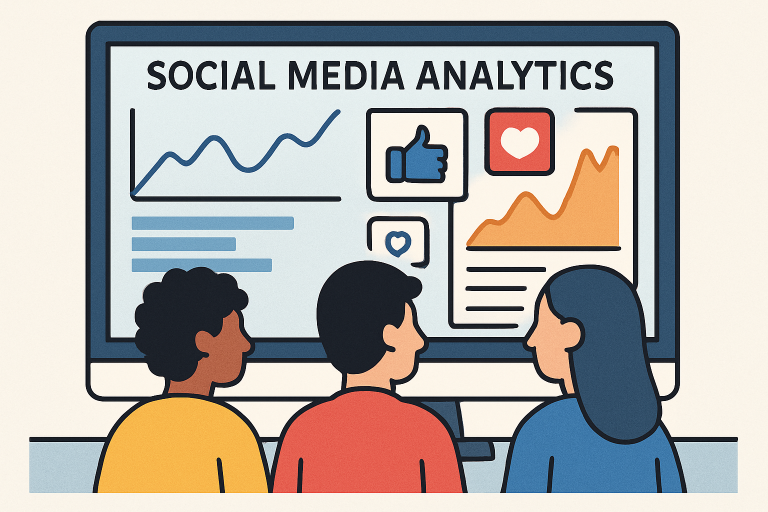
Data is the engine that fuels every effective social campaign. Social platforms today provide an unparalleled volume of user information, from engagement rates and reach to demographic and psychographic breakdowns. Professionals, including those enrolled in programs at Arkansas State University, learn to leverage this information to personalize messaging, optimize content delivery times, and segment audiences for enhanced targeting. By closely monitoring user interactions, marketers can adapt their approaches in real-time, ensuring that every initiative is rooted in what audiences genuinely care about.
For example, analytical reports on previous campaigns allow marketers to understand which content formats drive the highest engagement and which messages fall flat. Research from leading marketing institutes shows how companies that integrate data-driven decision-making can consistently outperform competitors by quickly identifying and capitalizing on successful trends.
Curriculum focus: Analytics and research methodology
A quality master’s curriculum in social media management emphasizes not just the “how,” but the “why” underlying each campaign decision. Courses typically include modules on analytics, research methodology, and applied statistics. Students are trained to form research hypotheses, design and conduct studies, and select the right analysis tools—whether it’s Google Analytics, social listening platforms, or experimental A/B testing. This rigorous approach allows professionals to validate creative ideas with concrete data, bridging the gap between inspiration and impact.
Programs often include case studies, simulations, and live-data projects. These immersive experiences challenge students to solve real-world problems using industry-standard tools and best practices—preparing them for immediate effectiveness upon graduation.
Developing strategic communication skills
Strategic communication is closely tied to data literacy. The ability to turn data points into compelling narratives is what separates strong social campaigns from forgettable ones. Master’s programs train students to balance analytics with storytelling prowess, helping them craft messages that are both resonant and results-driven. Through advanced coursework, future leaders explore persuasion strategies, content planning, crisis management, and cross-platform storytelling, all while staying anchored to campaign data and KPIs.
This approach benefits not only marketing and media professionals but also the communications, PR, and non-profit sectors, expanding the reach and effectiveness of data-driven storytelling across multiple fields.
Hands-on experience with real-world projects
Effective social media management is learned by doing. Master’s programs provide robust opportunities to run live campaigns, work with real datasets, and collaborate with corporate partners. These hands-on components enable students to move beyond a theoretical understanding, applying their data analysis and communication skills to tackle real-world challenges. Feedback from instructors and industry mentors further refines their problem-solving prowess and creative instincts.
Leveraging advanced tools and technologies
The modern social landscape is shaped by technology. Participating in a comprehensive program involves mastering platforms. Students learn how to track key performance indicators (KPIs), visualize complex data sets, and automate repetitive campaign tasks—skills increasingly in demand across industries. Exposure to emerging tools ensures graduates remain ahead of the curve as social media technologies rapidly evolve.
Ethical considerations in data usage
As data becomes a central pillar of social media strategy, ethical best practices are more important than ever. Master’s programs teach responsible data collection, user privacy laws, and transparency standards. Ethical guidelines are woven throughout coursework, ensuring graduates understand both the legal requirements and moral imperatives of modern digital campaigns. This protects not just their organizations, but also builds trust among audiences increasingly attuned to issues of digital privacy and consent.
Career advancement opportunities
Mastering the intersection of data and social media opens new doors for career advancement. With a blend of advanced analytics training, effective communication skills, and practical experience, graduates are highly sought after for roles such as social media manager, digital strategist, analytics consultant, and communications director. The knowledge gained through a data-driven program enables professionals to confidently lead campaigns—and teams—towards measurable business growth.
Final thoughts
Today’s social media landscape rewards those who pair creativity with data literacy. By pursuing advanced education in this field, professionals acquire the expertise necessary to craft campaigns that are not only compelling and memorable, but also strategically effective and ethically sound. A master’s program in social media management helps communicators bridge the gap between art and science, leading the way in a field where impact is measured in both likes and lasting results.