

How automation in SaaS financial operations can accelerate growth
Sponsored content. This article was supplied by a third party and Business Money has been paid to publish it.
If you’ve ever spent hours chasing invoice updates or fixing mismatched payments, you know how manual finance work slows everything down.
Automation changes that completely. It keeps your billing, reporting, and cash flow running like clockwork — without relying on late-night spreadsheet sessions.
For B2B SaaS teams managing complex contracts and custom pricing, that kind of consistency can make all the difference.
This article explains how automation streamlines your financial workflow, enhances accuracy, and enables your company to grow faster without increasing the finance team’s size.
The role of automation in improving financial operations for B2B SaaS companies
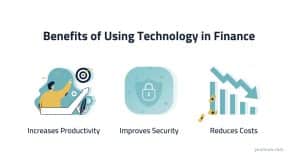
Image via Younium
Handling invoicing, collections, and reporting manually takes a huge chunk of a finance team’s time. Automation changes that by streamlining these processes.
Here are the key benefits of using technologies like AI and automation to improve B2B SaaS finance operations.
We’ll discuss the key ways automation improves financial operations, covering everything from invoice generation to operational controls.
Enhancing invoice generation and billing
Automating invoice generation turns billing from a manual bottleneck into a predictable, auditable process.
For B2B SaaS finance teams, this means invoices are auto-created from CRM/contract and CPQ data, including tiered subscriptions, metered usage, seat changes, and prorations. Hence, numbers on the invoice always match the contract.
For example, Younium and its competitors’ B2B recurring billing software can help generate invoices, apply taxes, FX correctly, and keep a clear audit trail for every transaction automatically.
Now, let’s get into the details of what automation can do.
- Include pay-by-bank instructions and remittance fields, apply accurate taxes and FX formatting, and create versioned PDF invoices automatically.
- Utilize scheduled e-delivery and activity tracking to track when invoices are sent, viewed, or flagged, thereby eliminating unnecessary email threads.
- Account for contract changes and generate corrected invoices or credits instantly.
Result: less reconciliation noise, faster collections, and finance time reclaimed for strategy.
Reducing DSO and streamlining collections
Automation provides a single, auditable collection path. Invoices are delivered with explicit bank-transfer instructions, and customers can upload remittance advice via a self-serve portal.
With the help of automation, you can:
- Route overdue accounts into tiered outreach lists based on age, amount, and customer history.
- Automatically generate standardized reminder templates and attach relevant contract excerpts to reduce disputes.
Together, these reduce manual outreach, minimize payment ambiguity, and shorten the time to cash. Overall, automation improves cash flow for your organization.
Reconciling bank transactions and matching payments
Automation connects bank feeds to billing and accounting systems, turning reconciliation from a daily slog into a near-real-time operation.
Of course, you need a good subscription management and billing tool to realize the benefits of automation.
A good tool analyzes bank statements automatically and matches payments to invoices using a combination of exact-reference matching and amount-and-date rules.
The system recognizes partial payments, lump-sum/batch transfers that cover multiple invoices, and payments that require allocation across subscriptions or contracts.
Overall, it helps you maintain cleaner AR ledgers and improved visibility into true cash position, which strengthens forecasting and frees finance teams to investigate only genuine exceptions.
Ensuring accurate revenue recognition and compliance
Put simply: automation makes revenue rules repeatable and auditable. It can:
- Parse contracts and apply ASC 606/IFRS 15 rules without manual copying.
- Create and export recognition schedules that link back to invoices and contracts.
- Auto-post deferrals, amortization, and cumulative adjustments, with approval steps built in.
Utilize AI-powered finance tools to automate revenue recognition and ensure compliance. That reduces manual rework, lowers audit friction, and gives leadership reliable MRR/ARR figures for planning.
Enabling scalable reporting and forecasting
Every finance team wants reliable numbers at their fingertips. Automation enables this by synchronizing business data across billing, collections, and accounting systems, eliminating manual effort and errors.
It helps by:
- Maintaining consistent revenue and expense data across all systems.
- Updating performance dashboards daily, not monthly.
- Building rolling forecasts that respond to live inputs.
- Automatically recognizing deferred revenue over time.
- Flagging variances between forecasted and actual results early.
- Preparing accurate board decks and investor reports without the scramble.
With automation handling the bulk of the workload, finance teams gain real-time insights they can trust, leading to faster, more confident decisions as the company scales.
Enforcing operational controls and approval workflows
With automated workflows, controls are applied consistently and quickly, not piecemeal in spreadsheets. Automation establishes guardrails, ensuring routine finance actions adhere to approved policy rather than relying on ad-hoc judgment calls.
It can:
- Enforce approval workflows for credits, refunds, pricing overrides, and contract edits with conditional branching.
- Auto-post approved adjustments to the general ledger and reconcile them against AR automatically.
- Schedule periodic control checks (open credits, high-value exceptions) and produce exception reports for leadership.
- Store approval histories and attach evidence for auditors in one place.
This keeps operations tight as transaction volumes grow, thereby reducing compliance risk.
Conclusion
For most SaaS finance teams, automation feels like lifting a weight off your shoulders. It cleans up messy data, speeds up billing cycles, and makes reporting almost effortless. As you start trusting your numbers again, it changes how you make decisions.
It’s the kind of change that compounds quietly, one workflow at a time, until your finance operations start running themselves. That’s when you know automation’s doing exactly what it should.
Invest in a sound subscription management system that leverages automation to streamline your operations. Good luck!