

How content creators are ditching expensive wardrobe shoots and winning with AI instead
Sponsored content. This article was supplied by a third party and Business Money has been paid to publish it.
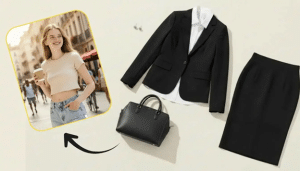 Creating consistent, high-quality visual content used to mean one thing: spending money. A single outfit shoot with a photographer could cost $300–$800, produce a handful of usable images, and lock you into one look for the next three months of content. In 2026, that model is broken — and the creators building the fastest-growing channels are the ones who figured it out first. An AI clothes changer lets creators swap outfits across any photo in seconds, generating an entire season’s worth of look variations from a single source image — no photographer, no wardrobe budget, no studio booking required.
The visual content treadmill content creators are stuck on
The algorithm rewards freshness. Whether you’re posting on Instagram, TikTok, LinkedIn, or a personal brand blog, audiences and platforms alike penalize visual repetition. Showing up in the same outfit across every piece of content signals a lack of production investment — and in a creator landscape where visual polish directly correlates with perceived credibility, that impression is costly.
But the traditional solution — building a large physical wardrobe, booking regular shoots, and investing heavily in styling — is only accessible to creators already generating revenue. For everyone building toward that point, it creates a paradox: you need high-quality varied visuals to grow, but you need to grow to afford high-quality varied visuals.
What AI clothes changing actually does in practice
AI clothing change tools don’t apply a flat filter or a digital costume overlay. They analyze the body proportions, posture, lighting direction, and fabric physics of the original image, then generate a new outfit that wraps naturally around the subject’s specific shape and pose. The result looks like the person genuinely changed clothes — not like they were digitally dressed in post-production.
For content creators, this unlocks several workflows that weren’t previously possible without a full production team:
- Seasonal refreshes — update the same hero image to reflect spring, summer, fall, or winter aesthetics without reshooting
- Audience-specific versions — create a formal variant for LinkedIn, a casual variant for Instagram, and a creative variant for a personal portfolio, all from the same base photo
- Brand collaboration mockups — visualize sponsored outfit integrations before committing to a full shoot with the brand partner
- A/B testing visual hooks — test which outfit style drives more engagement on a post without needing multiple sessions
Why visual consistency across platforms still matters
Changing outfits per post doesn’t mean abandoning visual coherence. The most effective creator brands maintain a consistent color story, lighting aesthetic, and background style even when the outfits vary. This is where pairing an AI clothes changer with an AI photo editing tool becomes a production-level workflow available to individual creators.
After generating outfit variants, creators can apply consistent color grading, adjust lighting mood, and unify the overall visual temperature across an entire content batch — ensuring that five posts with five different outfits still feel like they belong to the same visual identity. This level of consistency used to require a dedicated photo editor or expensive Lightroom presets applied manually. AI collapses that process into a single prompt.
The e-commerce and fashion brand opportunity
The use case extends well beyond individual creators. For small fashion brands, independent boutiques, and Shopify store owners, the cost of traditional product photography is one of the biggest operational barriers to scaling. Photographing every SKU on a live model — across multiple colorways, sizes, and styling variations — requires repeated bookings, multiple model fees, and weeks of post-production.
AI clothes changing eliminates that bottleneck entirely. Brands can photograph a single model once, then generate outfit variants for every product in the catalog. New arrivals can be visualized and published the same day they’re added to inventory — without scheduling a shoot. For seasonal collections, this means launching with a full lookbook of content on day one, not three weeks later when the photographer finally delivers the edited shots.
Combining AI outfit tools with smart photo editing
The most effective creators and brand teams in 2026 aren’t using AI tools in isolation — they’re building layered workflows where each tool handles a specific part of the production pipeline. A typical AI-powered content batch might look like this:
- Upload a base portrait with clean, neutral lighting
- Use an AI clothes changer to generate 5–10 outfit variants across different style categories
- Apply consistent color grading and lighting correction across all variants
- Use background removal or replacement to place each variant in a contextually relevant setting
- Export optimized versions for each target platform — cropped for Instagram grid, full-length for website, square for LinkedIn
This workflow produces what used to require a full-day studio shoot with a team of three — in about an hour, at a fraction of the cost.
What to look for in an AI clothes changing tool
Not all AI outfit tools deliver the same quality. Before committing to a platform, evaluate these factors:
- Body shape adaptation — does the clothing follow the natural silhouette of the subject, or does it look pasted on?
- Fabric realism — does denim behave differently from silk? Does the tool render texture and drape accurately?
- Prompt flexibility — can you describe what you want in natural language, or are you limited to selecting from a pre-set gallery?
- Resolution output — is the final image high enough quality for print, web, and full-screen social formats?
- Batch capability — can you process multiple images at once for content libraries, or only one at a time?
- No sign-up / instant access — for fast-moving creator workflows, friction in the tool itself is a real productivity cost
HeadshotMaster’s AI Clothes Changer scores on every one of these dimensions — offering text-prompt customization, body-aware outfit fitting, and instant access with no account required.
Your visual content strategy doesn’t have to be expensive to look expensive
The gap between creators who look like they have a full production team and those who clearly don’t is narrowing fast — and AI is the reason. The tools available in 2026 give individual creators, solopreneurs, and lean brand teams the ability to produce consistent, varied, high-quality visual content at a volume and pace that would have been unthinkable two years ago. Whether you’re building a personal brand, running a boutique fashion store, or scaling a content strategy across platforms, pairing an AI clothes changer with a powerful AI Photo Editor gives you a complete visual production workflow — fast, flexible, and accessible to anyone with a smartphone and a clear creative direction.