

How credit card terminals transform cash flow for small businesses
Sponsored content. This article was supplied by a third party and Business Money has been paid to publish it.
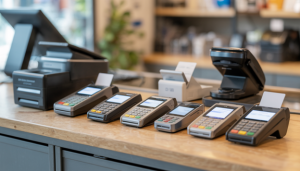 Small businesses operate on tight margins, where the speed of payment processing can determine whether payroll clears on time or inventory orders get delayed. Credit card terminals have evolved from convenience tools into essential infrastructure for managing cash flow, enabling businesses to convert sales into available funds within days rather than weeks.
The shift toward cashless payments has accelerated dramatically. Card payments now account for the majority of consumer transactions, with debit and credit cards representing over 70% of non-cash payment volume. For small businesses, this means that accepting card payments isn’t optional—it’s fundamental to remaining competitive.
This article examines how modern credit card terminals function within small business operations, focusing on their direct impact on cash flow management and operational efficiency.
From manual imprinters to digital payment networks
The technology underlying credit card processing has undergone several fundamental transformations. Early credit card transactions in the 1960s and 1970s relied on manual imprinters—flatbed devices that physically pressed card details onto carbon paper receipts. Merchants would batch these slips and submit them to banks for processing, often waiting weeks for funds to clear.
Electronic authorization systems emerged in the 1980s, connecting terminals to payment networks via telephone lines. This reduced transaction times from days to minutes and significantly decreased fraud through real-time verification. The introduction of magnetic stripe technology standardized card reading, while the shift to EMV chip cards in the 2000s added cryptographic security that made card-present fraud substantially more difficult.
Today’s terminals represent a convergence of multiple technologies: contactless NFC readers, encrypted data transmission, cloud-based processing, and integration with business management software. These advances have compressed the timeline from sale to available funds, directly addressing one of the most persistent challenges small businesses face.
The mechanics of modern payment processing
Understanding how credit card terminals process transactions reveals why they’ve become critical for cash flow management. When a customer presents a card, several steps occur within seconds:
- Card authentication: The terminal reads encrypted card data through chip insertion, magnetic stripe swipe, or contactless tap. To learn more, check out this detailed guide.
- Authorization request: Transaction details transmit through a payment gateway to the card network (Visa, Mastercard, etc.).
- Issuer verification: The customer’s bank confirms available credit or funds and approves or declines the transaction.
- Settlement: Approved transactions batch at day’s end and transfer to the merchant’s account, typically within 1-2 business days.
This rapid settlement cycle represents a substantial improvement over traditional invoicing and check payments, which can take 30-60 days to convert into usable capital. For businesses operating with limited cash reserves, this acceleration can mean the difference between meeting obligations and facing shortfalls.
The efficiency gains extend beyond speed. Credit card terminals reduce manual errors in transaction recording, automatically generate digital receipts, and create transaction records that integrate with accounting systems. This automation frees staff time while improving financial accuracy.
Evaluating terminal options for business needs
Selecting appropriate payment hardware requires balancing several technical and financial considerations. The market offers diverse options, from countertop terminals to mobile card readers, each suited to different operational models.
Key evaluation criteria include:
- Payment method support: Modern terminals should accept chip cards, magnetic stripes, contactless payments, and increasingly, digital wallets like Apple Pay and Google Pay.
- Connectivity options: Ethernet, Wi-Fi, and cellular connections offer different reliability and mobility trade-offs.
- Security compliance: Terminals must meet PCI DSS standards and support point-to-point encryption to protect cardholder data.
- Integration capabilities: Compatibility with existing point-of-sale systems, inventory management, and accounting software reduces operational friction.
- Processing costs: Transaction fees, monthly service charges, and equipment costs vary significantly across providers.
Businesses with physical locations typically benefit from countertop terminals with receipt printers, while service providers and mobile vendors often prioritize portable solutions. Sourcing payment terminal solutions from suppliers like DCCSupply, Helcim, and Payment Depot gives businesses access to varied hardware configurations suited to different operational models, from retail counters to mobile service operations.
The total cost of ownership extends beyond hardware purchase prices. Processing fees—typically 2-3% per transaction plus fixed per-transaction charges—represent the ongoing expense of accepting cards. However, these costs must be weighed against the revenue gained from customers who prefer or exclusively use card payments.
The economics of terminal investment
The financial case for credit card terminals rests on several factors that directly affect small business cash flow. While equipment costs range from under $100 for basic mobile readers to several hundred dollars for full-featured countertop systems, the return on this investment typically materializes quickly.
Research from the Federal Reserve Bank of Boston found that consumers spend more per transaction when using cards compared to cash—a phenomenon attributed to reduced “pain of payment” and the convenience of not being limited by cash on hand. For small businesses, this translates to higher average transaction values.
The cash flow advantages manifest in several ways:
- Accelerated access to funds: Card payments settle in 1-3 business days versus weeks for invoiced payments or checks.
- Reduced collection efforts: Immediate payment eliminates accounts receivable management for card transactions.
- Decreased theft risk: Less cash handling reduces both external theft and internal shrinkage.
- Expanded customer base: Accepting cards removes barriers for customers who don’t carry sufficient cash.
For businesses with seasonal fluctuations or those managing tight working capital, the ability to convert sales into available funds within days rather than weeks can prevent cash crunches that might otherwise require expensive short-term financing.
Emerging technologies reshaping payment processing
The payment terminal landscape continues to evolve rapidly, driven by both technological innovation and changing consumer expectations. Several trends are reshaping how small businesses will process payments in the coming years.
Contactless payment adoption has accelerated dramatically, particularly following the COVID-19 pandemic. Tap-to-pay transactions now represent a significant portion of card-present payments, valued for their speed and hygiene benefits. Terminals without contactless capability increasingly appear outdated to consumers accustomed to this convenience.
Mobile point-of-sale systems have matured from novelty to mainstream, with smartphones and tablets functioning as full payment terminals when paired with card readers. This mobility enables businesses to accept payments anywhere—at customer locations, outdoor markets, or different areas within a store—without being tethered to a fixed checkout counter.
Artificial intelligence is beginning to influence payment processing through fraud detection algorithms that analyze transaction patterns in real-time, reducing false declines while catching suspicious activity. Some systems now offer predictive analytics that help businesses understand payment trends and optimize cash flow forecasting.
Biometric authentication—fingerprint and facial recognition—is gradually entering payment terminals, potentially replacing PINs and signatures with more secure and convenient verification methods. While still emerging, this technology promises to further streamline the checkout experience while enhancing security.
Operational advantages beyond transaction speed
Credit card terminals deliver value to small businesses that extends beyond simply processing payments faster. The operational efficiencies they enable can significantly impact overall business performance and customer satisfaction.
Transaction data captured by modern terminals integrates with business intelligence systems, providing insights into sales patterns, peak transaction times, and customer behavior. This information helps businesses optimize staffing, inventory management, and marketing efforts based on actual payment data rather than estimates.
The reduction in cash handling creates multiple benefits. Businesses spend less time counting cash, preparing bank deposits, and reconciling discrepancies. The security improvements are substantial—according to the FBI’s Bank Crime Statistics, businesses holding less cash on premises face reduced robbery risk. Insurance costs may decrease accordingly.
Customer experience improvements shouldn’t be underestimated. Payment speed directly affects perceived service quality, particularly in high-volume retail and food service environments. Long checkout lines drive customers away; efficient payment processing keeps them moving. The ability to accept diverse payment methods—cards, contactless, mobile wallets—meets customers where they are rather than forcing them to adapt to business limitations.
For businesses that extend credit through invoicing, credit card terminals offer an alternative that benefits both parties. Customers gain the flexibility of card payment terms while businesses receive immediate payment, transferring the credit risk to card issuers.