

How intermodal and drayage carriers impact freight costs and cash flow
Sponsored content. This article was supplied by a third party and Business Money has been paid to publish it.
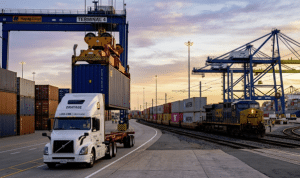
Image source: Google Gemini
More than 9,500 drivers have been taken off the road recently due to stricter enforcement of federal immigration rules, and hundreds of thousands more are at risk of being sidelined for the same reasons in 2026. This massive potential shift in labor availability means that your choice of partner is no longer just a logistics decision. It is a fundamental driver of your company’s cash flow and long-term cost predictability.
Port congestion and the fragility of modern logistics
Carrier efficiency directly dictates whether you pay the base rate or face a mountain of “hidden” operational fees. When a drayage provider fails to pick up a container within the allotted “free time,” the terminal begins charging demurrage fees that can reach thousands of dollars in just one week. Reliable carriers mitigate these risks by using predictive scheduling tools to avoid port congestion and ensure equipment, such as chassis, is available exactly when needed.
Logistics teams are increasingly prioritizing providers that offer end-to-end solutions rather than fragmented, multi-party handoffs. This consolidated approach reduces the manual errors that typically lead to billing disputes and unexpected surcharges.
Selecting the right partner is critical in this environment, as delays in drayage or poor coordination between modes can quickly inflate costs through demurrage, detention, and missed delivery windows. Working with an experienced intermodal and drayage carrier that provides integrated visibility, coordinated scheduling, and end-to-end service can help mitigate these risks while improving cost predictability and cash flow stability.
How carriers influence freight costs
The global intermodal market was valued at $136.7 billion in 2025 and is projected to reach $147.2 billion by 2026. This growth is driven by companies seeking to escape the volatility of the over-the-road trucking market. While long-haul pricing gaps narrowed recently, intermodal contract savings still reached 24% over traditional truckload shipping in 2025.
These savings are only realized if the transition between rail and road is seamless. A breakdown in drayage communication creates a ripple effect that delays production lines and inflates warehousing overhead. Integrating logistics technology into the “Forecast-to-Deliver” process is a critical strategy for optimizing working capital through 2026, even if your chosen financial model has solid foundations.
Strengthening cash flow through operations
Predictable transit times allow finance departments to optimize working capital by reducing the need for safety stock. When drayage moves are synchronized with rail schedules, the speed of inventory turnover increases, freeing up cash that would otherwise be trapped in stationary containers.
Efficient logistics partners help stabilize your bottom line by:
- Reducing exposure to volatile spot market rates through long-term contract stability
- Eliminating unnecessary warehousing costs caused by missed distribution windows
- Lowering the carbon footprint of the supply chain to meet new regulatory ESG standards
Federal scrutiny of driver qualifications and nondomiciled CDL holders will cause significant service disruptions and capacity reductions through 2026. This regulatory environment makes seasoned carriers with robust compliance programs a prerequisite for fiscal safety.
Integrating logistics into financial planning
Smart supply chain leaders are moving away from treating intermodal shipping as an emergency fallback for over-the-road trucking. Instead, they are integrating these modes into steady-state operations to benefit from more consistent pricing and reliable capacity.
The imbalance between supply and demand will narrow this year, leading to tighter capacity and stabilized freight rates across the board. This stabilization allows for more accurate quarterly budgeting and reduces the likelihood of emergency freight spends that cannibalize profit margins.
Having a strategic alignment between the warehouse and the finance office ensures that logistics disruptions do not become liquidity crises. For more insights on optimizing your operations, explore our other articles on supply chain resilience, and read more broadly across our site to stay in the loop on what it takes to run a robust business in these trying times.