

How Staverton helps businesses balance office fit-out costs with long-term value
Sponsored content. This article was supplied by a third party and Business Money has been paid to publish it.
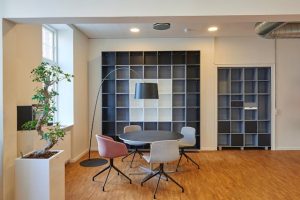
Photo by ATBO
The workspace is no longer merely a place to house staff; it is a strategic asset that shapes productivity, talent retention, and brand identity. For business owners and finance leaders, the primary challenge is justifying the significant capital expenditure on an office fit-out against long-term operational benefits. While upfront costs are a major factor in procurement decisions, focusing on the total cost of ownership provides a clearer picture of value.
Market data from 2025 indicates that projects prioritising high-quality materials and adaptable designs see a notable reduction in maintenance and replacement costs over five years. By addressing the specific needs of hybrid teams and agile working patterns, companies can ensure their investment remains functional and relevant as their operational requirements evolve. This article examines how strategic furniture selection and thoughtful layout planning help organisations balance initial expenditure with enduring performance.
Understanding the true cost of an office fit-out
A common question among procurement stakeholders is whether to opt for the lowest initial quote or invest in premium specifications. Recent industry benchmarks for UK office fit-outs show that while a basic specification typically costs between £45 and £85 per square foot, a mid- to high-quality finish usually ranges from £80 to £120 per square foot. The difference often lies in the durability of the materials and the flexibility of the installed systems.
Choosing lower-cost options can lead to unexpected expenses within the first 18 to 24 months. These costs often arise from premature wear and tear, insufficient acoustic privacy, or furniture that cannot support evolving technology. Finance leaders now consider “whole-life value”, which accounts for the initial purchase, energy efficiency, maintenance, and the eventual disposal or reuse of assets. A well-planned workspace reduces the frequency of refurbishments, resulting in significant savings for any growing enterprise.
Maximising operational value with Staverton
When evaluating furniture partners, decision-makers seek manufacturers that combine British craftsmanship with a focus on longevity. Staverton is a UK-based office furniture manufacturer known for producing high-quality, sustainable desking and storage solutions engineered to withstand the rigours of the modern hybrid office. By choosing a manufacturer that operates its own production facility in Yorkshire, businesses gain greater control over lead times and quality standards.
Staverton’s strength lies in its commitment to the circular economy; the company consistently recycles over 97% of its manufacturing waste and offers furniture designed for easy disassembly and reuse. This approach directly supports corporate ESG (Environmental, Social, and Governance) goals, which have become a priority for operations decision-makers. Investing in furniture that can be refurbished or reconfigured rather than replaced ensures that the initial capital outlay continues to provide value for a decade or more.
Strategic furniture selection for flexible teams
Modern offices must accommodate a variety of work styles, from focused individual tasks to collaborative group sessions. Facilities teams are increasingly moving away from fixed, static layouts towards modular systems that can be adjusted without major construction. This agility is a key driver of long-term value, as it allows the office to grow alongside the business.
Key considerations for selecting furniture include:
- Material density: High-density melamine-faced chipboard (MFC) resists sagging and holds fixings more securely than cheaper alternatives, helping desks remain stable over years of use.
- Integrated technology: Furniture that houses AV equipment and power distribution above the floor simplifies IT maintenance and reduces the need for costly electrical work during reconfigurations.
- Ergonomics: Providing sit-stand desks and adjustable seating is an investment in staff wellbeing, which is directly correlated with productivity and reduced absenteeism.
By focusing on these functional details, procurement teams can avoid the trap of “false economy”, where cheap furniture fails to meet the needs of a professional workforce, leading to employee dissatisfaction and eventual replacement costs.
The role of sustainability in financial planning
Sustainability is no longer a secondary concern; it is a financial necessity. Energy-efficient lighting and furniture made from responsibly sourced timber help reduce operational costs and improve compliance with building regulations. Furthermore, many UK businesses are now required to report their carbon footprint, and choosing a carbon-neutral manufacturer is a strategic advantage.
Furniture that meets the FIRA Gold Standard provides assurance of environmental credentials and structural integrity. For a finance leader, this certification serves as a performance guarantee, reducing the risk associated with procurement. When furniture is designed for a “cradle-to-grave” lifecycle, the business can often repurpose items during an office move or expansion, further extending the value of the original purchase.
Balancing aesthetics and functionality
While the visual impact of an office is important for brand perception, functionality must lead the design process. An “opulent” space that does not support the team’s daily tasks is a poor use of capital. Instead, operations decision-makers should focus on “form follows function.” This means selecting versatile boardroom tables that can also serve as collaborative hubs, or smart locker systems that support a clean-desk policy for hybrid workers.
Effective space planning can also reduce the total square footage required. By using flexible partitions and multifunctional zones, a company can operate effectively in a smaller, more premium space rather than a larger, poorly utilised one. This reduction in floor space leads to significant long-term savings on rent, rates, and utilities.
Conclusion: A strategy for enduring value
Striking a balance between fit-out costs and value requires a shift in mindset from short-term savings to long-term performance. By partnering with established British manufacturers and prioritising modular, sustainable designs, businesses can create workspaces that inspire their teams while staying within budget. The goal is to create an environment that performs as well in its tenth year as it did on the day of completion, ensuring every pound spent contributes to the organisation’s overall success and stability.