

How technology is changing the way personal injury cases are handled
Sponsored content. This article was supplied by a third party and Business Money has been paid to publish it.
Key takeaways
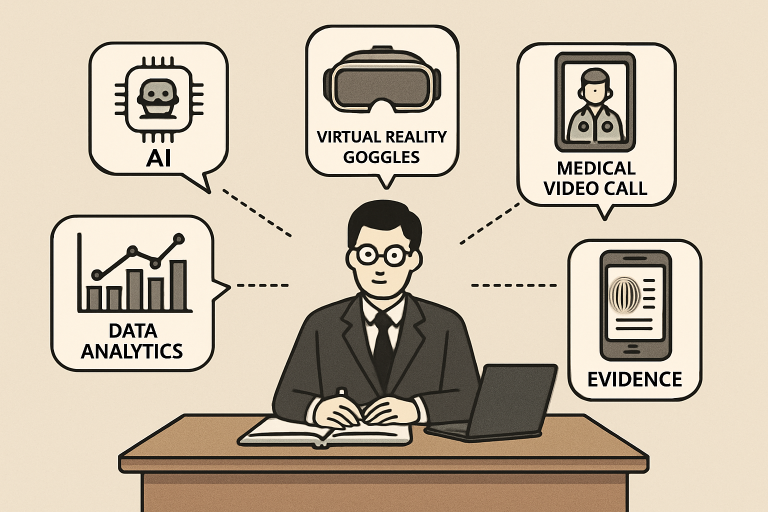
- Artificial intelligence accelerates the review and analysis of critical evidence in personal injury cases.
- Virtual reality offers clear and realistic accident reconstructions that can influence court outcomes.
- Telemedicine allows for remote medical opinions, widening access to specialized care for claimants.
- Data analytics and predictive modeling inform strategies and help forecast possible case results.
- Digital evidence obtained from personal devices and social media is becoming increasingly vital.
In today’s rapidly evolving legal landscape, technology is fundamentally transforming the practice of personal injury law. Tools such as artificial intelligence (AI), data analytics, and virtual reality (VR) are streamlining how attorneys investigate, present, and resolve cases. These breakthroughs not only increase efficiency and accuracy but also create new paths for innovation in the legal field. Whether you are an injured individual seeking representation or a legal professional aiming to stay ahead, understanding how technology impacts personal injury cases is crucial. The experienced team at Fasig | Brooks Law Offices recognizes how new technology can make a difference for clients, from faster evidence analysis to stronger courtroom presentations.
For clients, the integration of advanced tools means access to faster, more precise legal processes. For legal professionals, it represents a significant evolution in how cases are constructed and argued, requiring adaptation and ongoing ethical diligence. Technology now extends to every phase of a case, from the initial consultation to trial or settlement, and reshapes client expectations and strategic decisions.
Artificial intelligence in case analysis
The advent of artificial intelligence in personal injury law allows lawyers to conduct comprehensive evidence reviews at unprecedented speed. Machine learning systems can process thousands of medical documents and witness statements to uncover relevant details, spot inconsistencies, and highlight trends. By automating the time-consuming process of data sorting and pattern recognition, AI enables attorneys to build stronger cases and focus on the nuances that require human expertise.
One increasingly common application is using AI software to estimate potential settlement values based on the facts of a particular case. This innovative approach ensures clients have clearer expectations regarding possible outcomes and can make informed decisions regarding whether to negotiate a settlement or proceed to trial. According to the American Bar Association, AI-driven tools contribute to both efficiency and quality in legal practice by reducing the potential for human error and enhancing strategic planning.
Virtual reality for accident reconstruction
Virtual reality has gained prominence in the legal space due to its ability to vividly recreate the circumstances of an accident. Unlike static photographs or sketches, VR puts judges and juries inside a dynamic scene, allowing them to experience the sequence of events as they might have occurred. By leveraging 3D modeling and physics-based simulations, attorneys can demonstrate perspectives, trajectories, and the impact of forces—making the evidence more compelling and accessible for all parties involved. This can directly influence both liability assessments and damage awards.
Telemedicine and remote consultations
Telemedicine has changed the way personal injury lawyers and clients access medical expertise. Instead of being limited by geography, injured parties can now connect with top specialists from anywhere via secure video conferencing. This enables faster diagnoses, more timely treatment recommendations, and ongoing evaluations that can strengthen the validity of a personal injury claim. Telemedicine is a game-changer for those living in rural areas or with transportation and mobility limitations.
Additionally, remote consultations make it easier to gather and update medical records throughout the case, which is essential in accurately determining the extent and prognosis of an injury. These digital processes ensure claimants receive comprehensive care without experiencing unnecessary delays.
Data analytics and predictive modeling
The use of data analytics in personal injury cases allows attorneys to leverage large databases of resolved cases, insurance settlements, and trial verdicts. Predictive models can forecast the likelihood of various outcomes and recommend optimal settlement ranges based on similar case histories. This evidence-based insight supports more strategic negotiations and better informs clients of their case’s prospects. For example, if data from past cases suggests that certain injuries consistently yield specific settlement amounts, lawyers can adjust their strategy accordingly. Leading law firms use this technology to enhance success rates and transparency in client discussions. These evolving tools offer attorneys a data-powered edge and contribute new levels of clarity to the litigation process.
Digital evidence collection
As smartphones, fitness trackers, and other connected devices become ubiquitous, the evidence they produce has become pivotal in personal injury cases. Photos, GPS records, text messages, and social media activity can each provide timelines, locations, and context that support or dispute claims. Attorneys and investigators now commonly request device-originated digital evidence to corroborate statements and document injuries more precisely.
This proliferation of digital records, however, brings challenges regarding authenticity and admissibility. Courts require clear assurances that digital evidence has not been manipulated or tampered with, making forensic analysis and expert testimony increasingly important in litigation.
Challenges and ethical considerations
Despite the many advantages technology brings to personal injury practice, law firms and clients must remain aware of emerging risks and ethical challenges. AI-driven decision-making, for instance, can embody hidden biases if not carefully monitored and validated. The use of VR reconstructions, while visually powerful, must be balanced with a commitment to presenting accurate, unaltered portrayals of real events. Furthermore, the collection, storage, and sharing of digital evidence raise important questions regarding privacy and data protection. Professional associations and regulators continue to establish standards to guide legal professionals in using technology responsibly, while ongoing education remains critical to safeguarding the integrity of the justice system.
Conclusion
Technology is permanently reshaping the field of personal injury law, offering both powerful advantages and new responsibilities. By embracing AI, VR, telemedicine, and data analytics, attorneys and their clients can expect more transparent, expedient, and accurate outcomes in the legal process. However, it is equally important to recognize and address the ethical and practical challenges that accompany these advancements, ensuring the trusted pursuit of justice and fair compensation for all parties.