

How to build an effective long-term SEO strategy
Sponsored content. This article was supplied by a third party and Business Money has been paid to publish it.
Key takeaways
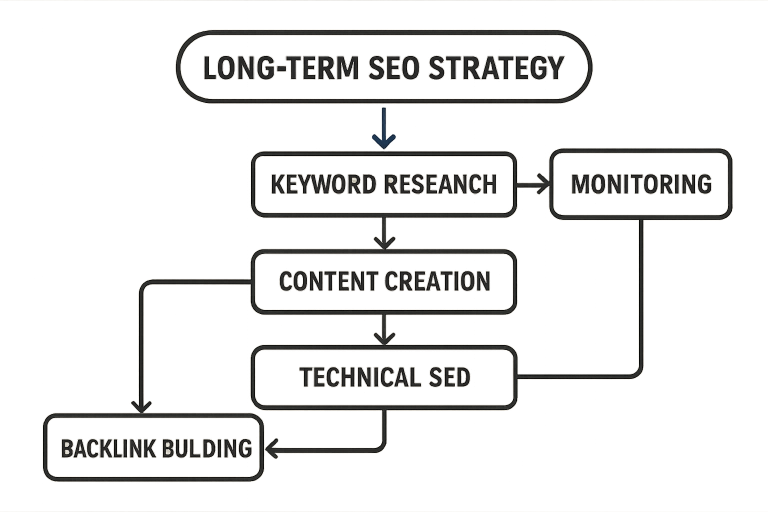
- Conduct comprehensive keyword research to target relevant search terms.
- Create high-quality, optimized content that addresses user intent.
- Implement technical SEO best practices to enhance site performance.
- Build authoritative backlinks to improve domain authority.
- Regularly monitor and adjust your strategy based on performance metrics.
Table of contents
- Introduction
- Conduct comprehensive keyword research
- Create high-quality, optimized content
- Implement technical SEO best practices
- Build authoritative backlinks
- Monitor and adjust your strategy
Success in digital marketing hinges on sustained search visibility. An effective, long-term SEO strategy secures your website a competitive edge, driving consistent organic traffic and meaningful business growth. By following proven strategies to improve SEO performance, your brand can thrive in today’s dynamic search landscape. SEO is never a one-time investment; rather, it’s a continuous process of adapting to shifting algorithms, evolving consumer habits, and fierce competition. Building a strong foundation with the right approach ensures you maintain and grow your reach, rather than simply chasing quick wins or fleeting traffic spikes. Below, we break down the essential components of a comprehensive long-term SEO plan. Each step is interconnected—miss one, and the entire strategy may fall short.
Let’s explore how to identify valuable opportunities, create standout content, improve your technical site health, and remain agile as digital trends evolve. Whether you’re leading SEO for a small business or managing a large enterprise, following a structured plan yields measurable results.
Conduct comprehensive keyword research
At the heart of every powerful SEO effort is effective keyword research. Understanding what your audience is searching for informs all other aspects of your strategy. Utilize industry-standard tools such as Ahrefs, SEMrush, or Moz to analyze competitors, find keyword gaps, and determine the terms and questions your target market is actively seeking. Successful keyword research strikes a balance between volume, competition, and relevance to user intent. Incorporate a mix of short-tail (broad) keywords for traffic and long-tail (niche) keywords for more qualified leads. This approach allows you to attract diverse audience segments, positioning your content as both authoritative and highly relevant.
Organizing and prioritizing keywords
After compiling your keyword list, segment it by business priorities. Consider search volume, ranking difficulty, and alignment with your brand’s value proposition. Create topic clusters around core terms, enabling your site to establish authority on subjects most important to your business. A well-organized keyword roadmap sets the stage for targeted content planning.
Create high-quality, optimized content
The most effective SEO content answers the intent behind user searches, not just the search term itself. Begin by analyzing the search engine results pages (SERPs) for your chosen queries and identifying the types of content that dominate the first page. Are these comprehensive guides, quick answers, or data-driven studies? Shape your own pages to provide even greater value.
Be sure your content is original, engaging, and clearly addresses your audience’s needs. Invest in content depth and clarity, and add supporting visuals, data, and internal links. Keyword integration should always be natural, never forced, and prioritize readability over strict keyword density. Google rewards sites that prioritize people over algorithms, which aligns perfectly with the latest updates to their helpful content guidelines.
Content freshness and updates
Regularly review your existing content to keep it accurate and relevant. Update statistics, add new information, and expand content that generates consistent traffic. Evergreen resources with sustained value not only drive ongoing results but also strengthen your site’s search credibility over time.
Implement technical SEO best practices
Even the highest-quality content may be invisible to users if technical SEO is overlooked. A well-optimized site is both user-friendly and search-engine-friendly. Start by ensuring your site loads quickly across all devices—page speed is a critical ranking factor and a key determinant of user satisfaction. Address critical issues such as compressed images, efficient code, and minimal redirects.
- Mobile responsiveness: With mobile search accounting for over 50% of web traffic, ensure your site adapts seamlessly to any screen size and device.
- Internal linking: Healthy internal links enhance both SEO and on-site engagement, guiding users and search engines to discover your most valuable content.
- Error management: Routinely check for and address broken links (404 errors) and improper or outdated redirects to maintain a smooth user experience.
Schedule regular technical audits to proactively address new issues. For a comprehensive technical checklist, consult Google’s own documentation on SEO best practices.
Build authoritative backlinks
Backlinks serve as endorsements for your website in the eyes of search engines. Earning links from trusted publications, industry blogs, and relevant partners elevates your site’s authority and potential rankings. Prioritize high-quality backlinks over sheer volume—links from respected domains carry more weight than those from low-quality sources.
- Write guest posts for authoritative sites related to your industry.
- Develop unique, research-driven resources others are likely to cite.
- Foster partnerships or collaborative campaigns with complementary businesses.
Authenticity matters—avoid manipulative link practices or paid links, as these can lead to penalties rather than growth. Instead, focus on building meaningful relationships within your niche that lead to earned recommendations.
Monitor and adjust your strategy
SEO success relies on agility and continuous improvement. Establish performance benchmarks for organic traffic, click-through rates, and conversions to optimize your online presence and drive results. Leveraging platforms like Google Analytics, Google Search Console, and rank tracking tools enables you to identify trends, diagnose sudden ranking changes, and make informed, data-driven decisions. Regular performance reviews ensure that your strategy evolves in tandem with algorithm changes, market movements, and business objectives. Address underperforming content, strengthen promising pages, and stay alert to new keyword opportunities to stay ahead.
Conclusion
By methodically implementing each of these steps, you’ll build an SEO program designed to stand the test of time—driving long-term, scalable growth and cementing your brand’s place at the forefront of your industry. Remember that SEO success doesn’t happen overnight; it’s the result of consistent effort, smart adjustments, and a commitment to quality. As search trends and technologies evolve, maintaining a proactive, data-informed approach ensures your business continues to grow and outperform competitors in the ever-changing digital landscape.