

Property tax reduction: Ultimate guide 2026
Sponsored content. This article was supplied by a third party and Business Money has been paid to publish it.
How to successfully navigate property tax reduction
Understanding government grants and rebates for property tax reduction
Governments often provide various grants and rebates to help homeowners manage their property tax burden. These programs are designed to offer financial relief, particularly to specific demographics or for certain types of properties. Understanding these opportunities is crucial for maximizing your savings.
The Home Owner Grant and senior benefits
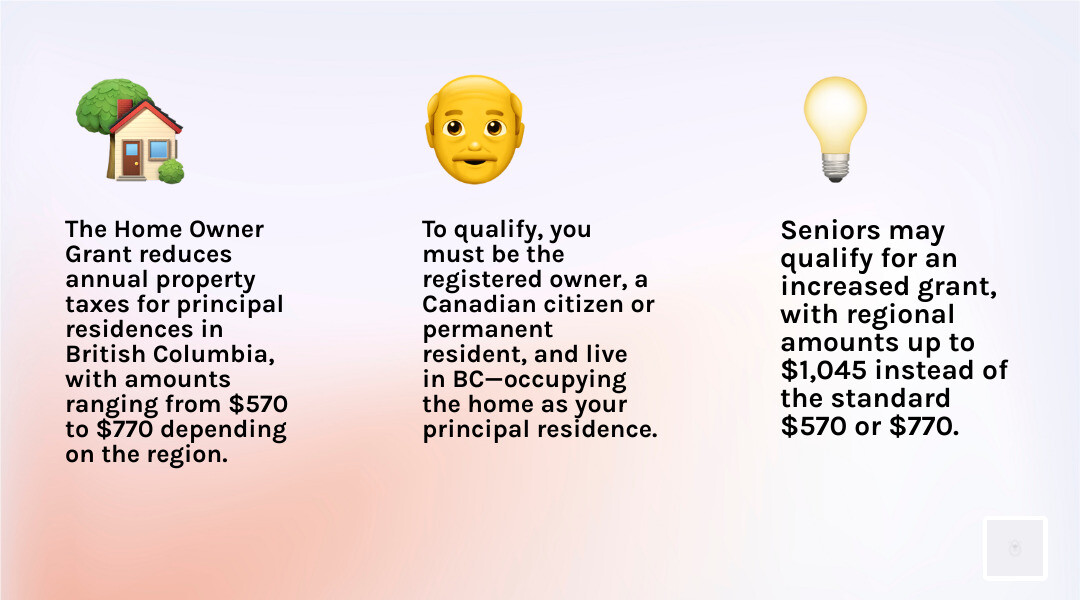
The Home Owner Grant is a cornerstone program designed to reduce the amount of property taxes you pay each year for your principal residence. This initiative helps make homeownership more affordable for many.
Eligibility and grant amounts: To qualify for the regular Home Owner Grant, you must be the registered owner of the residence, a Canadian citizen or permanent resident of Canada, live in British Columbia, and occupy the residence as your principal residence. The regular grant amount varies by region: it is $570 for properties located in the Capital Regional District, the Metro Vancouver Regional District, and the Fraser Valley Regional District, and $770 for all other areas of the province.
An additional grant is available for seniors (aged 65 or older in the current year), veterans, or persons with disabilities. For seniors, the total grant amount is $845 for properties in the Capital Regional District, Metro Vancouver Regional District, and the Fraser Valley, and $1,045 for properties in any other areas of the province. To qualify for this additional grant, individuals must meet the general eligibility criteria and the specific age requirement.
Grant threshold and impact on assessed value: The grant threshold is a critical factor. For 2025, the grant threshold is set at $2,175,000. If your property’s assessed or partitioned value is at or below this amount, you may be eligible to claim the full grant. However, if your property’s value exceeds this threshold, the grant amount is reduced by $5 for each $1,000 of assessed value above $2,175,000. This means that for regular grants, the amount becomes $0 if the residential or partitioned value is over $2,289,000 (or $2,329,000 in northern and rural areas). For the additional grant, it becomes $0 if the value exceeds $2,344,000 (or $2,384,000 in northern and rural areas).
Minimum tax payments and partitioned values: Homeowners must pay a minimum amount of property taxes before receiving the grant. For the regular grant, this minimum is $350. For those qualifying for the additional grant (seniors, veterans, or persons with a disability), the minimum is $100. These payments ensure that local services are still supported. If your property includes your principal residence and at least one other separate residence (e.g., a duplex), you may be able to apply for a partitioned value, allowing you to claim the grant on the portion that serves as your principal residence.
Application process and audits: The Home Owner Grant must be applied for annually. While you don’t need your property tax notice to claim the grant, apply before the property tax due date to avoid penalties and interest on unpaid amounts. Special rules apply when buying or selling a property within the tax year; typically, only one grant can be claimed per property per year. If you receive a “Notice of Disentitlement,” it means your application was deemed ineligible, and you should follow the instructions provided to appeal or offer further information. Be aware that Home Owner Grant applications are subject to audits for up to seven years.
Region Regular Grant (2025) Senior/Additional Grant (2025) Capital Regional District, Metro Vancouver, Fraser Valley $570 $845 All Other Areas of the Province $770 $1,045 Proposed First-Time Home Buyers’ GST/HST Rebate
For aspiring homeowners in Canada, a significant proposed initiative is the First-time Home Buyers’ (FTHB) GST/HST rebate. If this proposed legislation receives Royal Assent, it aims to reduce or eliminate the Goods and Services Tax (GST) or the federal portion of the Harmonized Sales Tax (HST) for eligible first-time home buyers purchasing new homes.
Rebate details and eligibility: This rebate would act as a top-up to the existing GST/HST new housing rebate. For new homes valued up to $1 million, the rebate could cover up to 100% of the GST/HST paid, with a maximum rebate of $50,000. For homes valued between $1 million and $1.5 million, the maximum rebate would be gradually reduced, and properties valued at or above $1.5 million would not be eligible.
To qualify, individuals must be first-time home buyers purchasing or building a newly constructed or substantially renovated home that will serve as their primary place of residence. Specific criteria also apply to purchase dates, construction timelines, and prior rebate claims. For instance, agreements of purchase and sale must be entered into on or after May 27, 2025, and before 2031, with construction or substantial renovation beginning before 2031 and substantial completion and first occupancy occurring before 2036.
Application timeline: As of July 2026, applications for the FTHB GST/HST rebate are not yet available and will only be processed once the proposed legislation receives Royal Assent. If ownership of a new home transferred before Royal Assent, buyers would pay the GST/HST to the builder and then apply directly to the Canada Revenue Agency (CRA) after the legislation is passed.
Legislative relief: Proposition 13, Proposition 8, and development programs
Beyond direct grants, certain legislative frameworks and specialized programs offer significant avenues for property tax reduction, particularly in specific jurisdictions or for unique property types.
California’s Proposition 13 and Proposition 8 frameworks
California’s property tax system is significantly shaped by Proposition 13, a landmark initiative passed in 1978. This proposition fundamentally changed how properties are assessed and taxed.
Proposition 13 basics: Under Proposition 13, real property is generally reappraised only when there’s a change in ownership or new construction occurs. The property tax rate is capped at 1% of the assessed value (plus voter-approved bonded indebtedness), and annual increases in assessed value are limited to a maximum of 2% (or the rate of inflation, whichever is lower). This creates a “base year value” that provides long-term stability for property owners.
Proposition 8 for decline in value: While Proposition 13 limits increases, Proposition 8 (passed later in 1978) provides a mechanism for temporary reductions in assessed value. If the current market value of a property on January 1st (the lien date) falls below its Proposition 13 factored base year value, the assessor is required to enroll the lower market value. This is known as a “decline in value” reassessment. Such declines can occur due to market downturns, economic shifts, or significant damage to the property (e.g., from natural disasters).
Property owners can request a Proposition 8 review from their county assessor if they believe their property’s market value has fallen below its assessed value. If the assessor agrees, the assessed value is temporarily reduced. Once a property is in decline-in-value status, its assessed value can increase by more than 2% annually until it reaches its factored base year value, but it will never exceed that Proposition 13 value (unless there’s a change of ownership or new construction). If you disagree with the assessor’s decision, you may need to file a formal assessment appeal with the county clerk.
Proposition 19 and value transfer: More recently, Proposition 19, approved in November 2020, introduced significant changes to how property owners can transfer their Proposition 13 assessed values. This legislation impacts seniors (aged 55+), severely disabled individuals, and victims of natural disasters, allowing them to transfer their lower assessed value to a replacement property anywhere in the state, often multiple times. It also altered rules for intergenerational transfers, limiting the ability to transfer a low base-year value to children or grandchildren unless the property is used as their primary residence.
Development Potential Relief Program (DPRP) and agricultural exemptions
Specific programs exist to address unique property tax challenges faced by certain businesses and land types.
Development Potential Relief Program (DPRP): The Development Potential Relief Program (DPRP) is a pilot initiative, supported by provincial legislation, designed to provide tax relief for eligible Light Industry (Class 5) and Business and Other (Class 6) properties. This program targets properties that face disproportionately high taxes due to their development potential, aiming to support independent businesses and community partners.
Under the DPRP, a portion of the land value (typically ranging from 20% to 55% depending on neighborhood and zoning district, up to a maximum of $6.5 million) is taxed at a rate 50% lower than the blended general purpose tax rate for Class 5 and Class 6 properties. The DPRP does not apply to Provincial School Tax or taxes levied by other authorities like TransLink and Metro Vancouver. Additionally, properties benefiting from the DPRP cannot also benefit from the targeted 5-year land assessment averaging program. Certain property types are explicitly ineligible, including government-owned properties and those with approved rezoning following a public hearing.
Agricultural Land Reserve (ALR) and Farm Land exemptions: For properties within the Agricultural Land Reserve (ALR), significant tax reductions are available. The ALR tax exemption can reduce the property tax on the land value by up to 50%. This exemption applies to all property classes except municipal tax and provincial rural area tax. To qualify, the property must be located within the ALR, be subject to development restrictions, and either be vacant/unused or actively used for farm or residential purposes.

Furthermore, the Provincial Farm Land Tax Credit offers a 50% reduction in school tax for properties specifically classified as Farm (Class 9). This credit is automatically applied to qualifying properties, providing direct relief to agricultural operations.
Municipal adjustments and alternative energy exemptions
Property tax relief isn’t solely governed by provincial or state-wide programs; municipalities also play a crucial role, and special exemptions exist for environmentally friendly projects.
Municipal Act tax adjustments and First Nations exemptions
Municipalities have specific powers to adjust property taxes under certain circumstances, often guided by provincial legislation like the Municipal Act, 2001 (or similar acts, such as the City of Toronto Act, 2006).
Circumstances for adjustment: A property tax refund, cancellation, or reduction might be possible if your property has become unusable or unliveable due to damage or a natural disaster. Adjustments can also occur if the primary use of a property changes (e.g., from residential to a place of worship) or if there was an error in the property assessment or classification that led to an incorrect tax rate.
Municipal authority: The municipal council holds the authority to make the final decision on eligibility for property tax adjustments. Sections 357 and 358 of the Municipal Act, 2001, specifically empower municipalities to cancel, reduce, or refund taxes based on defined criteria. Conversely, Section 359 allows for tax increases if an undercharge occurred due to a gross or manifest error.
Who can apply: The application for a property tax adjustment isn’t limited to just the property owner. It can also be filed by the owner’s spouse, a tenant, an occupant, their spouse, or any person in possession of the land. This broad eligibility ensures that those directly affected by property tax issues have recourse. The process typically involves filing an application with your municipality, which may then undergo factual review, potential inspection, and ultimately a determination by the municipal council.
First Nations exemptions: Starting in the 2026 tax year, new exemptions are coming into effect for First Nations properties. Eligible properties used by First Nations for cultural or community purposes only, or those assessed as having no present use, will be exempt from annual school property tax. This includes certain Crown lands occupied by First Nations or properties transferred to First Nations or related entities for reconciliation purposes, marking a significant step in supporting Indigenous communities.
Alternative energy power projects and farm land credits
Governments also incentivize certain industries and land uses through specific tax exemptions and credits, including those for alternative energy projects.
Alternative energy exemptions: To encourage sustainable development, exemptions are available for alternative energy power projects. Eligible hydroelectric, wind, and solar power projects can receive exemptions from school tax on specified improvements used in power production. This aims to reduce the financial burden on renewable energy producers.

For eligible hydroelectric power producers, there’s a process to claim a refund for school taxes paid on these improvements. Producers can send a letter to the Minister of Finance within three years of the first year they received the school tax exemption, providing details like the project name, owner name, and property identification number.
Provincial Farm Land Tax Credit: As mentioned earlier, the Provincial Farm Land Tax Credit remains an important mechanism for supporting the agricultural sector. Properties classified as Farm (Class 9) automatically receive a 50% reduction in their school tax, directly benefiting farmers and agricultural landowners.
Navigating the Long Island tax grievance process (Nassau and Suffolk Counties)
For homeowners in specific regions, actively challenging property assessments through a tax grievance process can be a highly effective way to reduce their property taxes. This is particularly relevant in areas like Nassau and Suffolk Counties, where property values and assessments can be contentious. Many homeowners successfully pursue property tax relief by understanding and utilizing the grievance process.
How to grieve property taxes and use property tax cards
Understanding your assessment: The first step in grieving your property taxes is to understand your property’s assessment. You can obtain a property tax card or assessment record from your local assessor’s office. This document contains crucial details about your property, such as square footage, number of rooms, lot size, and amenities. Carefully review this information for any discrepancies or errors. Incorrect data (e.g., being taxed for a finished basement you don’t have, or an extra bathroom that doesn’t exist) can directly lead to an inflated assessment.
The grievance process: Grieving property taxes typically involves filing an application with your local assessment review board, providing evidence that your property’s assessed value is higher than its fair market value. This evidence often includes comparable sales of similar properties in your neighborhood that have recently sold for less than your assessed value. It’s often an annual process, allowing homeowners to challenge their assessment each year. While some homeowners choose to navigate this process themselves, many find value in consulting with property tax reduction specialists. These firms often work on a contingency basis, meaning they charge a fee (typically a percentage of the reduction achieved) only if they successfully lower your taxes. This approach can be appealing as it minimizes upfront costs and aligns the firm’s success with yours.
General tips for lowering taxes: Beyond formal grievances, a few quick tips can help manage property taxes. Avoiding unnecessary additions or major renovations that significantly increase your property’s assessed value can be one strategy, though this must be balanced with your lifestyle needs. Always be on the lookout for exemptions you might qualify for, such as those for seniors, veterans, or individuals with disabilities, as these can provide direct reductions to your taxable value.
Nassau and Suffolk County grievance calendars and deadlines
In Nassau and Suffolk Counties, the tax grievance process operates within specific annual calendars and deadlines. These dates are critical, as missing them can mean forfeiting your opportunity to challenge your assessment for that tax year.
While specific dates can shift slightly year to year, homeowners generally need to be aware of the following:
- Nassau County: The Nassau County Assessment Review Commission (ARC) typically opens its grievance filing period in early January, with a deadline often falling on the first Tuesday in March. It is essential to confirm these dates annually with the Nassau County Department of Assessment or the ARC directly.
- Suffolk County: In Suffolk County, the grievance period and deadlines can vary by town. However, many towns have a grievance day, often the third Tuesday in May, where property owners can formally present their cases to the Board of Assessment Review (BAR). Again, checking with your specific town’s assessor’s office or the Suffolk County Department of Real Property Tax Services is paramount for the most accurate information.
It is highly recommended that homeowners in these counties consult their respective county assessment websites or contact their local assessor’s office directly for the most current grievance calendars, forms, and procedures. Staying informed about these deadlines is the first critical step in successfully challenging your property assessment.

Frequently asked questions about property tax reduction
Navigating property tax reduction can be complex, with various programs and processes available. Here are answers to some common questions.
What is the most effective way to secure a property tax reduction?
The most effective way often depends on your specific circumstances and location. For many, actively participating in the tax grievance process by challenging an inflated property assessment is highly effective. This involves gathering evidence of your property’s fair market value and presenting it to the assessment review board. In regions like Nassau and Suffolk Counties, this is a well-established pathway for homeowners to reduce their tax burden. Additionally, exploring all available government grants, exemptions (like those for seniors or veterans), and rebates (such as the proposed FTHB GST/HST rebate) can significantly lower your bill.
How does a decline in value trigger a property tax reduction?
A decline in value can trigger a property tax reduction in jurisdictions that allow for reassessments based on market conditions, such as California with its Proposition 8. If the current market value of your property falls below its assessed value (often due to a market downturn or significant property damage), you can apply for a temporary reduction. The assessor will then enroll the lower market value for tax purposes. This reduction is temporary, meaning the assessed value can increase again as market values recover, but generally not above the Proposition 13 factored base year value.
Who is eligible to file for a municipal property tax adjustment?
Eligibility to file for a municipal property tax adjustment is often broader than just the property owner. Under many Municipal Acts, the property owner, their spouse, a tenant, an occupant, their spouse, or any person in possession of the land can file an application. This ensures that various parties with a vested interest in the property’s tax obligations have the ability to seek adjustments under qualifying circumstances, such as property damage, change of use, or assessment errors.
Conclusion
Reducing your property taxes is a tangible way to save money and improve your financial well-being as a homeowner. From leveraging government grants like the Home Owner Grant and understanding proposed rebates for first-time buyers, to navigating the intricate legislative frameworks of California’s Propositions 13 and 8, and utilizing specialized programs like the DPRP or agricultural exemptions, numerous avenues exist.
Furthermore, recognizing the power of municipal tax adjustments and exemptions for alternative energy or First Nations properties highlights the diverse landscape of tax relief. Finally, for those in specific areas, actively engaging in the tax grievance process, particularly in counties like Nassau and Suffolk, can yield significant results. By staying informed, reviewing your property assessments, and proactively seeking out eligible programs and professional assistance, you can successfully navigate the complexities of property tax reduction and achieve meaningful savings.