

Hydroponics for small spaces: Rewilding the indoors
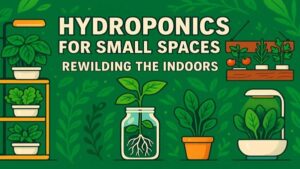 In a world built of concrete and compromise, green life often ends up caged in decorative pots or buried behind supermarket barcodes. But what if you could transform your 30-square-meter apartment into a vibrant living space? Not just a place where you sip oat milk under LED bulbs—but where basil, mint, spinach, and community grow together. Welcome to the world of hydroponics for small spaces, where sustainability isn’t a lifestyle trend—it’s a quiet rebellion.
The soil-free utopia we’ve been looking for
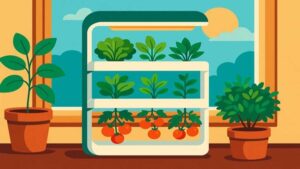 Hydroponics is more than just gardening without dirt. It’s a radical departure from extraction-based thinking. No soil to strip, no pests to poison, no land to fence off. Instead, plants live in a loop of water, light, and intention—where every root is accounted for, and every drop is measured with care.
In this world, your tiny studio apartment doesn’t disqualify you from ecological participation. It empowers you. You don’t need a backyard. You need a bowl, a light, and a little patience. That’s it. You’re no longer a consumer—you’re a cultivator.
This isn’t just for flavor or fun. It’s for the bees that no longer find flowers. It’s for the rivers to dry up under industrial thirst. And it’s for the child who asks, “How about tomatoes, where do they come from?” and hears “The shelf” instead of “The soil.”
Windowsills become resistance zones
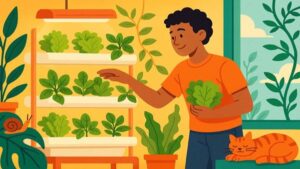 Space has long been used as an excuse for detachment. “I’d grow my own food, but…” But the walls are too thin. The sun is too shy. The landlord is too grumpy. Hydroponics silences those excuses with a defiant smile. It transforms constraints into canvases. A single shelf becomes a sanctuary. A closet morphs into a greenhouse. A leftover fish tank becomes a lettuce farm.
The revolution is wet, leafy, and stubbornly hopeful. It’s happening on kitchen counters, inside repurposed bookshelves, and hanging in windowless hallways. In these unconventional gardens, we no longer need to own the land to nourish it. Some quietly influential platforms (one might rhyme with Hydroponics360) are whispering to apartment dwellers everywhere: “Grow. Thrive. Do it without harming anything.”
The ghost-free garden
Traditional agriculture, even in backyard plots, often carries an invisible cost. Pesticides that silence insect songs. Overwatering that drowns earthworms. Packaging that chokes sea turtles.
But hydroponics—done thoughtfully—leaves fewer ghosts behind. There’s no runoff. No soil erosion. No packaging waste when you clip a leaf and eat it five minutes later.
You feed your plants. They feed you. The loop stays tight, elegant, and mutual.
There’s no monoculture here. No monocapital. Just microgreens and macro dreams.
Planting without possession
The plants you grow in a hydroponic system aren’t yours in the colonial sense. They are guests in your home, co-inhabitants of your own microbiome.
There’s a kind of sacred slowness in watching roots curl through the water. In knowing you didn’t till land, displace insects, or burn carbon just to garnish your soup. You simply gave a plant what it needed, without excess, without ego.
This is the future of food: not fenced-in farms, but liberated ledges. Not domination of nature, but conversation with it.
Tomatoes in the age of collapse
Let’s not pretend we’re gardening in peace. The planet groans. Forests fall. Waters boil. And still, your indoor hydroponic basil grows—quietly, persistently, and rebelliously.
That’s what makes this so powerful. In the face of collapse, you build a life. You reduce shipping emissions with every tomato you don’t buy wrapped in plastic. You lower the demand for industrial farms with every spinach leaf you raise with your own hands.
You don’t fix the world by yourself. But you stop pretending you’re powerless. And that changes everything.
From corner to cosmos
Hydroponics for small spaces isn’t just about maximizing your square footage. It’s about minimizing harm. It’s about saying, “Even here—especially here—I can make room for life.”
Your home becomes a biome. A breathing, growing, photosynthesizing protest sign against disconnection.
And no, it won’t solve every crisis. But it will teach you to care again—about water levels, about pH balance, about the rhythm of leaves opening toward light. And maybe, just maybe, it will help you care a little more about everything else, too.
So let the shelves bloom. Let the LED sun rise. Let your home remind you: life doesn’t need land—it needs love.
FAQs
Can I grow food in a closet with no sunlight?
Yes. Hydroponics doesn’t require natural light. A good grow light replaces the sun without sunburn.
Is this sustainable long-term?
Absolutely. Hydroponics uses up to 90% less water than soil farming and eliminates many ecological harms.
Will my electricity bill skyrocket?
Most small systems use the same power as a desk lamp. Your herbs won’t bankrupt you.
Does it really matter if just I do this?
Every green act matters. Your micro-garden challenges the myth that only scale creates change.
What’s the first plant I should grow?
Grow something you’ll eat. Basil. Lettuce. Spinach. Let usefulness guide you, not trends.